Go to SendWork
— Free for 7 Days
Full access
Full access

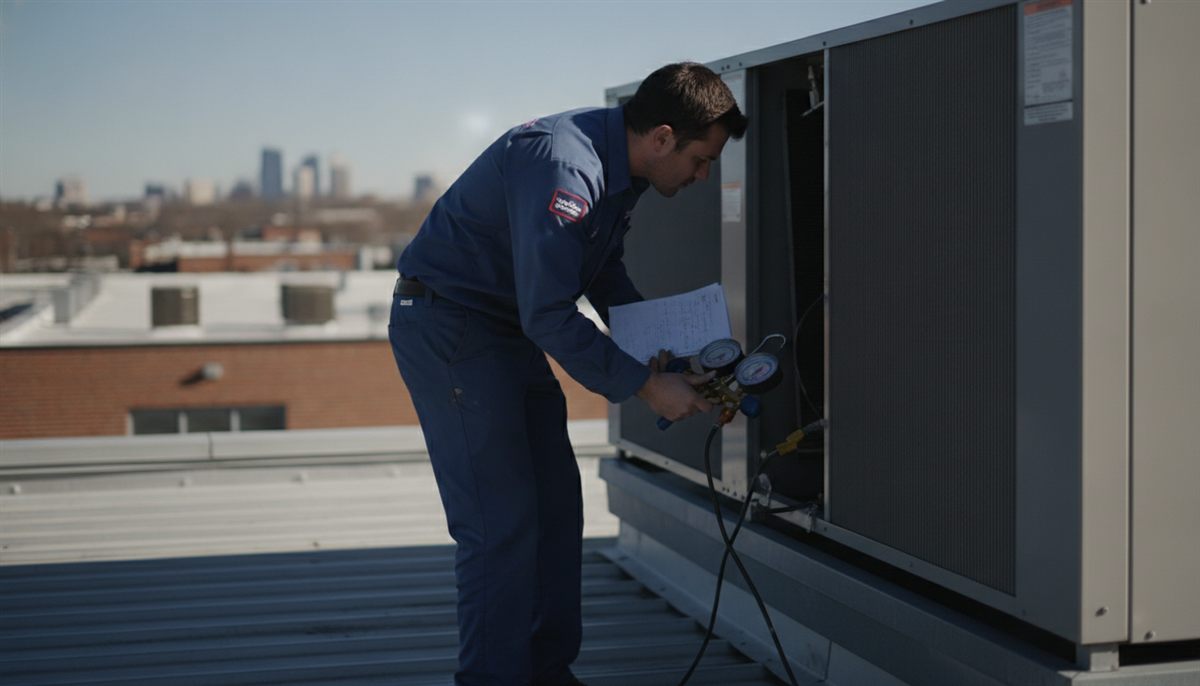
Emergency calls are unpredictable and disloyal. HVAC maintenance plans turn one-off jobs into steady, scheduled revenue — here's how to build, price, and sell them.
Every HVAC operator knows the feeling of the summer scramble. The first heat wave hits, the phone will not stop, and you spend three weeks chasing emergency calls you cannot fully staff. Then fall comes, the calls dry up, and revenue falls off a cliff until the next extreme season. The fix for that whipsaw is not more emergency work — it is HVAC maintenance plans that turn unpredictable one-off calls into steady, scheduled revenue you can actually plan around.
This matters more than most owners admit. A business that lives on emergency calls is at the mercy of the weather and of whoever picks up the phone first. By contrast, a book of recurring agreements gives you predictable cash flow, first claim on a client’s loyalty, and a reason for that customer to call you instead of the cheapest name on a search result.
So the operator consequence is direct: without a maintenance program, you are rebuilding your revenue from scratch every single season. With one, you start each year already ahead.
Emergency work pays well per call, but it is expensive to run. You cannot forecast it, you cannot staff it efficiently, and you spend your best technicians driving across town to jobs that may or may not close. Furthermore, an emergency customer is rarely loyal — they called you because you answered, and they will call someone else next time for the same reason.
Maintenance agreements flip that dynamic. Because the visits are scheduled, you can route them during slower weeks, keep your crew busy in the shoulder seasons, and smooth out the income that would otherwise swing wildly. In addition, regular service catches small problems before they become after-hours failures, which means fewer angry midnight calls and more planned, profitable work.
There is also a retention effect that is easy to underestimate. A customer on a plan has already decided you are their HVAC company. As a result, when their system finally needs replacing, you are the obvious choice for a job worth thousands — not a stranger bidding against three others.
A plan only works if both sides understand exactly what it covers. Vague agreements lead to disputes, scope creep, and customers who feel they paid for nothing. Therefore, spell out the visits, the tasks, and the perks in plain language before anyone signs.
Most durable programs are built around two or three tiers, so the customer can choose the level that fits. The table below shows a simple, common structure.
| Plan element | Basic tier | Premium tier |
|---|---|---|
| Scheduled visits | 1 per year | 2 per year (spring + fall) |
| System inspection | Standard checklist | Full diagnostic + report |
| Filter changes | Customer supplies | Included |
| Priority scheduling | Standard queue | Front of the line |
| Repair discount | None | 10–15% on parts and labor |
| After-hours fee | Standard rate | Reduced or waived |
Notice how the premium tier sells itself on convenience and savings, not just on extra visits. That is the point. Customers renew because the plan feels like protection and priority, rather than a line item they forgot they were paying for.
Do not give maintenance away to win goodwill. Price each visit to cover your technician’s time, the truck, and a real margin, then add the value of priority and discounts on top. A common mistake is pricing the plan so low that every visit loses money on the theory that you will make it back on repairs. Instead, the visit itself should stand on its own, and the repair pull-through should be the bonus — not the rescue.
FRIGALTO — Climate Systems. Managed Uptime.
For operators running commercial HVAC maintenance portfolios — structured inspections, refrigerant compliance, and uptime reporting across every unit.
The best moment to sell a plan is when you are already standing in front of the customer — ideally right after you have fixed something. The system is on their mind, they trust you because you just helped, and the pitch is simple: “I can come back twice a year and keep this from happening again.” Consequently, your highest close rates come from technicians who are trained to offer the plan on every completed repair, not from a separate sales push weeks later.
Consider a two-truck shop that added a single sentence to every repair invoice review: a quick offer of a maintenance plan with priority scheduling. Within a year, roughly a third of repair customers had signed on, and the owner walked into the next slow season with predictable monthly income for the first time. Nothing about the work changed. What changed was that the offer became routine instead of occasional.
Use this checklist to build the habit across your crew:
If your revenue still swings with the seasons, building HVAC maintenance plans is one of the highest-leverage changes you can make this year. Start small: pick one plan structure, train your technicians to offer it on every repair, and put the renewals on autopilot. Even a modest book of agreements changes how the slow months feel.
The administrative side is where many shops stall, because tracking visits, renewals, and reminders by hand quickly becomes its own headache. For more operator-focused guidance on running the service side of the trade, our HVAC resources for contractors are a useful next stop, and the U.S. Department of Energy’s ENERGY STAR guidance on heating and cooling maintenance is a solid, neutral reference you can share with customers to justify regular service.
The contractors who scale aren’t working harder. They stopped doing admin manually.
SendWork’s AI assistant tracks recurring visits, fires off the reminders, and handles invoicing — so a book of maintenance plans doesn’t become a second job.