Go to SendWork
— Free for 7 Days
Full access
Full access

HVAC contractors are skilled professionals responsible for installing, maintaining, and repairing heating, ventilation, and air conditioning systems in residential and commercial buildings. If you're considering a career as an HVAC contractor, or if you're just curious about how much these professionals earn, this article provides an in-depth look at HVAC contractor salaries based on industry statistics and data. Learn about the factors that influence HVAC contractor salaries and what you can expect to earn in this rewarding and in-demand field.
If you’re considering a career as an HVAC contractor or running an HVAC business, it’s important to understand the earning potential in this field. In this blog post, we’ll look at the latest pay figures for HVAC technicians, the salary ranges, how pay compares with similar trades, and the tax obligations that come with working for yourself.
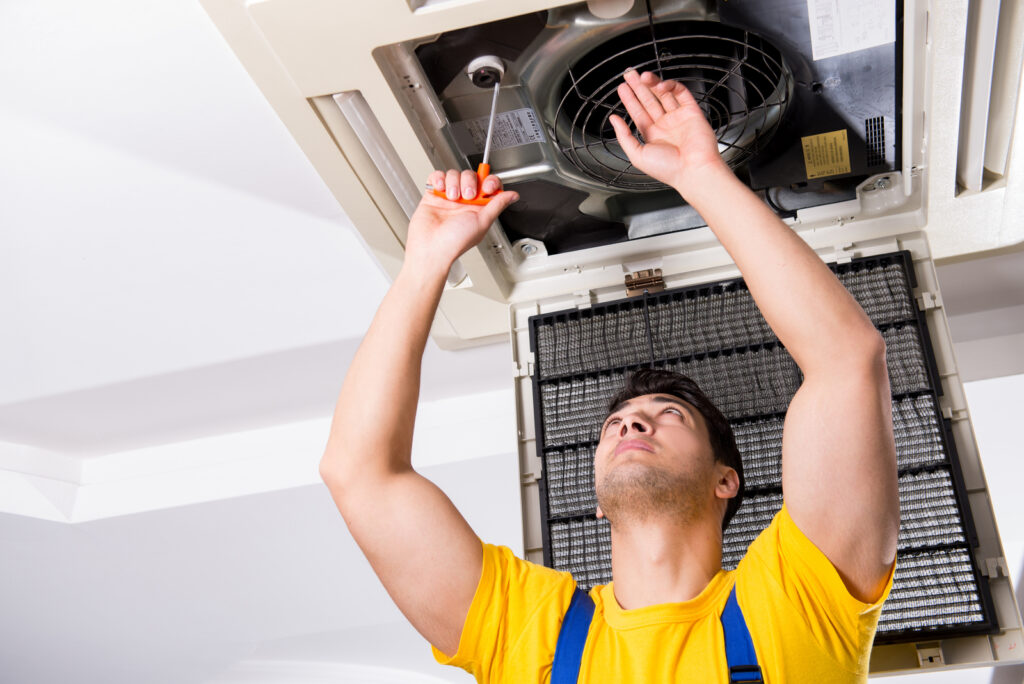


Heating, air conditioning, and refrigeration mechanics and installers are skilled technicians who work on heating, ventilation, cooling, and refrigeration systems. According to the U.S. Bureau of Labor Statistics, the median annual wage for HVAC technicians was $61,010 in May 2025, about $29.33 an hour. The lowest 10 percent earned less than $40,050, while the highest 10 percent earned more than $95,210. Demand is strong: BLS projects employment to grow 11 percent from 2025 to 2035, much faster than the 3 percent average, with about 40,600 openings a year.

Salary ranges for HVAC technicians vary widely depending on factors such as location, experience, and type of employer. Here are the May 2025 median wages in some of the industries that employ the most HVAC technicians:
| Industry | Median annual wage, May 2025 |
|---|---|
| Wholesale trade | $71,190 |
| Retail trade | $62,830 |
| Educational services (state, local, and private) | $62,520 |
| Plumbing, heating, and air-conditioning contractors | $60,030 |
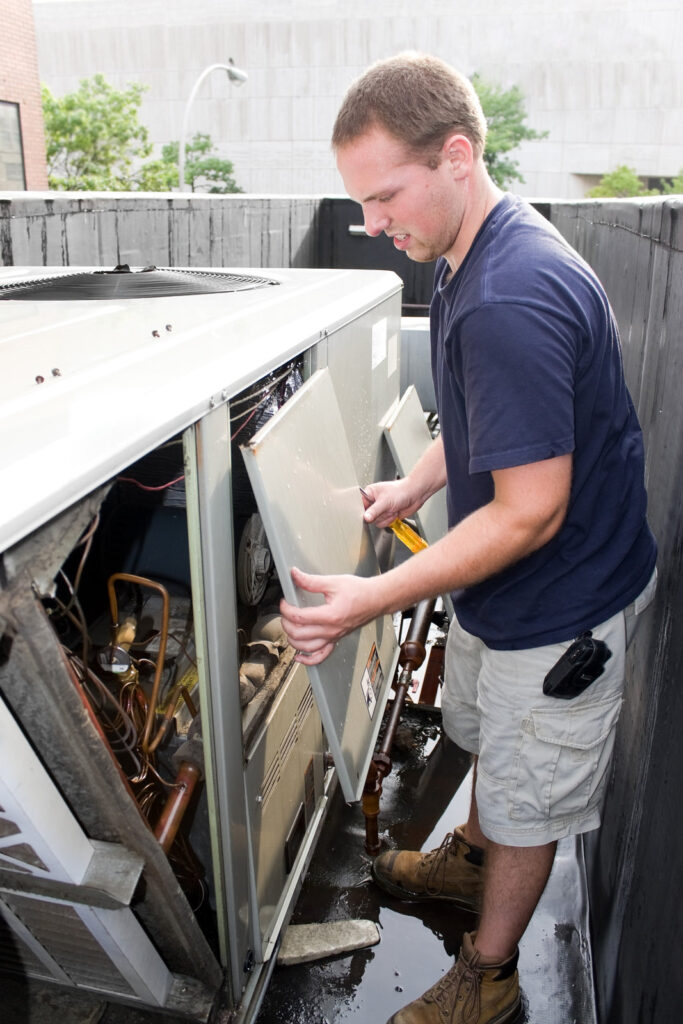
Pay also differs a great deal by state and metro area. State and local wages for HVAC technicians are published each year in the BLS Occupational Employment and Wage Statistics tables, and the U.S. Department of Labor’s CareerOneStop salary finder lets you look up wages by ZIP code. Keep in mind that these figures cover employees only: the BLS wage survey does not include self-employed technicians, who set their own rates.
Here’s how HVAC pay compares with similar occupations, with their entry-level education and 2025 median pay.
| Occupation | Job Duties | Entry-Level Education | 2025 Median Pay |
|---|---|---|---|
| Boilermakers | Boilermakers assemble, install, maintain, and repair boilers, closed vats, and other large vessels or containers that hold liquids and gases. | High school diploma or equivalent | $76,410 |
| Electricians | Electricians install, maintain, and repair electrical power, communications, lighting, and control systems. | High school diploma or equivalent | $63,190 |
| General maintenance and repair workers | General maintenance and repair workers fix and maintain machines, mechanical equipment, and buildings. | High school diploma or equivalent | $49,590 |
| Plumbers, pipefitters, and steamfitters | Plumbers, pipefitters, and steamfitters install and repair piping fixtures and systems. | High school diploma or equivalent | $63,800 |
| Sheet metal workers | Sheet metal workers fabricate or install products that are made from thin metal sheets. | High school diploma or equivalent | $61,800 |
| Solar photovoltaic installers | Solar photovoltaic (PV) installers assemble, set up, and maintain rooftop or other systems that convert sunlight into energy. | High school diploma or equivalent | $53,140 |
| Stationary engineers and boiler operators | Stationary engineers and boiler operators control stationary engines, boilers, or other mechanical equipment. | High school diploma or equivalent | $78,620 |
| Wind turbine technicians | Wind turbine service technicians maintain and repair wind turbines. | Postsecondary nondegree award | $64,120 |
As an HVAC contractor, you’ll likely be considered self-employed and responsible for paying your own taxes. This includes income tax, self-employment tax, and applicable state and local taxes. Working with a tax professional is important to ensure you’re paying the correct amount and taking advantage of any deductions or credits available to you.
In conclusion, HVAC is a well-paid trade with strong projected demand. By understanding typical salaries, how pay varies by industry and location, and your tax obligations, you can make informed decisions about your career and business in the HVAC industry.
Updated September 2026: pay, projection, and comparison figures now reflect Bureau of Labor Statistics data for May 2025 and projections for 2025–35. A May 2021 state wage table was replaced with current industry figures and links to official state data.