Go to SendWork
— Free for 7 Days
Full access
Full access

New York's next neonicotinoid ban, Spanish safety sections on labels, the records a new tech needs and where rodenticide rules really stand for 2027.
The pest control industry trends that will shape 2027 are mostly label and licensing rules, and several have firm dates. New York bans three more neonicotinoids on lawns and ornamental plants from December 31, 2026. Non-agricultural pesticides in the most toxic category start carrying Spanish safety sections two days earlier. The federal applicator rule already decides who may use restricted products on your crew and what records you keep. EPA’s tighter rodenticide rules are still only proposals. And at Rollins, the parent of Orkin, commercial and termite work is growing fastest.
None of that changes how you place a bait station. It changes what you put on a lawn program in New York, how you train a new hire and what you tell a customer about rodent control. Each point below comes from the statute, regulation or agency page behind it, as checked in October 2026.
New York’s Birds and Bees Protection Act is a state law that the Department of Environmental Conservation enforces, in Environmental Conservation Law section 33-1301. Since December 31, 2024, it has banned clothianidin and dinotefuran on outdoor turf and ornamental plants. From December 31, 2026, imidacloprid, thiamethoxam and acetamiprid join the ban.
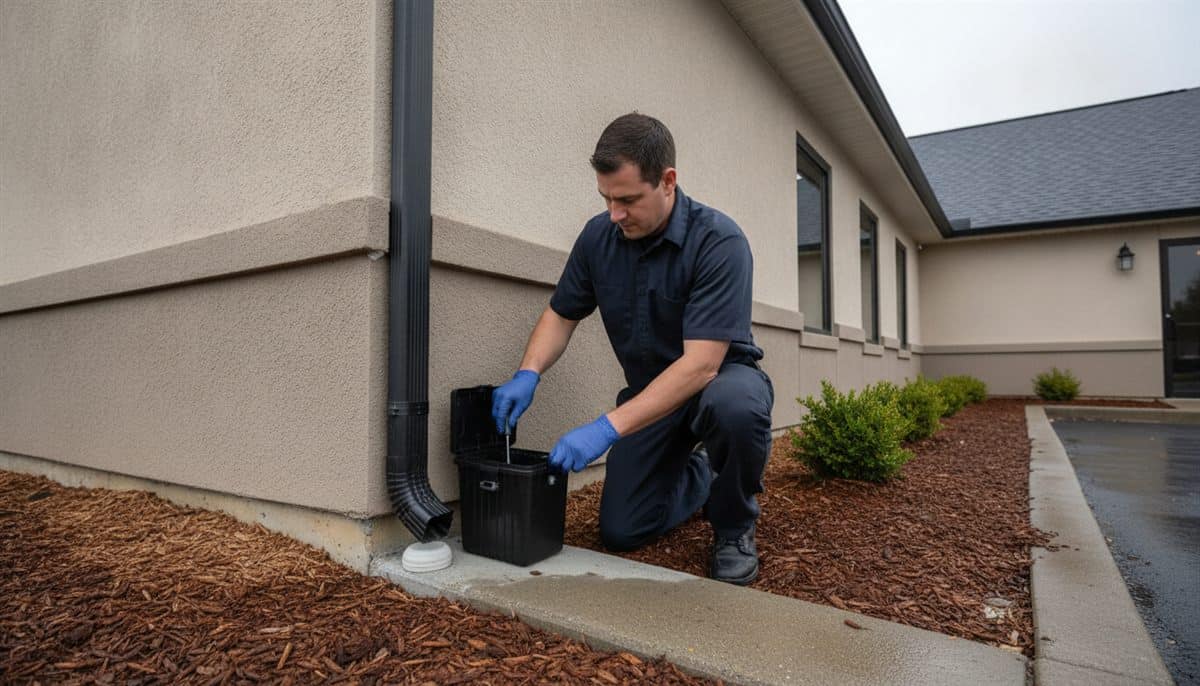
Structural work keeps an exemption. The law still allows structural commercial applications within one foot of a building’s foundation to manage structural pests. They must not be made on a blooming plant. Anyone using them under the law’s emergency or invasive-species exceptions must take a state-approved neonicotinoid course every year and keep the record for three years. If you run a lawn and ornamental program in New York, plan the 2027 products now and tell repeat customers what changes. Washington and Vermont have their own neonicotinoid limits in force too, so check your state’s agriculture department if you work there.
The Pesticide Registration Improvement Act of 2022, known as PRIA 5, is federal law that EPA administers. Among other things, it phases in Spanish translations of the health and safety sections on pesticide labels. EPA’s schedule gives these dates:
Agricultural products follow their own dates in 2025 and 2027.
The translation can sit on the container or be reached through a hyperlink or other readily accessible electronic method. The duty falls on the companies that register the products, not on you. Still, if part of your crew reads Spanish more comfortably than English, the new labels give you a better training tool. Show techs where the Spanish section is, and how to reach it if it sits behind a link.
The federal Certification of Pesticide Applicators rule sets the minimum standards that states must meet when they license people to use restricted use pesticides. EPA writes it in 40 CFR Part 171, each state runs the licensing under an EPA-approved plan, and it is mandatory. Each state set its own start date for the 2017 revision. Iowa’s, for example, took effect on January 1, 2026. Under the federal minimums:
Take a hypothetical hire. You take on a 19-year-old technician in March 2027 for a commercial rodent account that uses a restricted product. Before that first service, the training has to be done and dated, and its record filed where an inspector would look for it. Your state’s rules may add more than the federal floor, so read your state plan before the busy season. Our guide to the documentation a pest control business needs covers the wider job file.
Rodent control is where rules may tighten, but the federal change is not here yet. In November 2022, EPA proposed classifying all second-generation anticoagulants as restricted use pesticides. It also proposed carcass searches. And it proposed protective equipment rules. Texas regulators were told in 2024 that a revised proposal would follow in 2025. EPA’s rodenticide page, last updated in November 2025, shows none. There is no final federal decision yet. In November 2024, EPA also released a rodenticide strategy for endangered species. Its limits reach products one by one, through label changes, registration terms or Bulletins Live! Two. That is EPA’s online system of location-specific limits, which become enforceable when a label points to it.
The rules already in force still bind every job. Second-generation anticoagulants are sold only for professional use, in packs of at least 16 pounds (8 pounds for farm buildings). Tamper-resistant bait stations are required where children under six, pets or non-target wildlife could reach the bait, and for all outdoor above-ground placements. In California, three state laws now bar anticoagulant rodenticides in homes and most other settings, with listed exemptions. They are AB 1788 (2020), AB 1322 (2023) and AB 2552 (2024), and the Department of Pesticide Regulation enforces them. AB 2552 added the first-generation products chlorophacinone and warfarin from January 1, 2025.
For tented residential fumigation, EPA approved stricter sulfuryl fluoride labels on July 11, 2024. They added logs, signage, longer aeration, clearance devices and stewardship training. If you subcontract fumigation, ask your partner how they meet those label terms.
The public companies give the clearest dated numbers. Rollins, the parent of Orkin, reported to the SEC organic revenue growth of 5.7% in the second quarter of 2026. On the same organic basis, residential grew 3.6%, commercial 7.2% and termite and ancillary work 8.9%. It also noted weaker residential leads from search and inbound calls. Rentokil reported 2.6% organic growth for North American pest control in the first half of 2026, with residential holding up and termite revenue slower. So the mix differs by company: at Rollins, commercial and termite accounts carry growth while residential leads are harder to win. Treat that as two companies’ results, not a forecast for every shop.
Commercial accounts bring their own requirements, from audit-ready records to service frequency. Our guides to building a commercial pest control business and writing commercial pest control contracts cover both.
The labor market keeps adding jobs. The Bureau of Labor Statistics puts the median pay for pest control workers at $45,250 in 2025. It projects 6% job growth from 2025 to 2035, with about 13,700 openings a year. OSHA’s federal heat rule is still a proposal. The Department of Labor’s regulatory agenda targets a revised proposal in December 2026 and a final rule in October 2027. Those are targets, not dates you can plan around.
For the payroll, tax and sales rules that reach every trade in 2027, see our overview of 2027 rules for US service contractors.
The new tech on a restricted account
The right tech on the right stop is a scheduling decision first.
A technician who is not yet certified can only work a restricted-product account under direct supervision. SendWork assigns each job to a named tech in one schedule, so a commercial rodent stop goes to a crew that can legally run it.