Go to SendWork
— Free for 7 Days
Full access
Full access

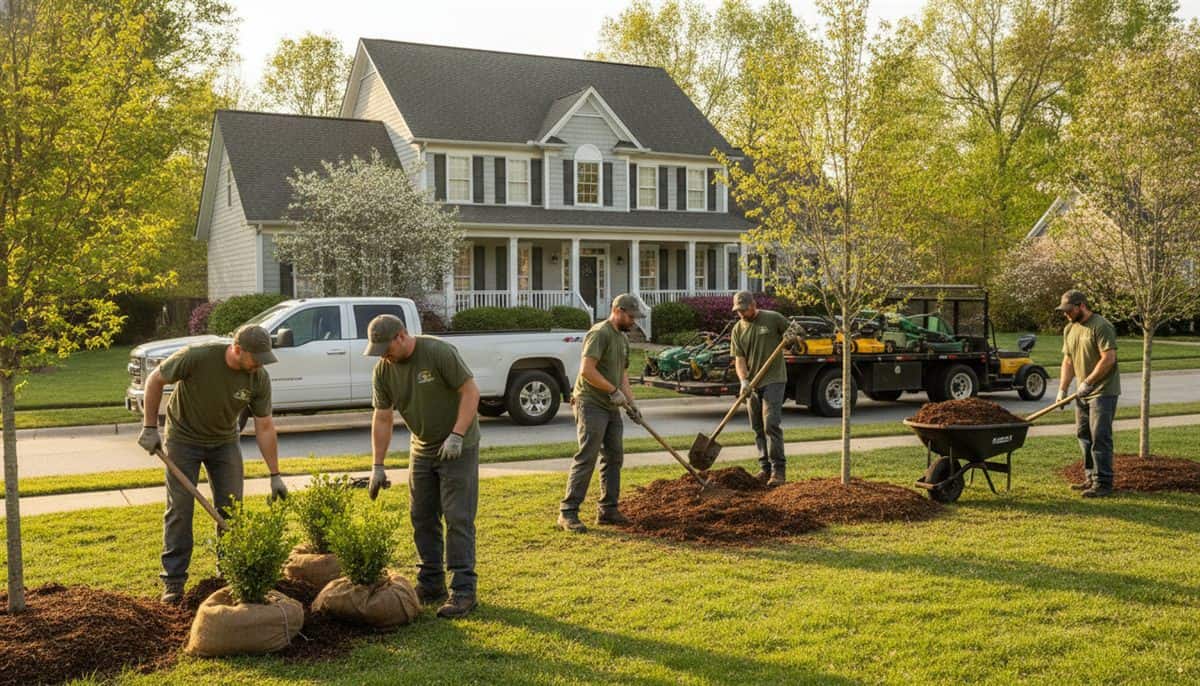
The first-half H-2B cap for 2027 is full, so spring crews need an April 1 start. The prevailing wage request should go in by November 2, the filing window runs January 1 to 16, and the January lottery decides who gets reviewed first. The countdown, step by step.
If you want H-2B workers on your crew for April 2027, the first deadline is about ten days away. The visas for work starting before April 1 are already gone, so an April 1 start is the earliest route left. That route opens on January 1, and you can’t file then without a prevailing wage determination from the Department of Labor. DOL advises asking for one at least 60 days before you need it, which points to Monday, November 2.
Here is the countdown from April 1, what each step involves, and how to decide whether this season is worth the attempt.
H-2B is the federal visa program for foreign workers who come to do temporary, non-farm work when US workers can’t be found. It rests on section 101(a)(15)(H)(ii)(b) of the Immigration and Nationality Act. DOL certifies the job, US Citizenship and Immigration Services (USCIS) approves the petition, and the State Department issues the visas. The program is optional for employers, but its rules are binding once you use it. Our 2027 landscaping trends guide covers where it fits among the other changes facing landscape crews.
Congress caps the program at 66,000 visas a year. Half are for workers starting between October 1 and March 31, and half for starts from April 1 to September 30. On September 11, 2026, USCIS announced that the first half of fiscal 2027 was full, with September 4 as the final receipt date. So for spring, every employer is competing for the same 33,000 second-half visas.
The competition is real. In the first three days of January 2026, employers filed 10,062 applications for April 1 starts, covering 162,603 worker positions, according to DOL’s Office of Foreign Labor Certification (OFLC). That’s almost five times the half-year cap.
| Date | Step |
|---|---|
| By Mon Nov 2, 2026 | Request a prevailing wage determination on Form ETA-9141 (DOL’s 60-day advice) |
| Nov–Dec 2026 | Draft the job order and Form ETA-9142B; sign recruiter agreements |
| From Wed Dec 2, 2026 | No layoffs of US workers in the same job (120 days before the start date) |
| Fri Jan 1, 2027, midnight ET | Filing window opens: ETA-9142B to DOL and job order to the state workforce agency |
| Jan 1–3, 2027 (expected) | Applications filed in these three days are put in random order |
| Sat Jan 16, 2027 | Last day to file for an April 1 start |
| Notice of Acceptance + 14 days | Finish your own recruitment of US workers |
| After certification | File Form I-129 with USCIS |
| Thu Mar 11, 2027 | Duty to hire qualified US applicants ends (21 days before the start) |
| Thu Apr 1, 2027 | Start date; visa fees reimbursed in the first week |
The prevailing wage is the lowest hourly rate DOL will let you offer for the job in that area. It usually comes from the Bureau of Labor Statistics wage survey. Its National Prevailing Wage Center issues it after you file Form ETA-9141 through FLAG, DOL’s online filing system. Under 20 CFR 655.10, you must have it before you file the job order, and it must be valid on the day the job order is posted.
The FLAG H-2B page says employers “are encouraged to file at least 60 days before the determination is needed.” DOL’s processing times page showed the center working on H-2B requests received in August 2026, as of September 30. That’s a gap of one to two months. A request filed in mid-November could still be waiting on January 1, so file the ETA-9141 now.
If your crew works at several sites, the wage is the highest one among them. You’ll then have to offer and pay that wage, or the federal, state or local minimum if it’s higher, to your H-2B workers and to US workers doing the same job.
Under 20 CFR 655.15(b), the application for temporary labor certification must be filed “no more than 90 calendar days and no less than 75 calendar days” before your start date. For April 1, 2027, that’s Friday, January 1 through Saturday, January 16. You file Form ETA-9142B with DOL’s processing center. On the same day, you send the job order to the state workforce agency covering the worksite. That’s the posting the agency circulates to US job seekers.
In January 2026, OFLC said it would deny April 1 applications filed before midnight Eastern on January 1. It then put everything filed from January 1 to 3 into random order, using a procedure published in the Federal Register in 2019. The first group held enough worker positions to reach the 33,000 cap. OFLC hasn’t yet announced the January 2027 window. The 2026 reminder came on December 29, so expect the same pattern, not a promise of it.
Your season also has to qualify as temporary. DOL says it won’t certify a seasonal or peakload need of more than nine months, except a one-time event. So plan an April-to-December type season, not a year-round one.

Once DOL accepts the application, it sends a Notice of Acceptance. You then have 14 calendar days to complete your own recruitment:
You have to hire any qualified US applicant who applies until 21 days before the start date, which is March 11, 2027. Each one hired reduces the number of H-2B workers DOL certifies.
After certification, you file Form I-129 with USCIS, with the certified application attached. USCIS will only accept its 09/09/26 edition from November 9, 2026. The petition fee for unnamed workers is $580, or $460 if you have 25 or fewer full-time-equivalent employees. Add a $150 fraud fee and the Asylum Program Fee of $600, or $300 for a small employer. Premium processing costs $1,780 and gets a decision within 15 business days.
DOL certification doesn’t reserve a visa. USCIS assigns numbers in the order petitions arrive, and announces a final receipt date once the cap is reached. In 2026 that date for the second half was March 10. Extra supplemental visas for fiscal 2027 aren’t assured. As of mid-October, DHS had published no rule for them.
Federal rules in 20 CFR 655.20 set the main obligations, and the 2025 DHS rule tightened the ban on worker-paid fees:
The rules also guarantee hours for three-quarters of the workdays in each 12-week period. DOL’s own form notes that Congress barred it from spending money to enforce that guarantee in funding laws through at least 2022. The rule itself still stands, so build the hours into your crew plan anyway. Our guide to landscaping rates shows how to price a crew hour once the wage is fixed.
Go ahead if three things are true by November 2. You can file the wage request this week. You can be ready to file on January 1, with the job order, contracts and worksite list done in December. And your season can still work if you get your workers late, or not at all, because the lottery may not pick you.
If any of those fails, skip spring and plan for October 2027 instead. That half’s window opens in early July, and you’d need the wage request in by early May. Either way, line up US hires now. Our guide to hiring an employee covers the payroll and paperwork side.
A SPRING CREW THAT MIGHT ARRIVE LATE
Plan the season for the crew you have, then add the crew you’re waiting on.
If the lottery leaves you short in April, the jobs still have to go to someone. SendWork schedules each job and assigns it to the people on it, so you can shift the week around whoever is actually on the trailer.