Go to SendWork
— Free for 7 Days
Full access
Full access

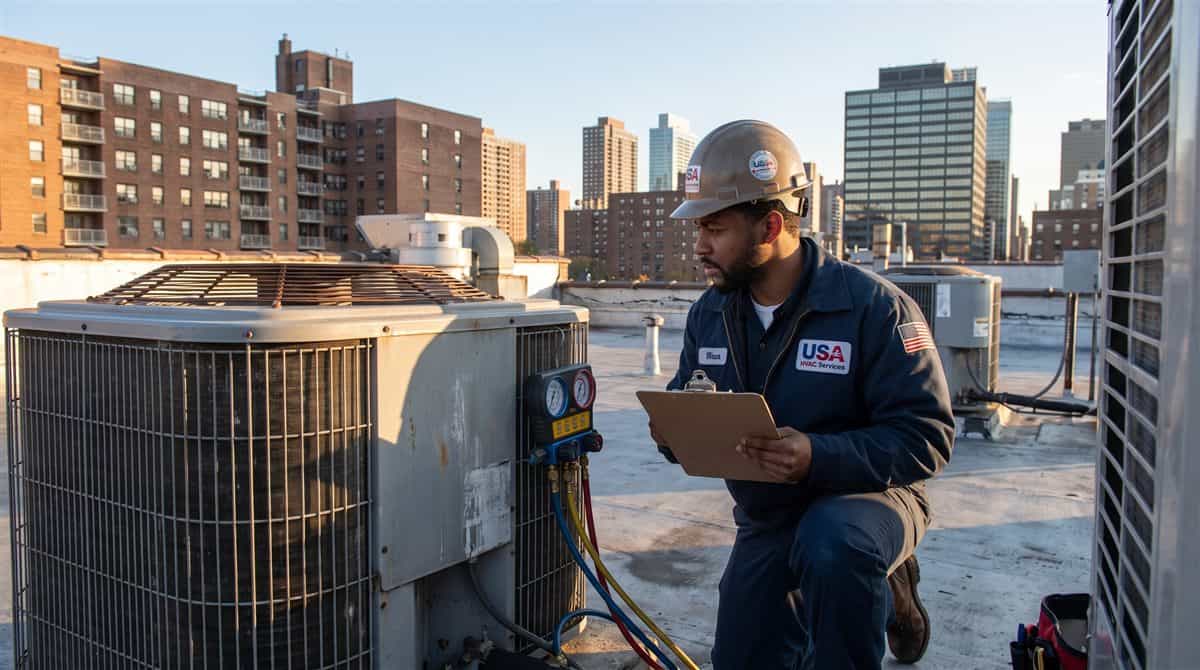
Real 2026 US HVAC rates — install, replacement, repair, and hourly labor — plus how to turn one-time service calls into recurring revenue.
Every HVAC owner knows the number that keeps the lights on: the system replacement. One approved changeout can be worth more than a month of service calls, which is exactly why so many shops underprice the small work and then wonder where the year went. Setting your HVAC rates USA well means pricing both ends of the business on purpose — the $150 repair and the $9,000 install — so neither one quietly loses money.
Below are the real 2026 figures HVAC contractors charge across the United States, from a tune-up to a full system with ductwork, plus how to turn a one-time repair into a customer who pays you every year. The ranges move with system type, region, and home size, so treat them as a market map rather than a fixed menu. What matters is that your pricing reflects the value you deliver, not just the hours you clock.
Installation is where the big numbers live. A new HVAC system replacement generally runs $5,000 to $11,000, and once you add or replace ductwork the range climbs to $7,000 to $16,000. Broken out by component, a central air conditioner replacement lands at $2,500 to $7,500, a furnace at $2,000 to $5,400, and a heat pump at $3,800 to $8,200. Installation labor alone typically adds $1,000 to $3,000 to a job. Permits, meanwhile, vary widely by jurisdiction — figure $100 to $250 for most work, and more for new installs with ductwork.
For a labor-market anchor, the U.S. Bureau of Labor Statistics reports median pay for heating, air conditioning, and refrigeration mechanics and installers at $59,810 a year — about $28.75 an hour — as of May 2024. As with every trade, that is the technician’s wage, not the shop’s billing rate. The gap funds your trucks, your EPA-certified refrigerant handling, your insurance, and your margin.
| HVAC work (2026) | Typical US price |
|---|---|
| New system replacement | $5,000–$11,000 |
| System with ductwork | $7,000–$16,000 |
| Central AC replacement | $2,500–$7,500 |
| Furnace replacement | $2,000–$5,400 |
| Heat pump replacement | $3,800–$8,200 |
| Hourly labor | $75–$150/hr |
| Seasonal tune-up | $70–$200 |
| Typical repair | $150–$450 |
| Thermostat install | $140–$350 |
Service work is billed differently, and it is where margin quietly leaks. Hourly labor runs $75 to $150, a seasonal tune-up lands at $70 to $200, and a typical repair falls between $150 and $450, with many shops folding a diagnostic fee into the first hour. The trap is treating repairs as a favor rather than a product. A tune-up priced at cost to “be nice” simply trains customers to expect free expertise. Instead, price the small work to stand on its own, and it becomes a doorway to the bigger relationship rather than a loss leader you resent.
Consider a July no-cool call. You diagnose a failed capacitor, replace it, and the house is cold again in forty minutes. If that visit is priced only as parts-plus-a-little, you left real value on the table. Meanwhile, the shop that prices the diagnostic and the fix as a defined service — and then offers the homeowner a maintenance plan on the way out — turned a $250 emergency into a multi-year customer.
FRIGALTO — Climate Systems. Managed Uptime.
For operators running commercial HVAC maintenance portfolios — structured inspections, refrigerant compliance, and uptime reporting across every unit.
The most valuable move in HVAC pricing is not raising your hourly rate; it is converting transactional customers into maintenance-plan members who pay every spring and fall. Recurring agreements smooth out your cash flow, fill the shoulder seasons, and give you first call when a system finally dies. If you have never built one, start with turning service calls into HVAC maintenance plans, then price the plan from your real cost of delivering two visits a year plus priority response. For the bigger picture on accounts that renew, the commercial HVAC business playbook shows how the contract model scales.
Localize all of this. HVAC pricing swings hard between a humid Southern market running air conditioning nine months a year and a Northern one built around heating, and licensing rules differ by state. Therefore, treat the national ranges here as a starting point, and benchmark against other USA pricing guides as the series grows.
The wide ranges above are not vague — they reflect real variables you can point to on the invoice. System type is the biggest lever: a straightforward condenser swap is worlds away from a full changeout with new ductwork, zoning, and a heat-pump conversion. Efficiency tier matters too, since a high-SEER system costs more in equipment and in the labor to commission it correctly. Then there is the house itself — attic access, existing duct condition, and electrical upgrades can all add hours nobody saw on the walk-through.
Climate and season shape the number as well. In a Sun Belt market running cooling most of the year, summer emergency demand lets you hold firm on price, while a northern shop leans on heating season and shoulder-season maintenance to stay busy. Rather than apologize for a range, show the customer which variables move their specific number. That transparency wins trust, justifies the price, and sets up the maintenance-plan conversation that turns a one-time install into a decade-long account.
Your HVAC rates USA should price both ends of the business deliberately, not just the jobs you enjoy quoting. This quarter, do three things. First, put a real number on diagnostics and tune-ups so the small work pays for itself. Second, build or reprice a maintenance plan from your true cost of delivery, rather than a round number that felt about right. Third, review your install margins against the ranges above to confirm you are not the cheapest changeout in town by accident. Handle those three, and the seasonal swings stop feeling like whiplash.
A full calendar next month starts with the client you served today.
SendWork’s AI office manager tracks every customer, remembers the last service date, and triggers the follow-up that turns a one-time repair into a maintenance-plan member.
Price the repair, price the install, and price the plan — then let the recurring revenue carry you through the slow months.