Go to SendWork
— Free for 7 Days
Full access
Full access

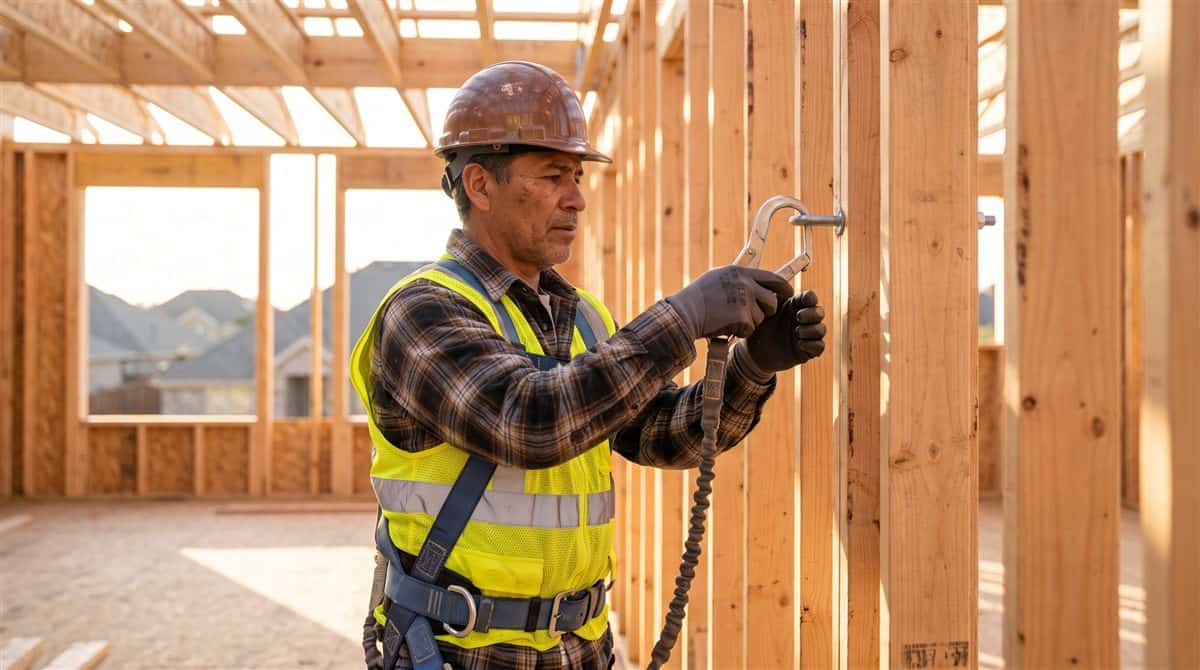
Fall protection, scaffolding, trenching — here are the OSHA compliance rules for contractors that trigger the most citations, and how to stay clear of them.
An OSHA compliance officer drives past a residential framing job, sees four workers on the second-floor deck with no harnesses, and stops. By the time the inspection wraps up, that is not one citation — it is four, one per exposed worker, and each serious violation can run up to $16,550. A single unguarded morning just became a $66,000 problem, and that is before anyone checks the ladders, the scaffolding, or the paperwork.
This is the math that makes OSHA compliance for contractors non-negotiable. Penalties are assessed per violation and per worker, so they stack fast, and willful or repeated violations climb to $165,514 each. For a small crew, one bad inspection can erase a season of profit — or end the business outright.
Every employer with even one employee falls under the Occupational Safety and Health Act. The moment you put a worker on a payroll, you are responsible for providing a workplace free of recognized hazards, and OSHA can inspect after a complaint, an accident, a referral, or as part of a targeted program. Therefore OSHA compliance is not a big-company concern that small contractors can wave off; it is a baseline cost of having a crew.
Here is the part most operators miss: the majority of citations are not written because a contractor ignored safety. They are written because the contractor could not produce the documentation proving compliance — the fall-protection plan, the training records, the daily trench-inspection log. The documentation gap, not the safety gap, is what an inspector writes up. There is some relief for the smallest firms, though: in 2026 OSHA expanded its size-based penalty reduction, so employers with up to 25 employees can now qualify for the largest good-faith discounts.
The stakes are not only financial. OSHA calls falls, struck-by incidents, electrocutions, and caught-in or crushed hazards the Focus Four, because together they cause the majority of construction deaths. Furthermore, a willful violation that leads to a worker’s death can be referred for criminal prosecution. Compliance, in other words, is the difference between a fine and a funeral.
OSHA publishes its most-cited standards every year, and for construction the list barely moves. Fall protection has topped it for fifteen consecutive years. The table below shows the standards that generate the most citations on job sites, along with what each one actually requires.
| Standard | What OSHA requires |
|---|---|
| Fall protection (the #1 citation) | Guardrails, safety nets, or personal fall-arrest systems for any work six feet or more above a lower level |
| Ladders | Sound, properly rated ladders set at the right angle and extended above the landing; no damaged equipment left in service |
| Scaffolding | Fully planked platforms, guardrails, and inspection by a competent person before each shift |
| Fall-protection training | Documented training for every worker exposed to a fall hazard |
| Eye and face protection | Appropriate PPE wherever flying particles, chemicals, or light hazards are present |
| Hazard communication | Safety data sheets, proper labeling, and worker training on the chemicals kept on site |
| Respiratory protection | A written program and fit testing wherever respirators are required |
| Excavation and trenching | Cave-in protection for any trench five feet or deeper, inspected daily by a competent person |
Notice the pattern: most of these are visible from the ground. An inspector does not need to dig to spot a missing guardrail, an unsafe ladder angle, or a worker standing in an unshored trench. That visibility is exactly why these standards dominate the citation list — and why a walk-through of your own site with this list in hand catches most problems before OSHA ever does.
Because so many citations come down to missing records, the fix is often organizational rather than physical. SendWork keeps each job’s daily logs, site photos, and notes attached to the specific project, so the proof that a competent person inspected the trench or that the crew got its toolbox talk lives with the job instead of on a clipboard that walked off the site.
Before your next inspection finds the gaps for you, run this checklist across every active site:
Run it monthly, not once. Conditions on a job site change daily, and a program that was compliant during framing can fall apart during finish work.
OSHA compliance is cheaper than the alternative by an order of magnitude, and the biggest wins are administrative. Put the physical protections in place, then close the documentation gap that drives most citations: keep the plans written, the training logged, and the daily inspections recorded where you can find them. These obligations arrive the day you hire your first employee, and they overlap with other federal rules — lead work, for instance, brings both EPA RRP requirements and OSHA’s lead standard into play at once. The OSHA penalties page lists the current maximums, but the number that matters is zero, and you reach it by being the contractor whose records are already in order when the inspector arrives.
ON THE INSPECTION YOU DIDN’T SCHEDULE
The contractors who survive an inspection are the ones with organized records.
When an inspector shows up, you have hours, not weeks, to produce records. SendWork keeps each job’s daily logs and site photos with the project, so the proof of what happened on site is a search away instead of a scramble.
See how organized US contractors keep site records straight →