Go to SendWork
— Free for 7 Days
Full access
Full access

Awaab's Law phase 2 widens the hazards social landlords in England must fix to deadlines from 30 November 2026. What it means for repairs contractors: the landlord's clocks, when your visit can start them, reporting hazards, recording failed access and the contract terms to settle first.
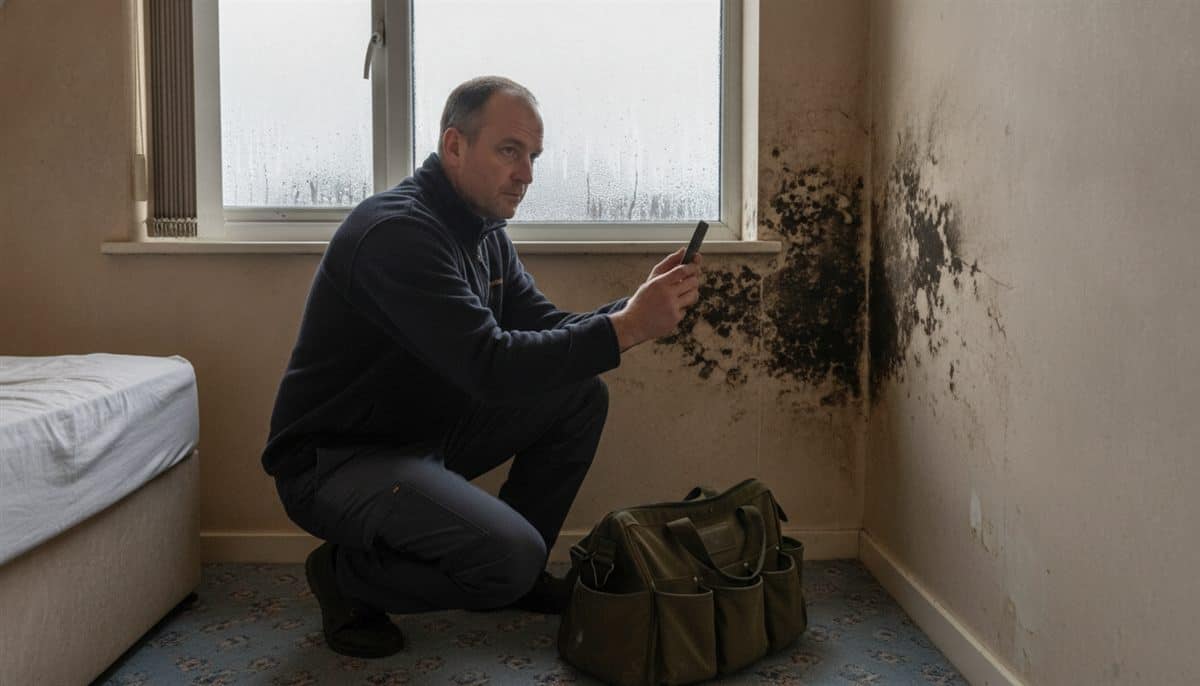
Picture an electrician on a housing association job, booked to replace a kitchen socket. In the back bedroom, the tenant mentions the light switch that sparks, and a skirting board with black mould behind it. Neither is on the job sheet. From 30 November 2026, under Awaab’s Law, both can start a legal clock for the landlord. Depending on the contract, that clock may already be running from the moment the electrician sees them.
That is the change phase 2 of the law brings to repairs work in social housing in England. The duties sit with the landlord, not with you. But the landlord can only meet its deadlines if its contractors report what they find quickly, with evidence, and record every failed visit. This article sets out what changes on site and what to agree with your client before November.
Awaab’s Law is the name for a set of repair deadlines that social landlords in England must meet when a home has a serious hazard. It takes its name from two-year-old Awaab Ishak, who died in 2020 after prolonged exposure to mould in his family’s home in Rochdale. The rules are in the Hazards in Social Housing (Prescribed Requirements) (England) Regulations 2025. Ministers made them under sections 10A and 10B of the Landlord and Tenant Act 1985, which the Social Housing (Regulation) Act 2023 added. The Ministry of Housing, Communities and Local Government wrote them and publishes the guidance.
They are a legal requirement, not good practice. Each social tenancy carries them as an implied term, so a tenant can take the landlord to court for a breach. They bind registered providers: housing associations and councils that let social homes. They do not apply to licences, shared ownership or long leaseholds, and they do not cover Wales, Scotland or Northern Ireland.
Phase 1 started on 27 October 2025. It covered emergency hazards and significant damp and mould. Phase 2 widens the significant hazards from 30 November 2026. It rests on amending regulations laid in draft on 13 July 2026. Parliament approved them, the House of Lords on 14 October and the House of Commons on 20 October, and they come into force on 30 November 2026.
The government’s phase 2 guidance for social landlords lists the significant hazards covered from that date:
Phase 1 already covers emergency hazards of every kind except overcrowding. The guidance gives examples a repairs contractor will recognise. They include gas or carbon monoxide leaks, broken boilers, total loss of water, exposed wiring, major leaks, broken external doors or windows, rotten ceiling joists and broken balcony railings.
The test for a significant hazard also gets plainer. It is a risk to the tenant’s health or safety that a reasonable landlord, knowing what it knows, “would make safe within 15 working days”. In practice that covers the boiler that works but cannot heat the home, the loose stair handrail and the extractor fan that never got fixed. Fire hazards in the communal parts of a block stay under the separate fire safety regime and are not part of Awaab’s Law.
These deadlines belong to the landlord. Your contract decides how much of each one it hands to you.
If the safety work cannot be done in time, the landlord must move the household into suitable alternative accommodation at its own expense. That is the cost your client is trying to avoid, and it explains why response times in framework contracts are getting tighter.
The guidance says a landlord usually becomes aware when a third party, such as a contractor, tells it. It then adds a sentence every repairs firm should read: “In some circumstances a landlord might be considered to become aware of a hazard when a third party employed by them (for example a contractor) becomes aware of it.” Whether that applies, it says, depends on whether the contractor is legally acting as the landlord’s agent, and it tells landlords to take legal advice on that.
So the honest answer to “does the clock start when my operative sees it?” is that it might. Your contract and the way you work for that landlord decide it. Either way, the guidance tells landlords to protect themselves with clear contractor instructions. The guidance asks them to make sure contractors know the deadlines, report any hazard they spot beyond the job they came for, and send the details needed for the written summary “in a timely manner”.
Back in that back bedroom, the sparking switch may be an emergency electrical hazard and the mould a significant one. If the electrician only mentions them on Friday’s job sheet, a 24-hour clock could already have run out.
None of this asks you to become the landlord’s surveyor. It asks you to pass on what you see, fast and in a form the landlord can use.
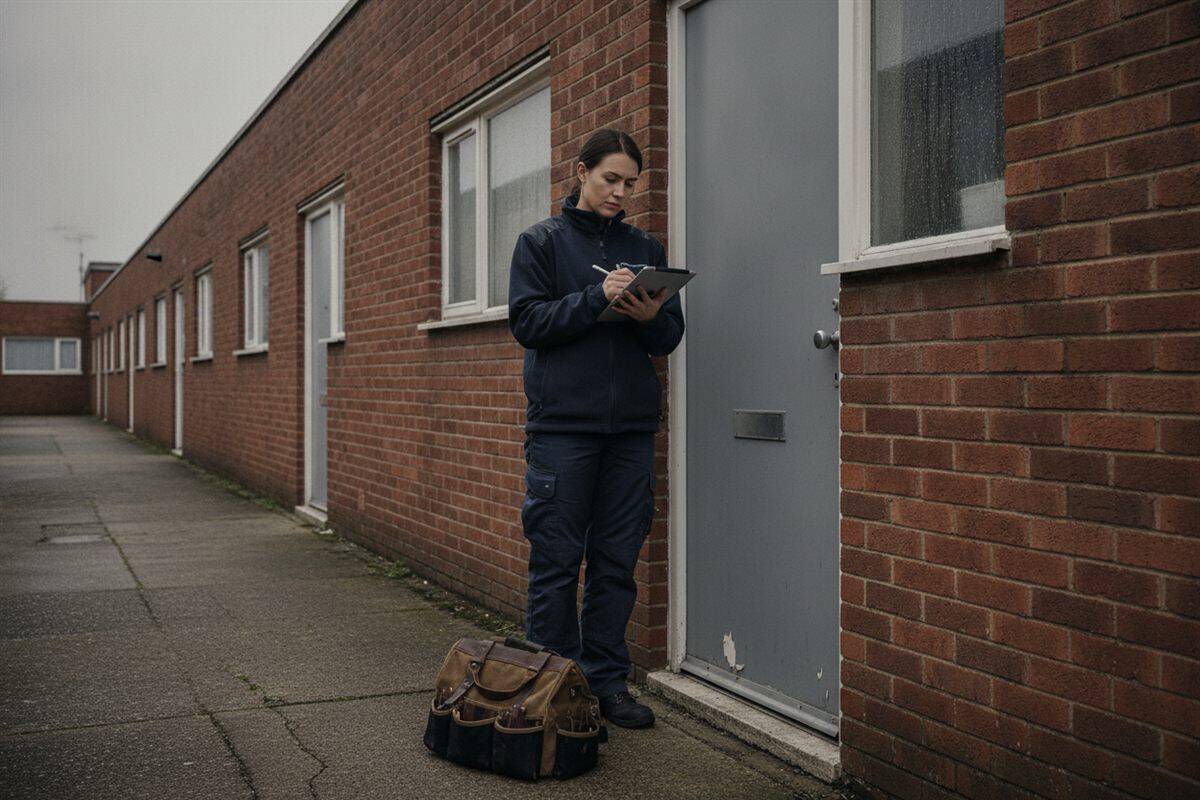
Landlords have a defence if they can prove they used “all reasonable endeavours” to comply. Failed access is the most common reason they will rely on it, and your records are their evidence. The guidance suggests leaving the tenant a notice that says a visit was attempted and gives contact details to rebook. It also says landlords should make sure their contractors do the same.
Log each attempt with the date, the time, how you tried to make contact and what you left behind. Three knocks with nothing written down will not help anyone in front of the Housing Ombudsman. Three logged attempts, each with a time and a card left, show the delay was not the landlord’s.
Phase 2 will push more structural, falls and electrical remedials through the same deadlines. The usual rules still apply alongside them. A repair to a structural or falls hazard is construction work, so your duties under CDM 2015 do not change because the landlord is in a hurry. New circuits or a consumer unit replacement are notifiable under Part P of the Building Regulations. And in a lot of older council stock, check for asbestos before drilling to fix a handrail or open up a ceiling. Our guide to asbestos checks before work covers what to ask the landlord for first.
The guidance also warns that a repair must not create a new problem. Its own example is ventilation for damp and mould that damages the fire compartmentation of the flat.
The guidance advises landlords to review their contractor agreements. Bring these points to that conversation before your client does:
Get the answers in writing, and price any out-of-hours or make-safe call-out before you do the first one. If the landlord is slow to pay for that extra work, our article on claiming late payment interest sets out what you can add to an overdue invoice.
THE HAZARD THAT WASN’T ON THE JOB SHEET
Know which operative is in which flat today, and what they found there.
When a landlord’s 24-hour clock can start with what your operative sees, the office needs to hear about it the same morning. SendWork assigns jobs to your team from your phone and keeps the visit notes with each job, so a hazard report and the no-access attempts are easy to find when the client asks.