Go to SendWork
— Free for 7 Days
Full access
Full access

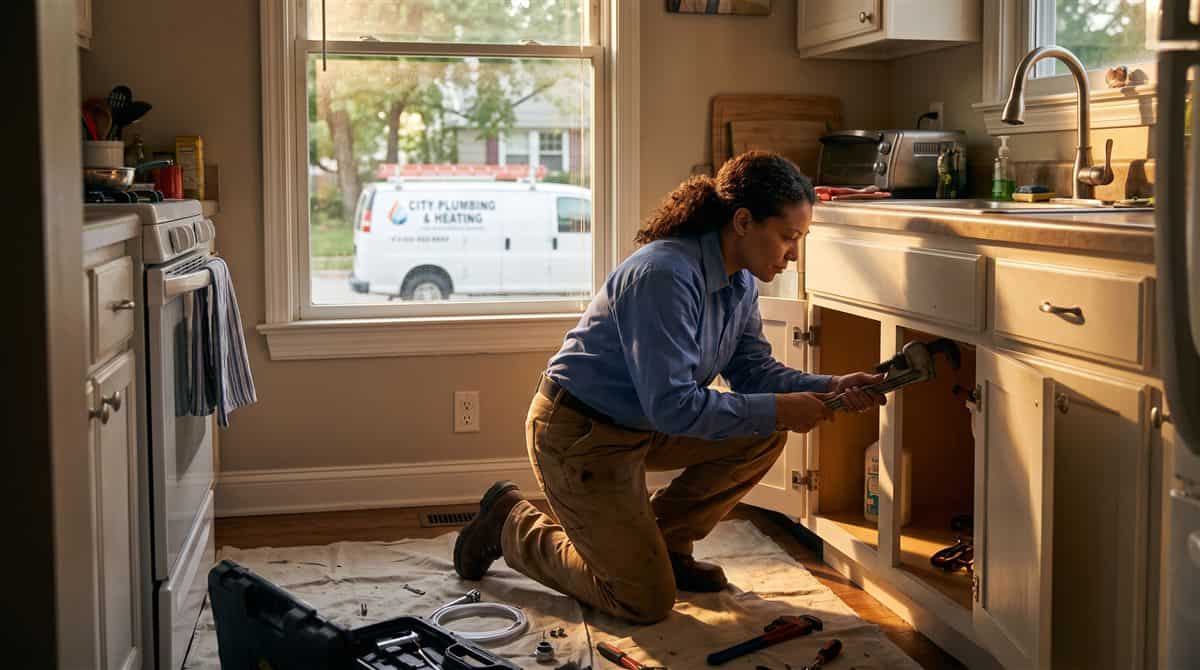
Real 2026 US plumber rates — service calls, hourly, per-job, and emergencies — plus how to price nights so your best hours actually pay.
The customer who calls at 9 p.m. with water spreading across the kitchen floor is not price-shopping — and yet plenty of plumbers still quote that call like it is a Tuesday-morning faucet swap. That instinct costs real money. Setting your plumber rates USA correctly means knowing the difference between a routine service call and an emergency, then charging each one for what it actually is. Get it wrong in either direction and you either scare off good customers or work nights for daytime pay.
Below are the real 2026 numbers plumbers charge across the United States — hourly, per job, and after hours — plus how to build a rate that survives a bad week. Treat the ranges as a market map rather than a rulebook, because pricing shifts with your region, your license level, and whether you run residential service or commercial work. What matters is that you can defend your number instead of apologizing for it.
Standard hourly billing for a plumber runs $45 to $150 an hour, with master plumbers generally landing between $75 and $125 and commercial work averaging around $85. Most shops open with a service-call fee of $50 to $200 that typically covers the first hour, and many enforce a flat minimum of $200 to $250 on small repairs so a ten-minute fix still pays for the truck to roll. For longer trips, a travel charge of roughly $1 to $2 per mile past the first ten miles is common.
For a labor-market anchor, the U.S. Bureau of Labor Statistics reports the median wage for plumbers, pipefitters, and steamfitters at $62,970 a year — about $30.27 an hour — as of May 2024. Keep in mind that this is the technician’s wage, not the shop’s billing rate. The distance between the two covers insurance, licensing, vehicle costs, unbillable hours, and the profit that keeps the doors open.
| Plumbing work (2026) | Typical US price |
|---|---|
| Service-call fee (includes first hour) | $50–$200 |
| Standard hourly | $45–$150/hr |
| Master plumber | $75–$125/hr |
| Flat-rate minimum (small repair) | $200–$250 |
| Drain clearing | $100–$275 |
| Faucet install | $120–$300 |
| Toilet install | $250–$750 |
| Water heater replacement | $600–$1,800 |
| Emergency / 24-hour | $195–$260/hr |
This is where most plumbers quietly leave money behind. A 24-hour or after-hours call commonly bills $195 to $260 an hour, and weekend or holiday work often runs at double or triple your standard time. The logic is simple: you are trading your evening, your family time, or your sleep, and the customer with an active leak values speed far more than a discount. As a result, pricing emergencies at your normal daytime rate is not “being fair” — it is subsidizing other people’s midnight problems with your own hours.
Consider a common field scenario. A homeowner calls at 8 p.m. about a failed water heater; you drive out, confirm the tank is done, and replace it the next morning. If you billed that after-hours diagnostic trip at your daytime rate, you covered your fuel and maybe your time — nothing more. Meanwhile, the plumber who charges a defined emergency rate captured the value the customer was already willing to pay. Charging for urgency is not gouging; it simply recognizes that the same job is worth more at 8 p.m. than at 8 a.m.
Flat-rate pricing beats hourly for most residential service work, because it removes the customer’s fear of a running meter and rewards you for being fast. However, a flat rate is only safe once you know your loaded hourly cost — the true all-in cost of putting one billable hour in front of a customer. That single number sits under every quote you give, so it is worth walking through how to calculate your loaded hourly rate as a plumber before you publish a flat-rate menu.
From there, build a short price book for your fifteen most common jobs, set a real emergency multiplier, and review both at least once a year. And get the number out fast, because a sharp rate still loses to a slow one — slow estimates quietly lose jobs to whoever quoted first. Rates and rules also vary by state, because plumbing licensing is handled at the state level and what a customer expects in San Francisco is not what flies in rural Ohio. Therefore, treat national ranges as a guide and localize the final number. As more trades are added, you can benchmark against other USA pricing guides in this series.
Geography moves plumbing prices as much as the job itself does. In dense, high-cost metros, standard hourly rates sit near the top of the range and emergency premiums climb steeply, because a burst line at midnight in a city high-rise is a very different call than the same fix in a rural ranch house. Older housing stock also lifts prices: cast-iron drains, galvanized supply lines, and cramped access all turn a “simple” repair into a longer, riskier job that deserves a higher number.
Commercial and new-construction work follows its own logic, often bid by project or contract rather than by the hour. Wherever you operate, the smart approach is to benchmark against the plumbers who serve your exact market and housing type, then price from your loaded cost rather than matching whoever quoted the customer first. That way a busy zip code lifts your rate instead of just your workload, and a slow week does not tempt you into giving the work away.
Most plumbers do not have a pricing problem so much as a visibility problem — they cannot see, in the moment, whether a given job actually made money. So fix three things this quarter to protect your plumber rates USA from erosion. First, set a written emergency rate and stop quoting nights like weekdays. Second, put a real minimum on small jobs so a service call always covers the truck. Third, rebuild your flat-rate menu from your loaded cost rather than from memory. Those three moves defend the hours you least want to give away, and they take an afternoon to set up.
The invoice should leave before you leave the job site.
SendWork’s AI office manager turns a finished job into a sent invoice on the spot — no gap between the handshake and the payment, and no paperwork waiting at your kitchen table.
Price the routine work fairly, price the emergencies for what they are worth, and let the numbers — not the clock — tell you when a job paid off.