Go to SendWork
— Free for 7 Days
Full access
Full access

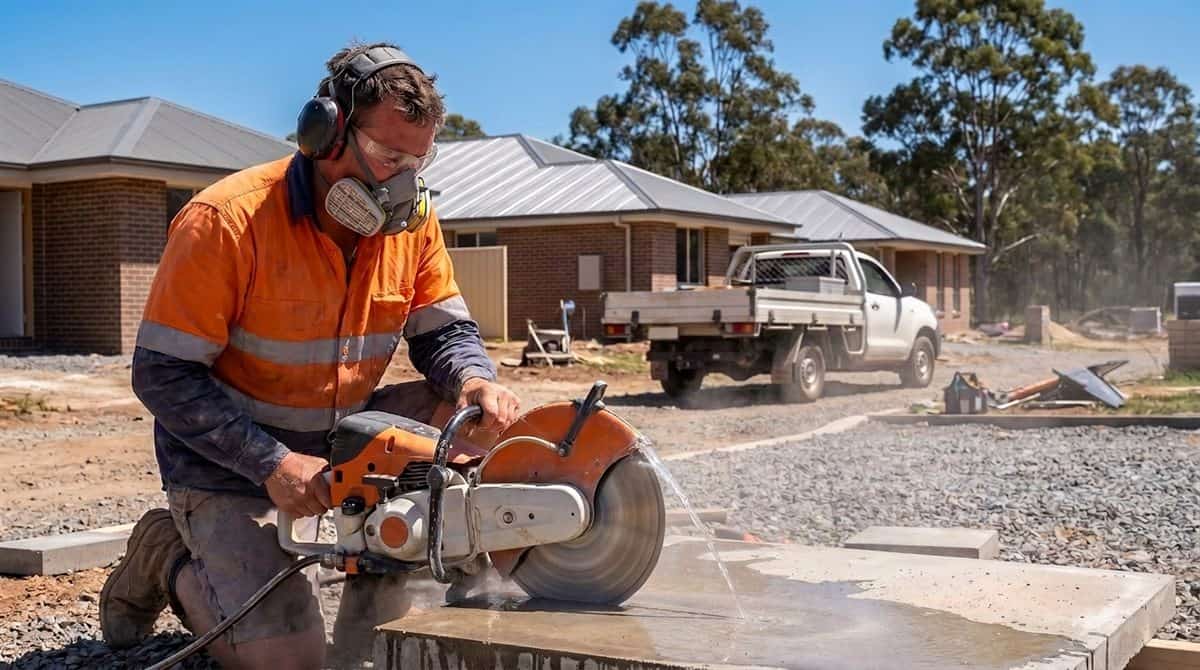
Australia's exposure standards become workplace exposure limits on 1 December 2026. Here's which trade dust and fume limits fall, why silica holds, and what to check first.
On 1 December 2026, Australia’s workplace exposure standards become workplace exposure limits. The new name is the smallest part of the change. When the list switches over, the numbers for some of the most common dusts and fumes on a building site come down. A few substances get a limit for the first time. And 33 chemicals lose theirs altogether.
Until 30 November, you work to the Workplace exposure standards (WES) list. From 1 December, the Workplace exposure limits (WEL) list replaces it, as the Commonwealth, states and territories write it into their work health and safety laws. Safe Work Australia gives a plain reason for the new name: these are limits, and exposure must not go over them.
Most values on the list have not moved, so the job between now and December is narrower than it sounds. Work out which of the substances your crews actually generate are changing, and which of your existing monitoring results you have only ever read against the old numbers.
An exposure limit is the airborne concentration of a substance that a worker’s exposure must not exceed. It can take three forms: an eight-hour time-weighted average, a 15-minute short-term exposure limit, and a peak limitation, a maximum measured over the shortest practical period of up to 15 minutes. Some substances carry more than one, and all of them apply in the worker’s breathing zone, a hemisphere with a 300 mm radius in front of the face.
The duty sits with the business running the work. A person conducting a business or undertaking must eliminate the risk from airborne contaminants where that is reasonably practicable, or otherwise minimise it so far as is reasonably practicable. They must also make sure no one’s exposure goes over the limit. A respirator only counts towards meeting a limit once the reasonably practicable higher-order controls are in place and the worker wears it correctly.
Victoria runs its own occupational health and safety laws. There, the list applies through the definition of exposure standard in the OHS Regulations 2017, and the duty falls on the employer. WorkSafe Victoria’s guidance is that the WEL list will operate nationally from 1 December.
One more point before the numbers. A limit is not a line between safe and unsafe. Safe Work Australia notes that exposure below a limit can still affect some people. That is why the duty to eliminate or minimise keeps applying when you are under the number.
Safe Work Australia’s changes table lists only the values that are new or changing on 1 December. It is not the full list, so a substance’s absence from it means its limit is staying put. The table below picks out the entries most likely to matter on residential and commercial jobs. Silica is not changing, so it is not in Safe Work Australia’s changes table, but it sits in the last row for comparison.
| Substance and where it comes from | Until 30 Nov (8‑hour TWA) | From 1 Dec (8‑hour TWA) |
|---|---|---|
| Portland cement Cement, concrete, mortar and grout |
10 mg/m³ | 1 mg/m³, respirable dust |
| Softwood dust Cutting and sanding pine and other softwoods |
5 mg/m³, plus a STEL of 10 mg/m³ | 2 mg/m³, with no STEL |
| Bitumen fumes Hot bitumen and asphalt work |
5 mg/m³ | 0.5 mg/m³ |
| Diesel particulate matter Diesel engines and plant |
No listed limit | 0.01 mg/m³, as respirable elemental carbon |
| Mineral turpentine Thinning paint and cleaning brushes and guns |
480 mg/m³ | 296 mg/m³, plus a STEL of 593 mg/m³ and a new ototoxic notation |
| Methyl bromide Fumigation |
5 ppm | 1 ppm |
| Respirable crystalline silica Cutting, drilling, grinding or polishing concrete, brick, tile and stone |
0.05 mg/m³, respirable dust | 0.05 mg/m³, respirable dust, unchanged for now |
TWA is the average over an eight-hour working day. STEL is a short-term exposure limit, averaged over 15 minutes. Under the WEL list, a dust or fume limit covers the inhalable fraction of particles unless it says respirable. Methyl bromide is a gas, so its limit is in parts per million.
Two rows need more than a glance. The new Portland cement limit applies to respirable dust, the very fine particles that reach deep into the lungs, so any sampling you rely on has to have measured that fraction. Mineral turpentine picks up the new ototoxic notation, which flags substances where exposure alongside noise can increase the risk of hearing loss. Think of a painter thinning coatings beside a running compressor.
Fumigation gets its own mention because SafeWork NSW names fumigators, quarantine contractors and people unpacking shipping containers as the workers most at risk from methyl bromide. If you fumigate, the product records and safety data sheets behind your commercial pest control documentation show which jobs used it.
Safe Work Australia’s review of the standards identified 33 airborne contaminants as non-threshold genotoxic carcinogens. These chemicals can cause genetic damage and may lead to cancer, and no practical safe level of exposure can be set for them. From 1 December they have no exposure limit at all. Where they are present, you must eliminate them, replace them with a safer alternative where possible, or reduce the risk as much as reasonably practicable.
They include chromium VI compounds such as zinc chromates, coal tar pitch volatiles, polycyclic aromatic hydrocarbon mixtures containing benzo[a]pyrene, 1,3-butadiene, ethylene oxide and vinyl chloride monomer. Check the safety data sheets for the products on your jobs against the full list rather than guessing from a product name.
For these chemicals, an air monitoring result does a different job. Under the old list, a result below the standard settled one part of the duty. For these 33 there is no number left to be under. Monitoring becomes a check that your controls are working, not proof that you comply.
Respirable crystalline silica does not change on 1 December. It is one of nine chemicals whose proposed new limits went to a separate impact analysis at the request of WHS ministers. In June 2026, Safe Work Australia reported that the ministers had not reached a majority in support of new limits for the nine, and that a majority had asked for further work.
So all nine keep their current values when the workplace exposure limits take effect. Silica stays at 0.05 mg/m³ as an eight-hour average. The other eight are benzene, chlorine, copper (fumes, dusts and mists), formaldehyde, hydrogen cyanide, hydrogen sulphide, nitrogen dioxide and titanium dioxide.
Unchanged is not the same as relaxed. WorkSafe Victoria recommends a precautionary approach: keeping silica exposure below 0.02 mg/m³ as an eight-hour average. In New South Wales, businesses must add each worker doing high-risk crystalline silica processing to the silica worker register within 28 days of that worker starting the work.
You must arrange air monitoring if you are not certain on reasonable grounds whether exposure is over the limit, or if you need it to work out whether there is a risk to health. The switchover can turn a reassuring old result into a problem. A bitumen fume result that sat comfortably under 5 mg/m³ can still be well over 0.5.
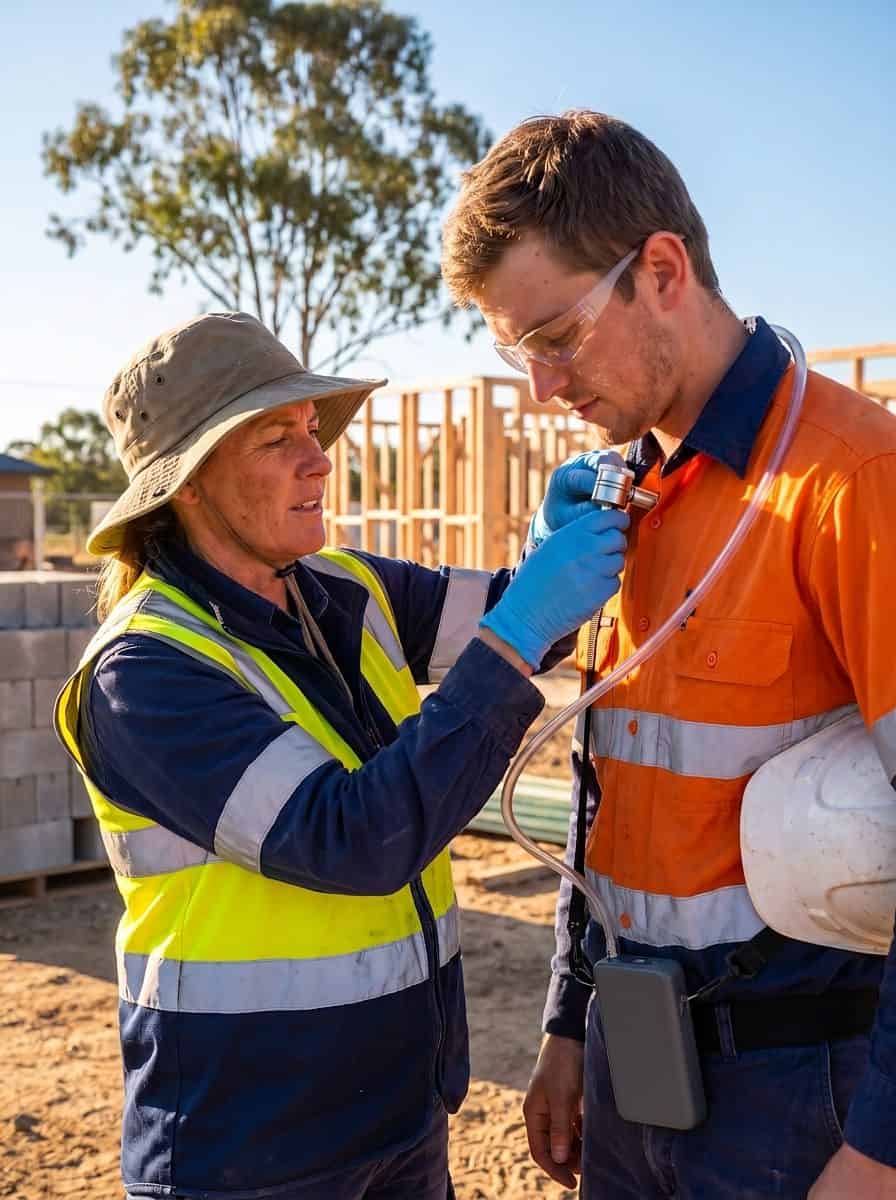
Some of the new limits are so low that current sampling and analysis may not measure down to them. For those, WorkSafe WA’s guidance is to have a competent person review the control measures, check they are working and maintained, and set a schedule for reviewing them again. An occupational hygienist can scope the monitoring or the review.
Run each substance your crews generate through these checks, in order.
If you work across state lines, check each regulator’s page. WHS ministers agreed one switch date, 1 December, but each jurisdiction adopts the workplace exposure limits through its own laws.
ON YOUR EXISTING RESULTS
The new limits start on 1 December. Check your results against them before then.
Your existing monitoring results can still help. Read each one against the revised limit, and have a competent person assess any that sit close to it or were sampled on a different basis. SendWork keeps every job, site and client history in one place, so finding the crews and sites a review has to cover is a search, not a memory test.