Go to SendWork
— Free for 7 Days
Full access
Full access

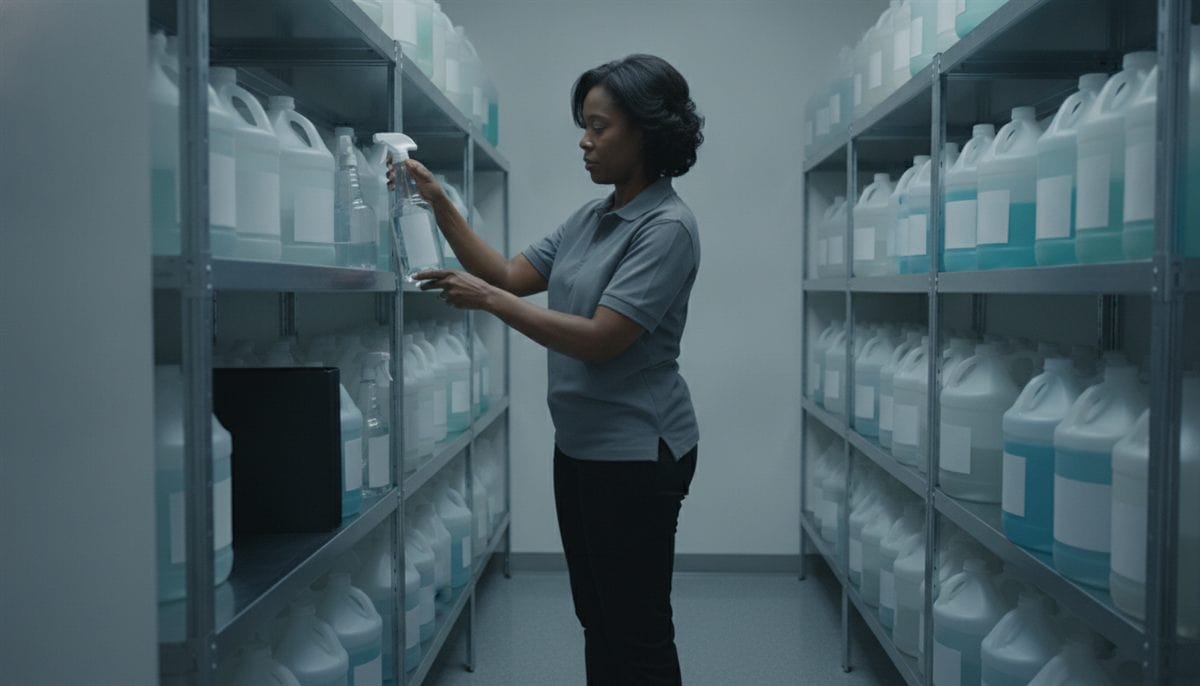
PFAS bans reach your supplier's shelf, OSHA's label deadlines arrive, California janitorial employers register and train, and wages move on January 1, 2027.
The cleaning industry trends that will change your business in 2027 are in your supply closet and your paperwork. More states ban the sale of cleaning products with added PFAS, with Vermont’s ban starting on July 1, 2027 and Connecticut’s and New Mexico’s in 2028. OSHA’s updated hazard communication rule gives employers a November 20, 2026 deadline to update labels and training, and another in 2028. California janitorial employers must register every year and train their crews every two years. And on January 1, 2027, Washington’s minimum wage rises while New York’s stays put.
None of that changes how you clean a floor. It changes which products your supplier can sell you, how you label a refilled bottle and what goes into your next commercial bid. Each point below comes from the statute, regulation or agency notice behind it, as checked in October 2026.
PFAS are long-lasting “forever chemicals.” Several states now ban the sale of cleaning products that contain them on purpose. These are the dates for cleaning products specifically:
| State | Sale ban on cleaning products with intentionally added PFAS | Who it binds |
|---|---|---|
| Minnesota | Since January 1, 2025 | Sellers and distributors |
| Maine | Since January 1, 2026 | Sellers (retailers after notice) |
| Colorado | Since January 1, 2026 (some hospital floor products from 2028) | Anyone who sells or distributes for use in the state |
| Vermont | From July 1, 2027 | Manufacturers |
| Connecticut | Labeling and notice since July 1, 2026; sale ban from January 1, 2028 | Manufacturers and sellers |
| New Mexico | From January 1, 2028 | Manufacturers |
Minnesota’s law, Minnesota Statutes section 116.943, is also known as Amara’s Law. Like the Maine and New Mexico laws, it bans almost every product with added PFAS from January 1, 2032, unless the use is “currently unavoidable.” The Minnesota Pollution Control Agency runs it, and manufacturers had to file their first PFAS reports by September 15, 2026. Colorado’s ban, in SB24-081, uses the words “distribute for use,” which could reach a business that hands products to its clients. That point is unsettled, so ask your supplier rather than assume.
The bans bind the people who make, sell or distribute the products. None of the laws read for this article stops a cleaning company from using stock it already holds. In practice, the change reaches you through your supplier’s shelf.
Take a hypothetical commercial cleaner in Denver reordering floor finish and degreaser for an office account. The distributor can no longer sell a cleaning product with added PFAS into Colorado, so a familiar product may be reformulated or replaced. Check the new product’s safety data sheet before the first job. Then update your secondary-container labels and tell your crew what changed. If a client asks whether your products are PFAS-free, point them to the manufacturer’s statement rather than making the claim yourself.
OSHA’s Hazard Communication Standard is the federal rule that requires chemical labels, safety data sheets and worker training. It is mandatory and sits in 29 CFR 1910.1200. OSHA updated it in 2024, then pushed the compliance dates back four months in a January 2026 rule. Employers have two deadlines:
Until the deadline that applies, you may follow either the old or the new version. Some basics have not changed. A refilled spray bottle needs either the full label or the product name plus words or pictures showing its hazards. The exception is a bottle intended only for immediate use by the employee who filled it. Crews moving between sites may keep safety data sheets at the main location, as long as they can get the information immediately in an emergency.
California’s Property Service Workers Protection Act is a state law that the Labor Commissioner enforces, in Labor Code sections 1420 to 1434. It covers any employer of even one janitor, including through a contract or franchise. Such employers must register with the Labor Commissioner every year. They must also give janitors and their supervisors in-person sexual violence and harassment prevention training every two years. For nonsupervisory janitors, the training must come from a qualified organization.
The penalties are real. An unregistered janitorial employer faces a fine of $100 a day, up to $10,000. A client can be fined too, if it contracts with a janitorial employer not shown as registered in the state’s online database. The fine is $2,000 to $10,000 for a first violation and $10,000 to $25,000 after that. So expect commercial clients to ask for your registration before they sign. The law covers janitors as a federal occupational directory defines them, and whether it reaches residential house cleaners was not confirmed.
On January 1, 2027, Washington’s minimum wage rises to $17.73 an hour. New York’s does not rise in 2027, because one of the “off-ramps” in its law was met. It stays at $17.00 in New York City, Long Island and Westchester and $16.00 elsewhere, with a separate increase for home care aides. If you bid multi-year commercial contracts, build in the increases your state has set.
If you use independent cleaners, the federal test is in flux. The federal test comes from the Department of Labor’s independent-contractor rule under the Fair Labor Standards Act, in 29 CFR Part 795, which its Wage and Hour Division applies. In February 2026 the Department proposed replacing the 2024 version with the 2021 “core factors” test, and no final rule has followed. The 2024 rule still applies in private lawsuits. Keep the reasons each cleaner is independent on file.
The labor pool is large but tight on experience. The Bureau of Labor Statistics puts the median wage for janitors and building cleaners at $17.71 an hour in May 2025. It projects 2% job growth from 2025 to 2035, with about 321,800 openings a year, mostly to replace people who leave. For maids and housekeeping cleaners, the May 2025 median was $17.07 an hour. Our guide to cleaning rates in the USA shows how to turn those wages into a price.
One smaller change reaches anyone who buys aerosol air fresheners in California. The change comes from the California Air Resources Board’s consumer products rule, in 17 CCR section 94509. On January 1, 2027, its limit on volatile organic compounds in manual aerosol air fresheners falls from 10% to 5%. The limit for concentrated aerosol air fresheners falls from 15% to 10%. The rule binds manufacturers and sellers, so expect product changes rather than a new duty for you.
For the payroll and tax rules that reach every trade in 2027, see our overview of 2027 rules for US service contractors. If you are weighing which side of the market to grow, our comparison of commercial and residential cleaning is a good next read.
When the client asks for your registration
Commercial clients buy from the cleaner who answers first and clearly.
A facilities manager comparing bids will ask about registration, training and products. SendWork keeps each client’s history, notes and follow-ups in one place, so the answer and the quote go out the same day.