Go to SendWork
— Free for 7 Days
Full access
Full access

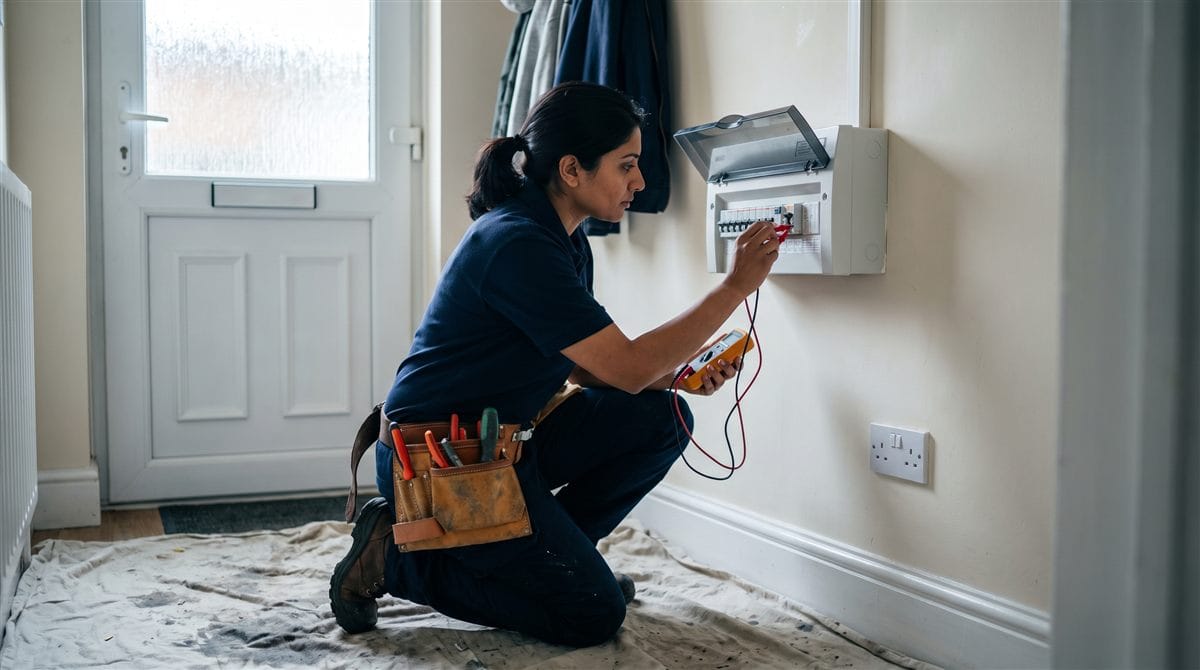
Published day rates for British electricians run from £237 to £400 — because three different pay systems all get called the same thing. How to tell a JIB wage from a subcontract rate from a charge-out rate, and build your own number.
Search electrician rates UK and four different numbers arrive before you finish scrolling. £237 a day. £312. £335. £400. All four were published by credible outfits. All four were current in 2026. Not one of them is the number that belongs on your next quote.
That spread is not sloppiness. The guides measure three different things and call them one thing. An employed wage, a subcontract day rate and a customer-facing charge-out rate all get filed under the same label. Benchmark yourself against the wrong one and you will work a year at two-thirds of what the job was worth. You will not find out until January, when you sit down with your own accounts.
Figures below were checked in July 2026 against published 2026 rate data. Rates move. Treat every number here as a market range to test your own costs against, not a price list.
Three separate pay systems operate in British electrical work at the same time, and each generates its own honest average.
The first is the Joint Industry Board agreement. The JIB negotiates national rates with the Electrical Contractors’ Association and Unite. From 5 January 2026 those rates rose by 3.95%, the first year of a three-year deal, with 4.6% agreed for 2027 and 4.85% for 2028. It is the closest thing the trade has to an official figure. It is also the least relevant to most readers. JIB membership is voluntary, and the agreement covers roughly 10,000 electricians across about 550 contractors — a small slice of the workforce, and almost none of the self-employed.
The second is the subcontract day rate. That is what an agency or principal contractor pays you to work on their site. It sits well above the JIB hourly equivalent. It also carries no holiday, no sick pay, no pension and no guarantee of next week.
The third is the domestic charge-out rate — what the customer pays you. It is the highest of the three. It is also the only one that has to fund your van, tools, insurance, certification, unpaid quoting time and profit.
| What it measures | Typical 2026 figure | Who it applies to | What it does not cover |
|---|---|---|---|
| JIB graded rate (employed) | Electrician £18.38/hr · Approved Electrician £20.08/hr, from 5 January 2026 | Electricians employed by JIB-member firms | Nothing — holiday, sick pay and pension sit on top, paid by the employer |
| Subcontract day rate | £220–£350 depending on region and sector | Self-employed sparks on someone else’s site | Holiday, sick pay, pension, downtime between contracts |
| Domestic charge-out rate | £45–£65/hr · £200–£400 per day | Self-employed working direct with homeowners and landlords | Everything — van, tools, insurance, scheme fees, quoting time, profit |
Grades above Approved Electrician are left out deliberately: the published Technician figure moves depending on whether transport is provided, so a single headline number would be misleading. The Electrician and Approved rates are consistent across sources.
Read down that final column and the confusion resolves itself. A JIB rate is a wage with the overheads already stripped out and carried by somebody else. A domestic charge-out rate is gross revenue with every overhead still inside it. Comparing the two is like comparing your salary to your turnover. It happens constantly on trade forums, usually in the direction that makes the self-employed spark feel overpaid.
Every published electrician rates UK average is a labour-only figure. The costs that decide whether your year works sit outside it. Three of them are specific to this trade.
Certification is a running cost, not a one-off. Notifiable domestic work has to be certified. In practice that means competent person scheme membership, with annual assessment and renewal fees. Price without that in your overhead and you are pricing someone else’s business. What counts as notifiable is set out in the Part P rules for electrical work. Those rules change at the Scottish and Northern Irish borders.
Site access has a price. Commercial and site work pays better than domestic. It asks for a recognised competence card first — ECS for electricians, not the general construction scheme. That distinction is covered in the guide to construction site cards. Card, test and qualification renewals are an overhead you carry whether or not the commercial work lands.
Unbilled hours are the largest hidden cost of all. Quoting, chasing materials, writing certificates and driving are not billable. On domestic work they routinely consume a day a week. A £300 day rate across five days is £1,500 of turnover only if all five days are on the tools. They rarely are.
Region matters, though less than the London headlines suggest. Published 2026 breakdowns put London day rates roughly in the £280–£380 band and the north of England and Wales nearer £200–£260, with the guides disagreeing by £50 or more on the same region. Elec-Mate’s 2026 breakdown makes the point that ends the argument: once housing, fuel and congestion charging are counted, a spark on £280 a day in London can keep less than one on £240 in the Midlands. Moving south to chase the rate is rarely the win it looks like on a spreadsheet.
Published electrician rates UK averages are useful for one purpose. They tell you whether the number you built yourself is wildly out of step with your market. They are not a substitute for building it.
The sum has two halves, and almost everyone gets the second one wrong. First, total what the business must recover in a year. Then divide by the days you will actually be on the tools — not the days in the year. Here is the shape of it for a self-employed domestic spark. The figures are illustrative; the method is the point.
| What has to be recovered in a year | Illustrative | Your figure |
|---|---|---|
| Target earnings, before tax | £42,000 | |
| Van — finance, fuel, insurance, servicing | £7,200 | |
| Public liability and tool insurance | £900 | |
| Competent person scheme — membership and annual assessment | £600 | |
| Test equipment, calibration, replacement tools | £1,100 | |
| Accountancy, phone, software, banking | £1,400 | |
| Pension | £2,400 | |
| CPD, wiring regs updates, ECS card renewal | £500 | |
| Total to recover | £56,100 |
Now the divisor. This is where the money quietly disappears.
| Working out billable days | Days | Running total |
|---|---|---|
| Days in the year | 365 | 365 |
| Less weekends | −104 | 261 |
| Less five weeks’ holiday | −25 | 236 |
| Less bank holidays | −8 | 228 |
| Less illness, at a conservative estimate | −5 | 223 |
| Less quoting, admin and materials runs — about a day a week | −40 | 183 |
£56,100 divided by 183 billable days is £307 a day. Divide the same £56,100 by a notional 250 working days and you get £224 — the number most sparks talk themselves into. That £83 gap is not a rounding error. It is 27% of the rate, and it is the difference between a business that funds a pension and one that funds a pension in theory.
Then sense-check the result against what your local market bears. Land above it and you need a reason the customer can see: a specialism, a response time, a guarantee. Land below it and the problem is usually not your rate. It is your billable-day count.
ON THE DAYS YOU NEVER BILLED
If you can’t answer “am I profitable this month?” in five seconds, your system is broken.
Your day rate is only half the sum. The other half is how many days turned into invoices. Most sparks find that number out far too late.
The same arithmetic runs differently in a trade where small jobs dominate the diary — for plumbing it is the call-out fee rather than the day rate that decides whether the visit paid, which is set out in the guide to plumber rates. If you are weighing this trade against the others before committing to a number, the five-trade rate comparison sets out what each published spread is really measuring. More rate benchmarks for British trades sit in UK pricing and market rates. The compliance side is in UK licensing and regulations. The JIB’s own agreement is published in the JIB Handbook.