Go to SendWork
— Free for 7 Days
Full access
Full access

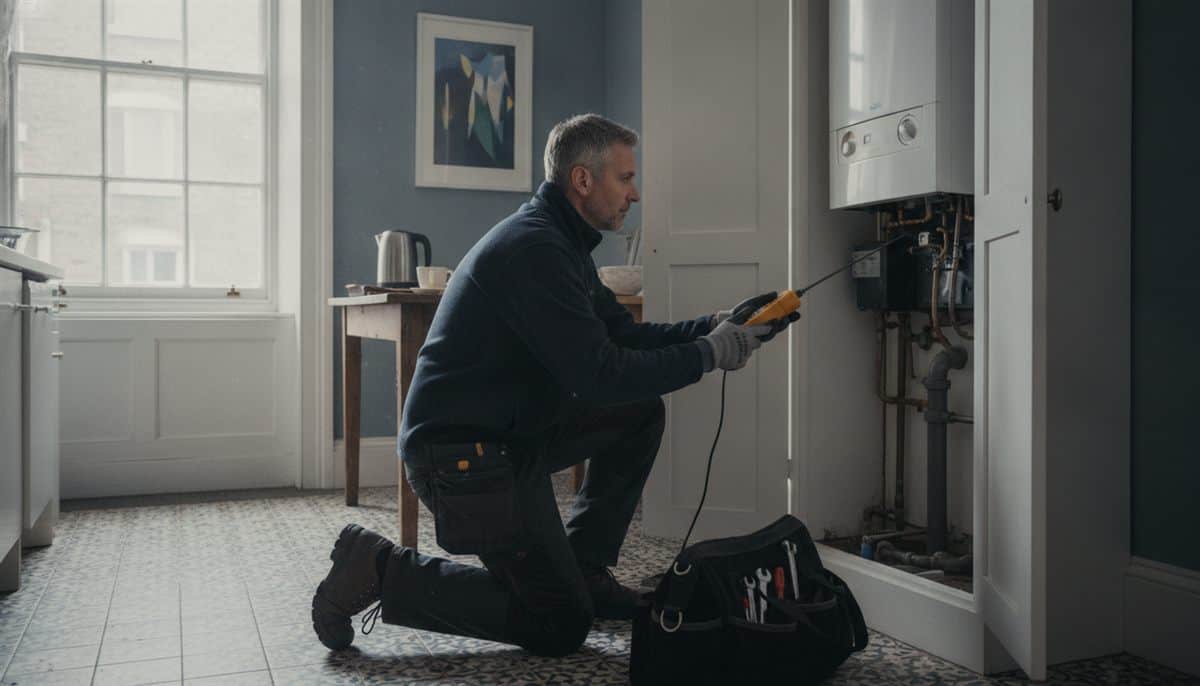
The nine details a landlord gas safety record must carry under regulation 36, how the two-month early window keeps the landlord's deadline, what to write when an appliance is unsafe, and how long the record is kept.
A landlord gas safety record is the document you leave behind after the annual check on a rented home. The law fixes nine things it must say. It also fixes when the next check is due, and that date can stay put even if you come back up to two months early. Get the record right and the landlord can prove the check happened. Get the date right and you keep their property on the same week every year.
This applies in England, Wales and Scotland. The landlord has the duty to arrange the check, but you fill in almost every line of the record, so the detail matters on your side of the job too.
The Gas Safety (Installation and Use) Regulations 1998 are the main gas safety law for homes and workplaces in Great Britain. The government made them under the Health and Safety at Work etc. Act 1974, and the Health and Safety Executive (HSE) enforces them. They are a legal requirement, not industry guidance. Regulation 36 covers landlords. It requires a safety check on each gas appliance and flue the landlord provides within 12 months of installation, then at intervals of no more than 12 months. The landlord must also keep a written record of each check.
Only a Gas Safe registered engineer can carry out the check. Gas Safe Register is the official list of gas businesses that HSE has approved under regulation 3(3), and Capita runs it on HSE’s behalf. Many landlords still call the record a “gas safety certificate” or a “CP12”. HSE treats those as older names for the same thing. There is no official form, so any layout works as long as it carries the required details.
Regulation 36(3)(c) lists them. Here they are in the order the law gives, with what each one means on a real job.
Two things are not on the list. An expiry date and an “earliest next check” date are optional, according to HSE’s L56 Approved Code of Practice. Adding them helps the landlord show their dates, and many engineers print both. HSE also says to issue the record once every check is complete. Don’t hold it back while you wait for a repair.
The landlord must arrange the check and keep the record. A tenancy agreement can’t pass that duty to the tenant, HSE says. A letting agent can take it on by contract, and then the same duties apply to the agent. Your duties sit alongside theirs. You need Gas Safe registration and competence for the appliances you check. You also have to tell the responsible person about any appliance you think is dangerous.
The check covers the appliances and flues the landlord provides. A gas appliance the tenant owns and can take with them is outside the definition in regulation 36(1). HSE still recommends checking every flue connected to a gas appliance, including one that only serves a tenant’s own fire. If you note a tenant-owned appliance on the record, mark clearly that it wasn’t part of the landlord’s check.

Before April 2018, an early check moved the deadline forward. Regulation 36A changed that. A check you complete in the two months ending with the deadline date now counts as a check on the deadline date itself. In HSE’s words, you can check “10 to 12 calendar months after the previous check” and keep the original date.
Take an illustrative property in Leeds whose last check was on 14 January 2026. Its deadline is 14 January 2027, so the window opens in mid-November 2026. Book the visit for 3 December 2026 and you write 3 December on the record. The next deadline is still 14 January 2028, not 3 December 2027.
Come back on 1 November 2026 instead, before the window opens, and the clock resets. The next deadline becomes 1 November 2027. The same thing happens if the landlord can’t produce the earlier records. In that case HSE takes the deadline as 12 months from the latest check.
The regulations don’t say whether the last day is the 13th or the 14th of the month. So don’t book on the boundary day. Aim for a week inside the window at either end.
A new boiler fitted in March would normally need its first check by the following March. If the rest of the house has its check every January, that means two visits a year. Regulation 36A(2) allows a one-off fix. The new appliance’s check can run up to two months after its own deadline, but only to line it up with the other appliances in the same property. The landlord can use it once per appliance, so diary the aligned date when you fit it.
The Gas Industry Unsafe Situations Procedure, known as GIUSP, sets out how to handle an unsafe appliance. The Institution of Gas Engineers and Managers (IGEM) publishes it as IGEM/G/11, and the current text is Edition 2, last amended in July 2025. It is industry guidance that HSE supports, not a regulation. It has two categories. IGEM dropped “Not to Current Standards” from the procedure, because those situations aren’t unsafe.
Either way, complete a warning notice and ask the person present to sign it. Then send details in writing to the landlord or agent if they weren’t there. On the record itself, the defect goes in the safety defect line, and anything you did goes in remedial action. Issue the record that day. HSE calls it a living document, and the landlord adds the follow-up repair once it’s complete.
Reporting to HSE is a separate, narrower duty than the ID label. The Reporting of Injuries, Diseases and Dangerous Occurrences Regulations 2013, known as RIDDOR, are a legal requirement that HSE enforces. Under regulation 11(2), your business must report a dangerous gas fitting within 14 days. That applies when its design, installation, modification or servicing could have caused death, unconsciousness or a hospital visit. A fitting that is dangerous only because nobody maintained it isn’t reportable under that rule, according to IGEM/G/11. You can still send it to HSE as a concern.
An existing tenant must get a copy of the landlord gas safety record within 28 days of the check. A new tenant must get one before they move in. For a stay of 28 days or less, the landlord can display a copy in the property instead. A copy can go by email if the tenant is happy with that, though they can still ask for paper. With the landlord’s agreement, you can send it to them directly.
Digital records are fine, HSE says, if you can print them when needed and they stay secure. They must also identify the engineer who did the check, such as with an electronic signature or your licence number. The landlord must keep each record until two further checks have taken place. Several HSE web pages still say two years, which was the rule before 2018. The two-year period now applies only to an appliance the landlord has taken out. Keep your own copy as well. IGEM/G/11 advises engineers to hold records for at least six years in case of a later claim.
Northern Ireland has its own rules, the Gas Safety (Installation and Use) Regulations (Northern Ireland) 2004. They have no two-month window, and landlords keep each record for two years from the check.
Back to the January example. Your record dated 3 December 2026 lists the boiler and hob, with no safety defects. The landlord’s next deadline is 14 January 2028, so their window opens in mid-November 2027. Put that window on the record if your form has space. Then book the next visit for the first week of December 2027, well inside it, rather than the week of the 14th.
Our guide to gas engineer rates explains why a property with several appliances needs more than a flat fee. If the register itself is the question, our Gas Safe registration guide covers what the card does and doesn’t prove. And when the check ends with a condemned boiler going in the van, read our guide to waste carrier registration first.
INSIDE THE TWO-MONTH WINDOW
A check booked on the right week keeps the landlord’s date for another year.
The window only helps if someone remembers it in November. SendWork keeps each property’s next visit in your schedule with a reminder, so the January deadline turns into a December booking.