Go to SendWork
— Free for 7 Days
Full access
Full access

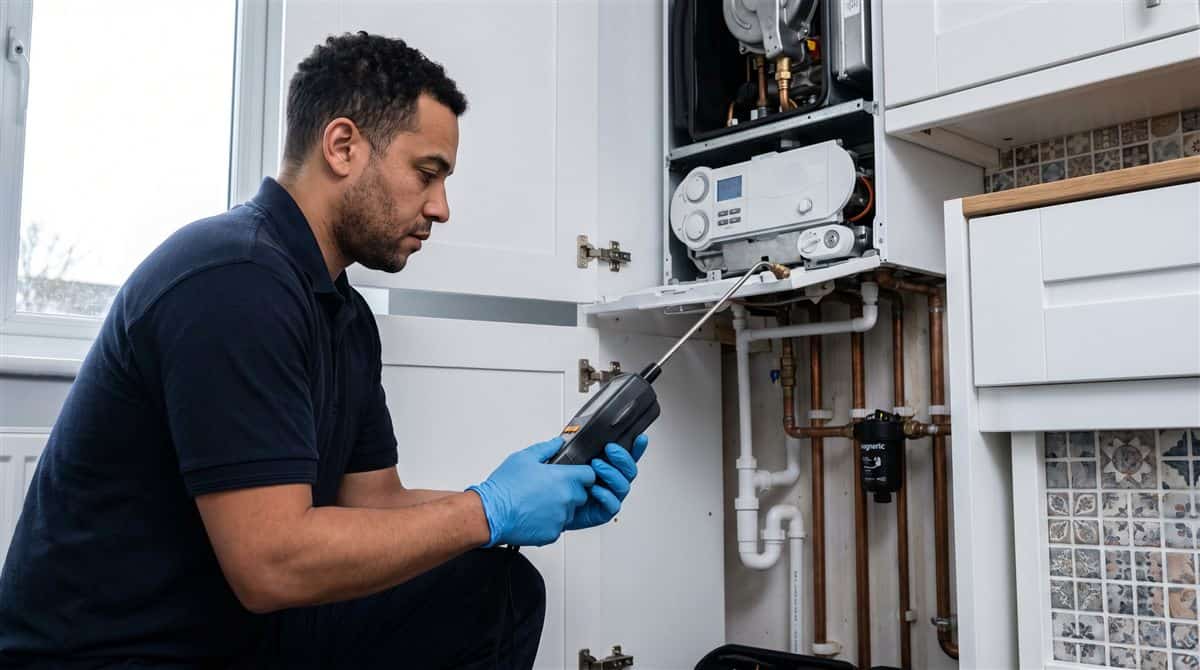
A £100 boiler service is not a £100-an-hour job. Why Gas Safe registration is a cost floor rather than a premium, and where the service visit loses money.
A £100 annual boiler service is not a £100-an-hour job. It is £100 for twenty-five minutes of driving, forty-five minutes at the appliance, and ten minutes writing up the paperwork. It also has to carry a share of the registration that made you legal to take the casing off at all. Published gas engineer rates for 2026 put the national day figure somewhere between £300 and £430. The service visit is where that day rate quietly goes to die.
Gas is the only domestic trade where the licence to work is an annual, non-negotiable cost. It arrives whether or not a single gas job comes in. Treat it as a credential rather than an overhead and you will work a fully booked year at somebody else’s margin, without ever seeing the moment it went wrong.
Rate figures here were checked in July 2026 against published 2026 UK survey and directory data. They are market ranges for testing your own costs against — not a tariff, and not stable.
THE 2026 MARKET IN FOUR FIGURES
£300–£380 — the typical national day rate. London and the South East run 30–45% above the midpoint; Northern Ireland, Wales and the North East sit 15–20% below.
£100 — the average annual boiler service in 2026, up from around £62.50 in 2025. That is the sharpest year-on-year move of any routine gas job.
£75 — the average call-out charge, rising to £150 or more outside normal hours.
£165 — the average breakdown repair, inside a range of roughly £80 to £250.
Those four figures come from different kinds of source. They do not carry equal weight. Day rates are a trade-side survey number, reported by engineers about themselves. Service and repair averages are consumer-facing, reported by what customers actually paid. The gap between the two is not an error. It is the overhead, sitting in the middle, belonging to you.
Every gas engineer knows the registration is compulsory. Fewer price as though it were.
The cost is not one line. It is annual registration for the business, plus a fee for each engineer on it. Add ACS reassessment on a five-year cycle, annual calibration on the flue gas analyser, and insurance. Then add the unbilled hours spent on records that have to exist whether or not anyone ever asks to see them. None of it is optional, and none of it scales down in a quiet quarter. What the registration covers and who must hold it is set out in the guide to Gas Safe registration.
Here is the part that gets mispriced. That overhead is usually treated as the justification for charging above a plumber — a premium earned by the qualification. It is the opposite. It is the amount you must clear before your rate starts behaving like a plumber’s. A general plumber without gas tickets carries none of it. That is exactly why the two trades cannot be benchmarked against each other, and why borrowed gas engineer rates rarely survive contact with your own accounts. The logic for that trade sits in the guide to plumber rates, where the call-out fee rather than the day rate decides whether the visit paid.
| Job | Typical 2026 range | What decides where you land in it |
|---|---|---|
| Annual service | £60–£120 | Travel radius, and whether certificate admin is priced or absorbed |
| Landlord certificate, single appliance | £60–£120 | Appliance count; multi-appliance properties should never be flat-rated |
| Breakdown repair | £80–£250 | Diagnosis time and parts, often folded into the call-out and lost |
| Power flush | around £575 plus VAT | Radiator count and system condition |
| Combi replacement, supply and fit | £1,500–£3,500 | Boiler specification and pipework; allow two days minimum |
| Full heating system | £3,500–£6,000 | Property size, radiator count, controls specified |
Read that table by margin rather than by headline, and the shape of a gas year changes. Published gas engineer rates flatten all of this into one figure. Installation carries the largest numbers and the largest risk of overrun. Servicing carries the smallest numbers and the most reliable diary. Breakdown work pays best per hour and worst per evening.
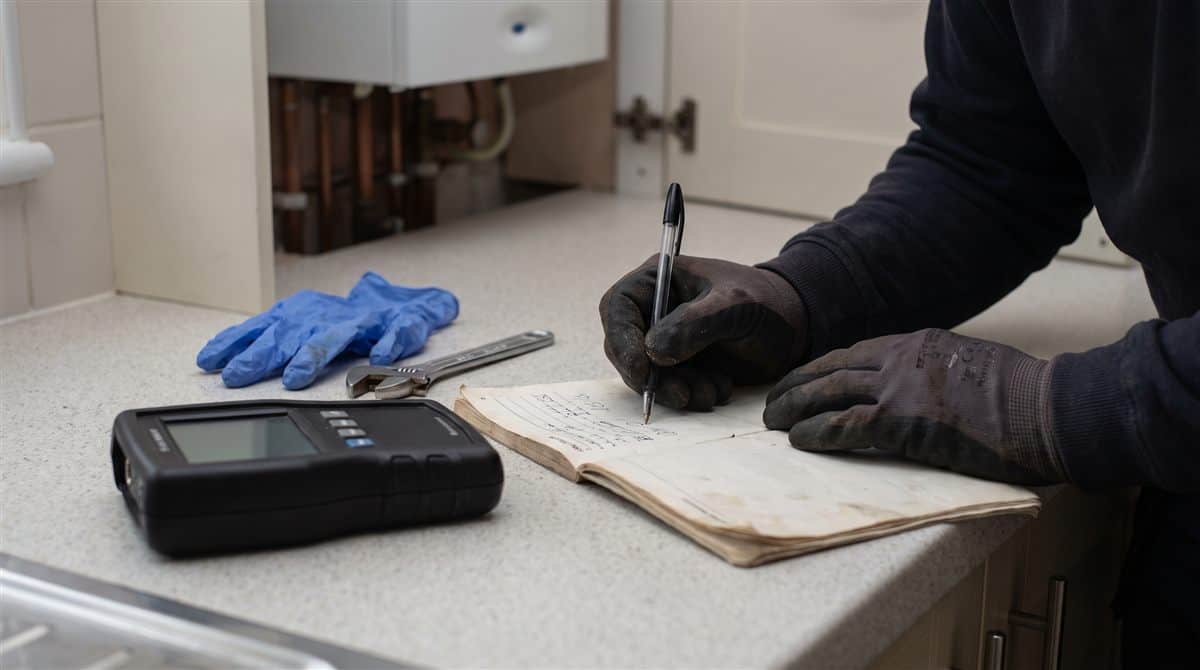
Take the £100 service and open it up.
| One annual service, decomposed | Illustrative |
|---|---|
| Charged to the customer | £100 |
| Travel, both directions | 50 min |
| At the appliance | 45 min |
| Records, certificate, invoice | 10 min |
| Total time consumed | 1 hr 45 min |
| Effective hourly, before fuel, parts or overhead | £57 |
Against a national hourly band of £50 to £85, that looks survivable. It is not. The £57 has not yet paid for the van, the analyser calibration, the registration, or the quarter of the year spent off the tools. That same sum, run across a whole year as annual costs divided by honestly counted billable days, is worked end to end in the guide to electrician rates. The trade changes; the method does not.
Two levers fix this, and neither is a price rise. The first is density. Three services on one street is a different business from three services across a county, and the whole difference sits in the travel column. The second is charging for the certificate as a deliverable, rather than as a courtesy performed after the van door shuts.
The honest test on any gas engineer rates figure is not whether it matches the regional average. It is whether the diary that produces it also funds the year’s compliance in a month when almost nothing comes in.
If it does not, the number is not a rate. It is a hope with a decimal point. Fix the density, price the paperwork, and let the day rate follow your own arithmetic rather than the neighbours’.
ON THE SERVICE THAT PAID £57
The contractors who grow don’t guess their margins. They see them.
A service diary feels profitable because it is full. Whether the driving between jobs ate the margin is a question about the route — and it is answerable before the week starts.
The register itself, and the check every customer is entitled to run on you, sits at the Gas Safe Register. If you are working out where gas sits against the other British trades, the cross-trade rate guide sets each published spread beside what it actually measures. Benchmarks for other British trades are collected under UK pricing and market rates. The obligations sitting behind them are in UK licensing and regulations.