Go to SendWork
— Free for 7 Days
Full access
Full access

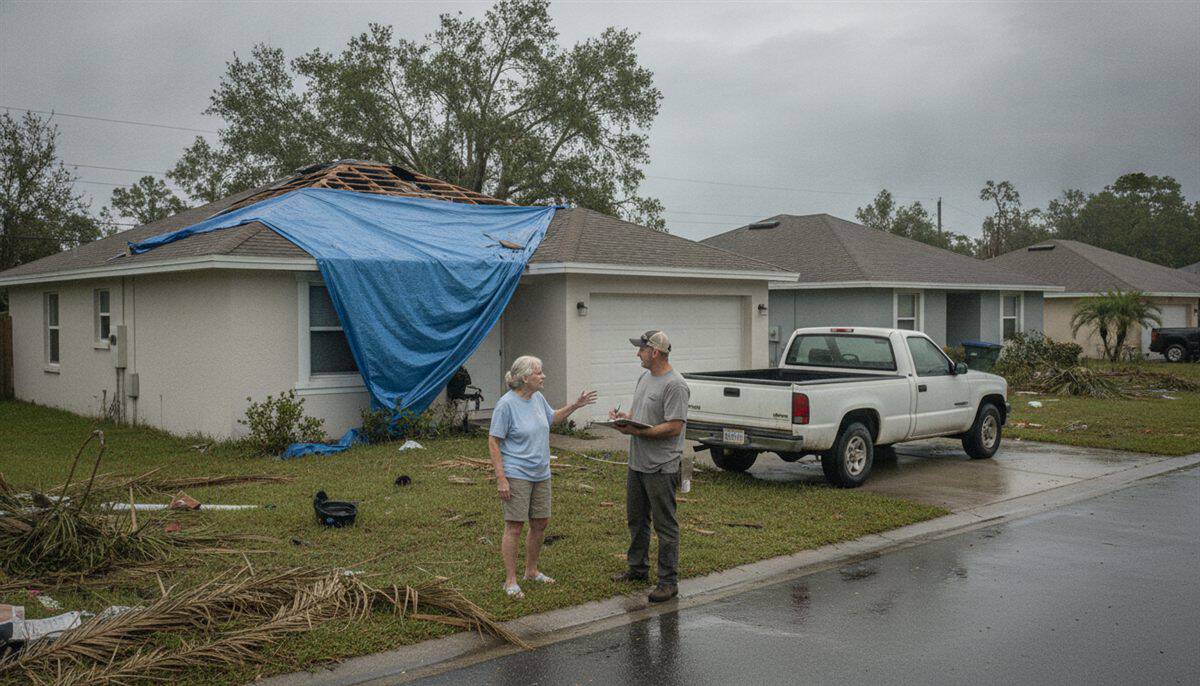
Price gouging laws switch on with an emergency declaration and measure your post-storm price against what you charged before. How seven storm states set the test, how long it lasts, which cost increases you can pass on, a worked Florida reroof and the records that protect your price.
The governor declares a state of emergency on Tuesday night. By Wednesday morning your phone is full of missed calls from homeowners with tarps on their roofs, your shingle supplier has emailed a price increase, and the crew wants overtime. What can you charge without breaking price gouging laws?
In most storm-prone states, these laws switch on with that declaration and compare your post-storm price with what you charged before it. The safe price is your pre-storm price plus the cost increases you can document. California and Oklahoma cap the increase at 10% with narrow exceptions. Florida, New York, Louisiana and North Carolina look for a gross or unreasonable gap from your own recent prices. Texas bans “exorbitant or excessive” prices without a number. In every state, the record of what you charged before and what your costs did after is what protects you.
These are state laws, enforced mainly by each state’s attorney general, and they apply only during a declared emergency in the area where you’re working. Outside one, they don’t touch your prices. Who can declare one differs, and it matters, because a storm in the news isn’t the same as a declaration on file.
Before you quote storm work, check the governor’s executive orders page for your state and, in California, the Cal OES list of current price gouging protections, which shows the end date for each county. A federal disaster declaration on FEMA’s site doesn’t, on its own, trigger the law in Florida, New York or Louisiana.
Yes, in most of these states. California’s Penal Code section 396 names “repair or reconstruction services” sold by a contractor and gives them a longer period than anything else. New York’s law covers repairs, and its attorney general lists roof repairs as an essential service. Florida, North Carolina, Louisiana and Oklahoma cover services generally. Texas is the odd one: its statute names building materials and construction tools, and repair labor falls under “another necessity” only by interpretation.
Here is how the seven states compare, read from each statute on October 19, 2026.
| State and law | Price test | How long it lasts | Cost increases you can pass on |
|---|---|---|---|
| California, Penal Code §396 | No more than 10% above your price just before the declaration | 180 days for contractor repair and cleanup work; 30 days for most else; can be extended | Supplier, labor or material cost increases you can prove, if the price stays within 10% above cost plus your usual markup |
| Florida, §501.160 | No “gross disparity” from your own average price in the 30 days before, or from the area’s average | Up to 60 days, extended only by an order naming the section | Increases due to added costs or regional, national or international market trends |
| Texas, Bus. & Com. Code §17.46(b)(27) | No “exorbitant or excessive” price; no number set | From the disaster until 30 days after the declaration ends | None written; costs still count as evidence |
| New York, Gen. Bus. Law §396-r | No “unconscionably excessive” price, judged against your own prior price or the area’s | While the governor’s declaration and market disruption last | Added costs outside your control that were imposed on you |
| North Carolina, G.S. 75-38 | No “unreasonably excessive” price, judged partly against your 60-day average | 45 days unless the governor extends it | Added supplier and other costs during the event |
| Louisiana, R.S. 29:732 | No more than prices ordinarily charged in the same market area before | Up to 30 days, renewed only by specific reference | Market fluctuations and reasonable added expenses and risk |
| Oklahoma, 15 O.S. §777.4 | No more than 10% above your price just before the declaration | The whole declaration plus 30 days; a further 180 days for repair goods, not labor | Only factors unrelated to the emergency, or petroleum and natural gas prices; no added profit |
Two of those rows deserve a second look. Oklahoma’s cost exception is narrow: a shingle price rise caused by the storm itself may not qualify, so treat its 10% cap as the ceiling. And California has changed its law. SB 1365, signed on September 30, 2026, recasts the cost exceptions as defenses the contractor must prove. Under California’s normal rules it should take effect on January 1, 2027. Until then, Cal OES shows contractor protections running to April 13, 2027 in Imperial, Los Angeles, Orange and San Diego counties after Tropical Storm Rachel.
The penalties are civil in most of these states and run per violation, so each overpriced job or quote can count separately:
Licensing can bite harder than pricing. In Florida, unlicensed contracting during a governor-declared emergency is a third-degree felony under section 489.127, so an out-of-state roofer needs a Florida license before the first job. Rules elsewhere vary, so check our guide to contractor license requirements by state before you cross a state line for storm work.
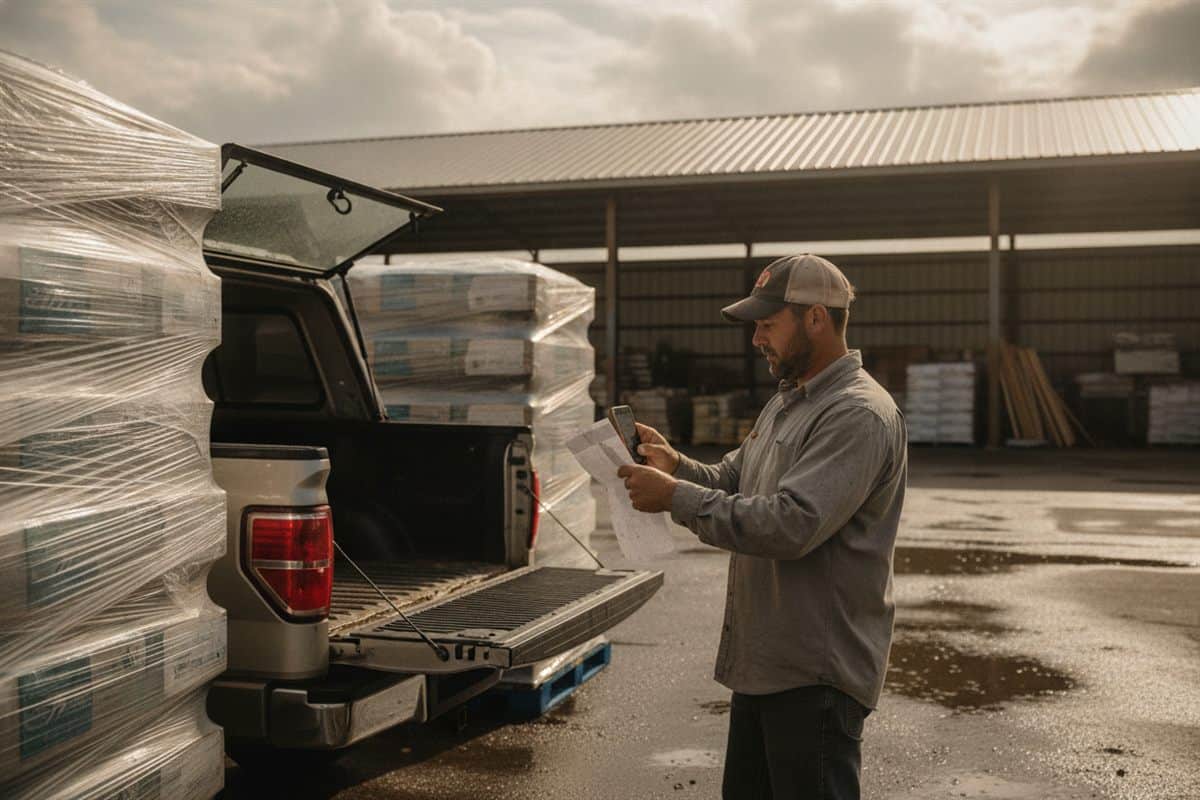
This is an illustration with made-up numbers. A Florida roofer’s own invoices in the 30 days before the governor’s declaration average $450 a square (100 square feet) for an architectural-shingle tear-off and reroof. That $450 breaks down into $150 of materials, $160 of labor, $40 of disposal, $40 of overhead and $60 of margin.
After the storm, three costs go up, and each one has a document behind it:
That’s $39.40 of documented cost. Add it to the pre-storm price, keep the same $60 margin, and the new price is $489.40 a square, 8.8% more. On a 25-square roof the job goes from $11,250 to $12,235, and every dollar of the $985 difference is tied to a document. Now suppose the same roofer quotes $600 a square instead. That leaves $110.60 a square, or $2,765 on the roof, with nothing behind it. That gap is exactly what a “gross disparity” comparison looks for.
Run the same numbers in other states and the line moves. In California, $489.40 is under the plain 10% cap of $495, so no defense is needed. In Oklahoma, the cap is also $495, but the storm-driven cost increases may not count as an exception, so $495 is the limit. Holding your dollar margin, rather than your percentage, is the cautious course everywhere. A written change order does the same job when a price changes mid-job.
None of this is legal advice for a particular job. If you’re unsure, the attorney general’s office in that state or a lawyer can tell you where the line sits. What every state’s test rewards is the same paperwork, kept before and after the storm:
Door-to-door storm sales bring a second rule into play, the federal three-day right to cancel, which has its own emergency exception. Our article on the cooling-off rule for contractors covers when it applies. And for the price you start from, our guide to setting general contractor rates explains markup and margin.
YOUR PRICE BEFORE THE STORM
The quote you sent last month is your best defense this month.
Every state on this list measures a storm price against what you charged before the declaration. When your quotes are built and sent in SendWork, last month’s quotes for similar jobs sit in your job history, so a post-storm quote starts from the right number.