Go to SendWork
— Free for 7 Days
Full access
Full access

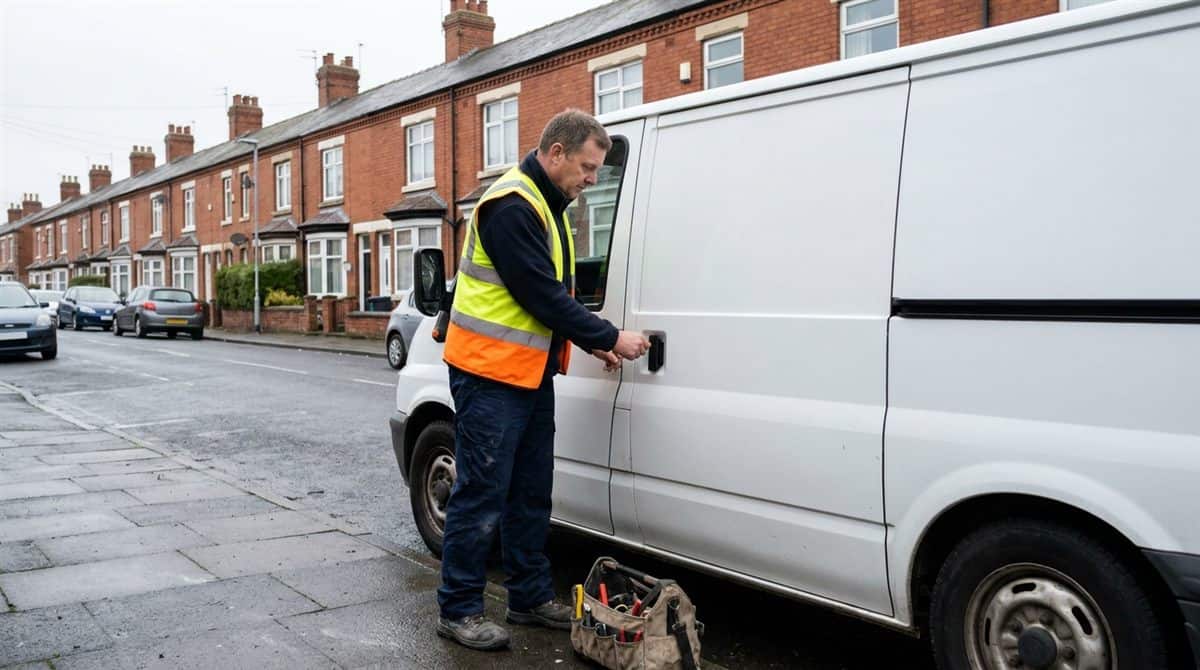
From April 2027 in the UK, a weekly supermarket run in the works van brings a £4,310 van benefit, plus £825 if you pay its private fuel. Keep that van to commuting, and the charge can be nil.
From April 2027 in the UK, a weekly supermarket run in the works van brings a £4,310 van benefit, plus £825 if you pay its private fuel. Keep that van to commuting, and the charge can be nil.
Two of your vans go home every night. One only does the drive between the driver’s house and the jobs. The other also does the weekly shop and a trip to the coast now and then, and from 6 April 2027 its van benefit goes through your payroll every month instead of onto a P11D after the year ends. So the question to settle this winter is which of your vans are which. The answer decides what your drivers pay, what you pay in National Insurance, and what your payroll has to do from April.
The rules sit in the Income Tax (Earnings and Pensions) Act 2003, the Act of Parliament that taxes the vans, cars and fuel an employer lets staff use. Under section 155, the van benefit is nil if the van meets what the law calls the restricted private use condition. That needs two things.
A little private use doesn’t break the condition if it is insignificant. HMRC’s Employment Income Manual gives examples. Taking an old mattress to the tip once or twice a year is insignificant. So is a short detour to drop a child at school, or calling at the dentist on the way home. A weekly supermarket shop, a week’s holiday in the van or regular social trips are not.
The law doesn’t say the terms must be written down. But HMRC says a nil figure has to hold “in practice as well as in theory”, and it names the van terms and mileage records as useful evidence. A one-page van policy signed by each driver, plus tracker or mileage records, is the practical way to show it.
If you run a double-cab pick-up, check it separately. Since 6 April 2025, HMRC expects most double cabs to count as cars for benefit purposes, with transitional rules for ones bought, leased or ordered before that date. Car rules are different.
The figures are for 2027-28, the first year of payrolling, and they’re illustrative. Both drivers are paid monthly, pay basic-rate tax at 20% in England, have the van all year and don’t share it. Van B’s driver uses a fuel card for everything.
The 2027-28 charges are the ones the Budget announced on 28 October 2026. The Overview of Tax Legislation and Rates puts the van benefit at £4,310 and van fuel at £825. They become law when the government makes the new order, which it says it will do before April. Class 1A is shown at 15%, today’s rate.
| Van A: commuting only | Van B: commuting plus weekend use | |
|---|---|---|
| Restricted private use condition | Met | Not met: weekly private use is not insignificant |
| Van benefit | Nil | £4,310 |
| Van fuel benefit | Nil | £825 |
| Driver’s income tax at 20% | £0 | £1,027 for the year |
| Your Class 1A at 15% | £0 | £770.25 for the year |
| Added to taxable pay each month | Nothing | £427.91 |
The same Van B in 2026-27 is £4,968 in total: £993.60 of tax for the driver and £745.20 of Class 1A for you.
Van B’s fuel charge isn’t fixed. It falls to nil if the driver must repay all the fuel used privately, commuting included, and does so by 6 July after the tax year. Repaying only the weekend mileage isn’t enough, according to HMRC’s guidance on van fuel. The van charge itself also drops pound for pound if the driver has to pay you for private use, and pays by the same date.
Today, a van benefit goes on a P11D, the year-end form that lists each employee’s benefits. You declare the employer’s charge on the P11D(b) by 6 July, and HMRC collects the driver’s tax through their tax code. That charge is Class 1A National Insurance, which only the employer pays, on taxable benefits.
From 6 April 2027, mandatory payrolling replaces that for company cars, vans, car and van fuel, and medical benefits. Your payroll reports the van’s value on each Full Payment Submission, the return your software sends HMRC every payday, and takes the tax from each payslip. The power to require it is going into the Finance Bill 2026-27, with the detail in regulations still to be made. So HMRC’s employer guidance is interim for now.
You work out the van’s value for the year and divide it by the number of pay periods. For Van B on a monthly payroll, that is £359.16 for the van and £68.75 for fuel. Those amounts go onto taxable pay, not onto pay for National Insurance or pension. You report and pay your Class 1A on them through payroll in real time. HMRC hasn’t yet published a separate payment date for it.
In July 2027 you still pay Class 1A for 2026-27 benefits the old way, by 22 July. By then you’re also paying Class 1A in real time on 2027-28 benefits. HMRC’s guidance calls this a one-off overlap and tells employers to budget for it.
For Van B, that’s £745.20 in July for 2026-27, on top of about £64 a month from April. Across the 2027-28 financial year, one van costs you roughly £1,515 in Class 1A. Multiply that by every van that fails the restricted use test, and it’s worth knowing which vans those are before you set next year’s day rates.

If a benefit van belongs to your first employee, the National Insurance and pension on their wages come on top. Our breakdown of what a first employee really costs sets those out line by line. And if your vans carry old boilers or rubble away from jobs, check that the business holds the right waste carrier registration as well.
VANS THAT GO JOB TO JOB
A van kept for work should spend its day on work.
The restricted use test starts with a van the driver needs for jobs. SendWork puts each day’s jobs and addresses in front of the crew, so you can see where every van is meant to be going.