Go to SendWork
— Free for 7 Days
Full access
Full access

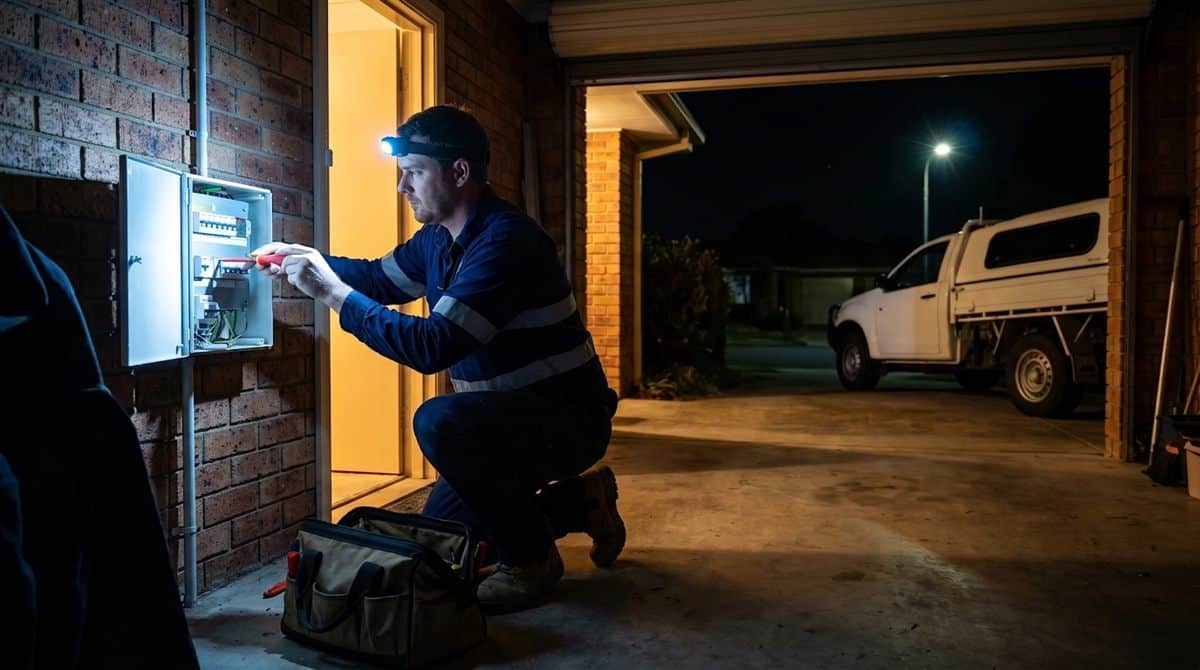
State averages put electricians at about $95 to $105 an hour. Here's what those figures leave out, from GST and service fees to the award cost of a Sunday call-out.
Look up electrician rates in Australia and you will find a tidy set of state averages. The 2026 cost guide from hipages puts New South Wales and Victoria at about $105 an hour, Queensland at $100, and South Australia, Western Australia and the ACT at about $95. That $10 spread makes it look as if your state sets your rate. Yet GST, service fees and after-hours costs can each shift a job’s price by about as much, or more.
Those averages leave out what actually shapes electrician rates in Australia. The guide does not say whether its figures include GST or a service fee. Nor does it say whether they cover after-hours or Sunday work. An average also cannot show the costs that genuinely differ between states. The sections below cover those gaps and show how to build a rate from your own costs. They also cover the Australian rules that shape the final price, from state certificate costs to the after-hours minimums in the Electrical, Electronic and Communications Contracting Award 2020. An award is a legal document from the Fair Work Commission that sets minimum pay and conditions for an industry. If it covers your employees, its rates are a legal floor, not a guide.
Start with the guide itself. Alongside the state figures, hipages gives a general range of $80 to $100 an hour, plus a service fee of $80 to $130. The service fee often covers the first 30 minutes, and time after that is billed in 15-minute increments. Two of its state averages sit above the top of that range. The guide says its prices are indicative. That is the right way to read them: as a rough picture, not a rate card.
Three things change the number a customer actually pays.
A price guide such as hipages’ shows electrician rates in Australia from the customer’s side. A rate you can defend starts with what an hour of work costs your business. The arithmetic has five steps.
Steps 1 to 4 give what an hour costs your business. Step 5 is where that cost becomes the price a customer pays. The ATO’s qualifying earnings guidance lists which pay lines attract super. For employees, the award then sets the floor under step 1, and that floor rises quickly after hours.
If the Electrical, Electronic and Communications Contracting Award covers your electricians, it sets the minimum you must pay. That minimum rises sharply after hours. The table shows minimum hourly rates from 1 July 2026 for a full-time or part-time Electrical worker grade 5, the trade-qualified level. These rates already include the award’s industry and tool allowances.
| When the work happens | Award rate | Minimum per hour |
|---|---|---|
| Ordinary hours | 100% | $31.13 |
| Overtime, Monday to Saturday, first 2 hours | 150% | $46.70 |
| Overtime, Monday to Saturday, after 2 hours | 200% | $62.26 |
| Sunday | 200% | $62.26 |
| Public holiday | 250% | $77.83 |
Casual employees get a 25% loading on top, which takes the public holiday rate to $97.28. An electrician who holds an unrestricted licence, and may be required to use it at work, also gets a licence allowance of $40.29 a week. Because it is an all-purpose allowance, you add it to the ordinary rate before working out overtime and penalties. None of these figures includes super, workers compensation, leave, the van or your own time.
On short after-hours jobs, the minimum hours matter more than the percentages.
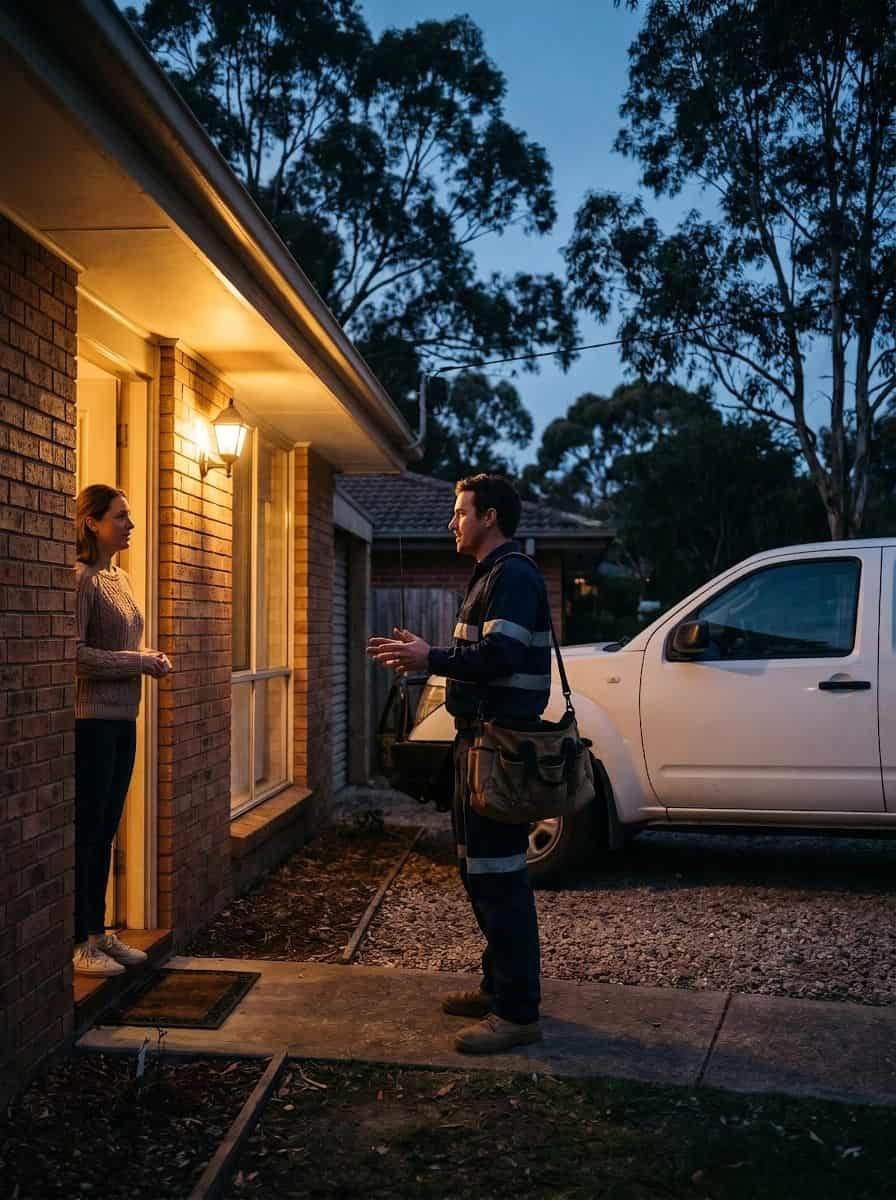
Here is an illustrative example. Say an employed electrician is called back on a Sunday for a 90-minute fault. The award wage alone is 4 hours at $62.26, or $249.04. Now bill it at the top of hipages’ general figures. That is a $130 service fee for the first 30 minutes, plus $100 for the next hour. The invoice comes to $230. That is less than the wage, before you add the licence allowance, super or the fuel to get there.
If you work on your own, no award sets your Sunday rate. You are still quoting against businesses whose after-hours labour costs at least this much. Charge your weekday rate on a Sunday, and your price can end up below an employer’s wage bill for the same call-out.
Some state differences sit outside the hourly figure, in the paperwork each job creates.
In Victoria, the electrician buys a Certificate of Electrical Safety for the work, and only registered licence holders can buy one. Energy Safe Victoria’s fees from 1 July 2026 are $39.70 for an electronic certificate for prescribed electrical work and $9.00 for non-prescribed work. Paper certificates cost $43.20 and $10.00. The purchase does not attract GST. Whatever your hourly rate, the certificate is a cost on every certified job.
In New South Wales, a Certificate of Compliance for Electrical Work (CCEW) is needed for installing, repairing, adding to or altering electrical equipment in an installation. Licensed electricians lodge it through the Building Commission NSW eCert portal. The deadline is 7 days after finishing the work, including the safety and compliance test. The NSW page lists no lodgement fee. A missed certificate carries a maximum penalty of 20 penalty units for an individual. In NSW, then, the main cost is admin time on every job that needs a certificate, within a 7-day deadline.
Elsewhere in Australia, check your own regulator’s licensing and certificate fees before building them into your electrician rates.
What exactly does my rate include? For householders, the price you advertise has to be the total, including GST and any fee they cannot avoid. Decide whether your figure includes the service fee and how you bill part hours. For jobs you can predict, a fixed price may suit better than an hourly one. Our guide to flat-rate versus hourly pricing uses plumbing jobs as examples, but its test for choosing between the two works for electrical jobs too. Also decide how you will cover card fees, now that the major card networks’ no-surcharge rules have applied since 1 October 2026.
What does an hour cost outside ordinary hours? If you employ electricians, work out the award cost of a Sunday call-back, including the 4-hour minimum, before you quote one. Then add the certificate, the travel and your margin. Published averages for electrician rates in Australia cannot answer either question. Your own job records and the award can.
ON THE SUNDAY CALL-OUT
You cannot price the hour correctly if you are guessing when it started.
If the job record does not show when the work happened, a Sunday call-out can end up billed at weekday rates. SendWork keeps each job’s booked day and time, the electrician assigned and the invoice in one place, so you can see a Sunday job is a Sunday job when you bill it.
See how Australian electricians keep jobs and invoices together →