Go to SendWork
— Free for 7 Days
Full access
Full access


A builder takes you on for a year of townhouse work while your past takings sit under $75,000. You may already have to register for GST within 21 days. Count the next twelve months, not just the last twelve.
Take a sole-trader plumber, in an illustrative example with invented figures. He has billed a steady $5,400 a month for the past year, all householder work. That is $64,800, comfortably under. On 1 September a builder takes him on for a run of townhouses: rough-ins and fit-offs worth about $1,500 a month from October, for at least a year. His usual work carries on as before. He has to register for GST that month, seven months before his past takings say so.
GST, the goods and services tax, is a 10% tax on most goods and services sold in Australia. The Australian Taxation Office (ATO) runs it. Registered businesses add it to their prices, collect it and pay it to the ATO. Registration is a legal requirement once you meet the threshold, not an optional ATO service. The rule is in Division 23 of the A New Tax System (Goods and Services Tax) Act 1999. The $75,000 figure comes from section 23-15.01 of the A New Tax System (Goods and Services Tax) Regulations 2019.
Division 188 of the GST Act defines two totals. Current GST turnover is everything you have made, or are likely to make, in the twelve months ending at the end of the current month: this month plus the previous eleven. Projected GST turnover is this month plus the next eleven. A signed contract, a builder’s run of houses or a strata maintenance agreement all go into it as soon as they become likely.
You meet the threshold when either total is $75,000 or more. For the plumber, they run like this:
| Month | Billed that month | Current GST turnover | Projected GST turnover |
|---|---|---|---|
| August | $5,400 | $64,800 | $64,800 |
| September | $5,400 | $64,800 | $81,300 (over) |
| October | $6,900 | $66,300 | $82,800 |
| November | $6,900 | $67,800 | $82,800 |
| December | $6,900 | $69,300 | $82,800 |
| January | $6,900 | $70,800 | $82,800 |
| February | $6,900 | $72,300 | $82,800 |
| March | $6,900 | $73,800 | $82,800 |
| April | $6,900 | $75,300 (over) | $82,800 |
In September the projected figure is a year of his usual work, $64,800, plus eleven months of the builder’s work from October, $16,500. It crosses the line on the day the builder takes him on, so he has until 22 September to apply. The current figure only gets there at the end of April. If he watches only his past takings, he applies in May, having billed $53,700 since 1 September without charging GST.
There is one escape, and it only works on the current figure. If that figure is over only because of a one-off year, the Act says you are not required to register while the ATO is satisfied your projected turnover is below $75,000. That is the ATO’s judgment, not yours, and hoping next year will be quieter is not the same thing. The government’s business.gov.au site advises checking both figures every month.
The total is the full price of what you supply. On a supply-and-install job, the hot water unit or the tiles count as well as your labour. While you are unregistered, the whole amount you charge goes in. Once you are registered, you count your sales without the GST. Profit plays no part: a painter who bills $78,000 and clears $40,000 after paint and fuel is over the threshold.
Three things stay out:
Section 25-1 of the GST Act says you must apply within 21 days of becoming required to register. You can register for GST online through the ATO’s Online services for business once you hold an Australian Business Number (ABN). You can also call the ATO on 13 28 66, or ask your registered tax agent to do it.
A late application does not reset the clock. The ATO decides when your registration takes effect, and it can set that date back to the day you first became required. Section 25-10 limits that backdating to four years, unless there has been fraud or evasion. The ATO also says penalties may apply when you fail to register on time.
The plumber’s registration would run from 1 September. GST on a sale is one-eleventh of the price, so the $53,700 he billed without GST carries $4,881.82 of GST. He owes that out of money he has already banked, and most of it came from householder jobs that are finished and paid.
Section 11-5 gives a partial offset. It lets you claim GST credits on business purchases made while you were required to be registered. Materials and fuel bought from 1 September count, provided he holds tax invoices for them. That reduces the bill, but for a plumber whose invoices are mostly labour, it will not come close to cancelling it.
Prices already agreed are where registration bites hardest. Under section 9-75 of the GST Act, the GST on a sale is worked out from the price you are paid. If an agreed price cannot change, the GST comes out of it.
Say you quoted a householder $14,000 in August for a bathroom you finish in October, after your registration date. If the price stays at $14,000, $1,272.73 of it is GST and goes to the ATO. Whether you can add 10% on top depends on what the contract says, and a quote that says nothing about GST gives you little to point to. Read the wording, and talk to your tax agent or lawyer before you send a customer a higher invoice.
Builders and other GST-registered businesses can usually claim back GST you charge them, so adding it costs them little. Householders cannot, which is why the same 10% is an easy conversation with a builder and a hard one at the kitchen bench.
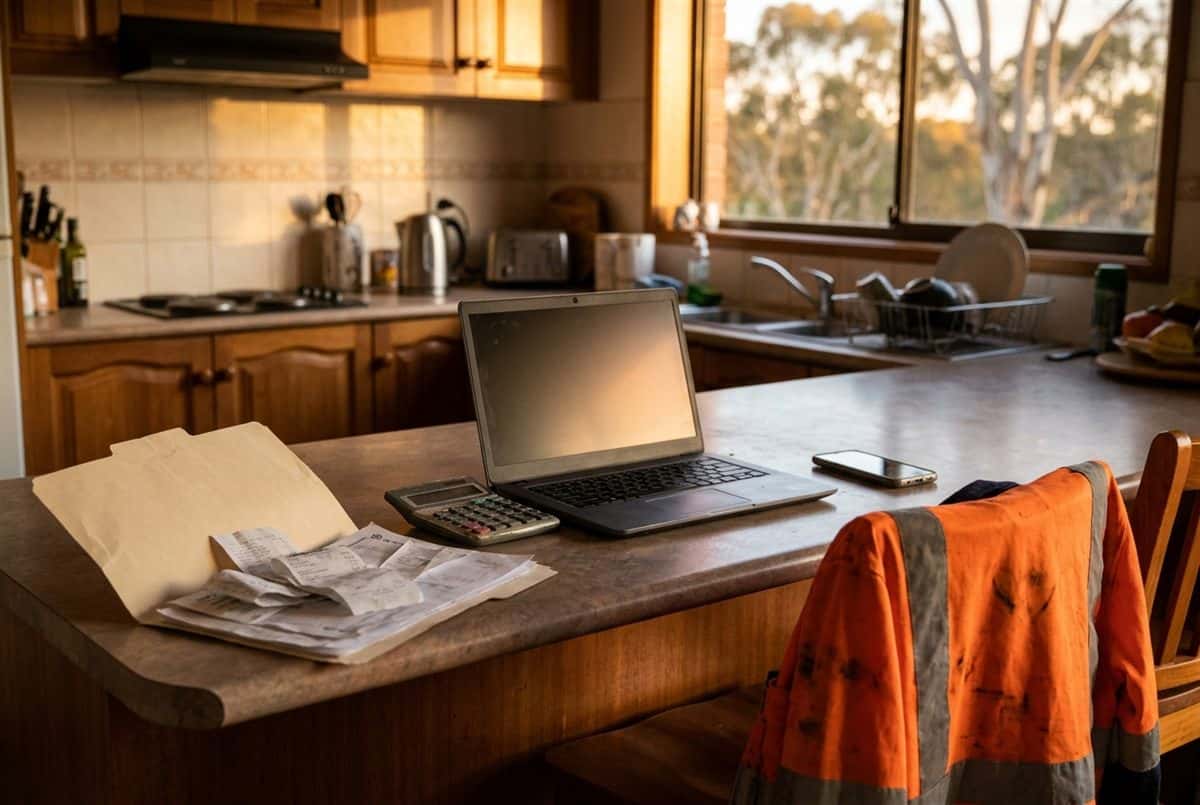
Two rules shape the quotes you send from now on. The first is the single-price rule in section 48 of the Australian Consumer Law. That law is national consumer protection law in Schedule 2 to the Competition and Consumer Act 2010, enforced by the Australian Competition and Consumer Commission (ACCC). Under section 48, when you quote part of a price for household work, you must also show the total, including GST, at least as prominently. The main exception is a quote made exclusively to a company. The electrician rates guide shows how that plays out in an hourly rate.
The second is fairness. A standard-form term letting you raise an accepted price later sits close to the price-change terms targeted by the Australian Consumer Law’s unfair contract terms rules. For householders, the cleaner option is a GST-inclusive price before they accept. For a builder, show whether the price includes GST and give the GST-inclusive total, so nobody argues about it at invoice time.
Your ABN record shows your GST registration date, and your paperwork changes from that day.
Tax invoices. Section 29-70 sets out what a tax invoice must make clear:
For a sale of $1,000 or more, it must also show the buyer’s identity or ABN. A customer can ask for a tax invoice, and you then have 28 days to give one. In the other direction, you need a tax invoice to claim a credit on a purchase of more than $82.50 including GST. That figure is the $75 limit in regulation 29-80.01, plus GST.
The BAS. Your business activity statement (BAS) is the ATO form for reporting the GST you collected and the credits you claim. By default it is quarterly, due on 28 October, 28 February, 28 April and 28 July under section 31-8. With GST turnover under $10 million you use the ATO’s simpler BAS method, which reports total sales, GST on sales and GST on purchases.
Cash or accrual. A small business entity, generally one with aggregated turnover under $10 million, can account for GST on a cash basis under section 29-40. You then report the GST on an invoice in the quarter the customer pays, not the quarter you send it. If a builder pays at 60 days, you are not paying the ATO before he pays you.
Registration also affects your income tax. PAYG instalments are the ATO’s regular payments towards your income tax, and their once-a-year option closes once you are required to register for GST.
Section 23-10 lets you register at any turnover while you are carrying on a business. Once registered, you claim credits on your business purchases. A $1,100 drop saw carries $100 of GST. The same one-eleventh applies to materials, fuel and a new ute, less any private use.
The cost is on the other side of the invoice. Each householder price either rises by 10% or the 10% comes out of your margin, and you take on the BAS. A tradie working mostly for builders gives up little, and one working mostly for homeowners gives up the most.
Two details make a voluntary registration less of a one-way door. Below the threshold you can choose an annual GST return under section 151-5 instead of quarterly reporting. If you later want out, the ATO must cancel on request after 12 months, provided you are not required to register for GST. Before then, it is the ATO’s choice.
PRICED BEFORE YOUR REGISTRATION DATE
Find the accepted quotes that still leave out the 10%.
When the projected test trips, the jobs at risk are the ones you have already quoted. With SendWork you build and send quotes from your phone, and each one stays with the customer and the job. The accepted prices you need to recheck are there to read, not pieced together from old texts.