Go to SendWork
— Free for 7 Days
Full access
Full access

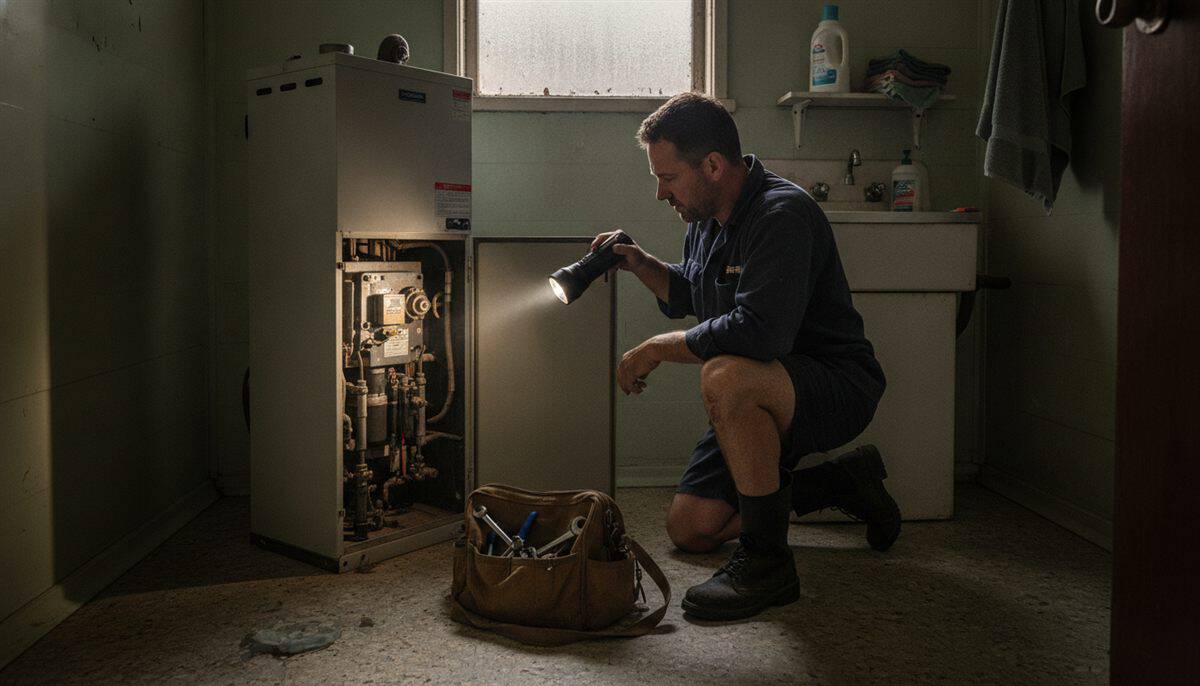
From 1 March 2027, a gas hot water system in a Victorian home that can't be repaired has to be replaced with an electric one, unless an exemption fits. Repair or replace, the exemptions as the regulation words them, rentals, the trades and certificates involved, rebates, and a sample quote note.
From 1 March 2027, when a gas hot water system in a house or flat in Victoria breaks and can’t be repaired, the replacement has to be electric, usually a heat pump, unless one of a short list of exemptions applies. The ban falls on the plumber doing the work, not on the homeowner. So the call-out to a dead gas unit after that date ends in an electric quote or a written reason why not.
Until 28 February 2027, a like-for-like gas replacement is still lawful, and a gas job contracted before 1 March can still be finished in the three months after it. That makes this summer’s quotes the ones where the customer chooses, and the ones worth putting in writing. Here is how the rule works, in the order you’d meet it on a job.
The ban is in the Building and Plumbing Amendment Regulations 2025 (S.R. No. 140/2025), made by the Victorian Government under the Building Act 1993 in December 2025. They add a new Part 6A to the Plumbing Regulations 2018. Regulation 45E is the hot water rule, and regulation 45D holds it back until 1 March 2027. It’s law, not guidance, and the Building and Plumbing Commission (BPC), Victoria’s plumbing regulator and the former Victorian Building Authority, enforces it.
Regulation 45E stops two kinds of plumbing work for an existing Class 1 or Class 2 building, meaning a house, townhouse or apartment, or a pool or spa that goes with one:
The maximum penalty is 20 penalty units for each offence, which is $4,182 at the current 2026–27 value. The rule covers storage and continuous-flow units alike. Commercial buildings are not.
“Reticulated gas” means natural gas supplied through a gas company’s meter, under section 221B of the Building Act. Bottled LPG systems sit outside the rule, and the Victorian Government’s own fact sheet says so. It doesn’t touch gas heaters or cooktops either. Energy Victoria’s guidance is plain that existing gas appliances “can continue to be used, maintained and repaired as usual”.
The rule bites on replacement, not repair. Swapping a thermocouple, a gas control valve, a burner or an anode is repair work on the existing heater, and nothing in regulation 45E stops it. A leaking cylinder is different: fixing that means replacing the water heater.
Neither the regulation nor the government’s guidance sets a test for when a unit “cannot be repaired”. That’s your professional call, made with the owner. Where the honest answer is that a repair would buy a year on a 14-year-old tank, say so, and note on the job what you found and what you recommended. The guidance also says a gas unit that “needs to be replaced for any other reason” goes electric. So an owner can’t ask for a new gas unit just because they’d like one.
If the heater needs replacing, regulation 45E lists the cases where you can still fit gas. Read them as the regulation words them, because several are narrower than they sound.
These apply to any installation or replacement:
These apply to replacement only:
The switchboard exemption is the one owners will ask about. It turns on a factual question for the electrician, so get their answer in writing before you rely on it. The pilot-light exemption needs care too. Government material calls it “like-for-like”, but the regulation’s words are “another type of reticulated gas water heater”. Until the BPC publishes guidance, the safe course is to replace a pilot-light unit with an equivalent one.
Work under a contract signed with the owner before 1 March 2027 can go ahead if you finish it within three months after that date. The same applies to work under a direction to fix or a rectification order issued before 1 March. A dated, signed contract is what proves a gas job falls in that window, so keep it on file.
Everything above is the plumbing rule, and it applies whoever owns the property. A rental home has a second layer. From 1 March 2027, the rental minimum standards in the Residential Tenancies Regulations 2021 require an energy-efficient water heater, a heat pump or solar unit, when the old one fails. A rental provider has its own list of grounds where that would be “unreasonable”, including a cost test the owner-occupier rule doesn’t have. If an agent calls you to a rental, find out which of those grounds, if any, they’re relying on before you price a gas option.
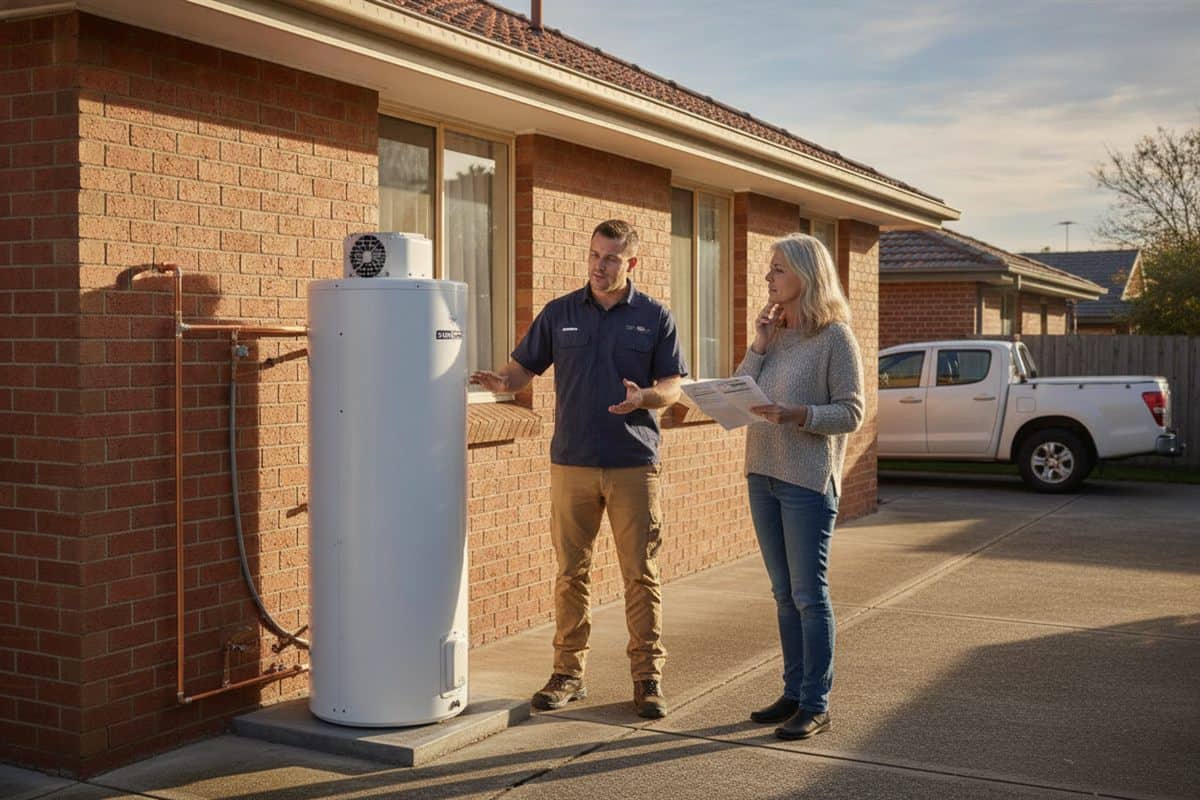
A heat pump replacement usually involves at least two trades, and the quote should show both. According to the BPC, removing the gas water heater is gasfitting work. Fitting a self-contained heat pump needs water supply accreditation. A split system with refrigerant lines also needs refrigeration accreditation. Sealing the old consumer piping has to meet AS/NZS 5601.1:2022, the gas installations standard, and the BPC says it has had “numerous complaints” about poor capping.
Each plumber issues a compliance certificate for their own part. You need one for any work on a gas appliance or gas piping, whatever its value, and for other plumbing work over $750. The electrician who wires in the heat pump issues a Certificate of Electrical Safety. The house can stay connected to gas for heating or cooking. Abolishing the meter is a separate matter between the owner and their retailer.
An owner-occupier may be able to cut the price with two Victorian schemes. The Solar Homes hot water rebate, run by Solar Victoria, pays 50% of the purchase price of an eligible heat pump, up to $1,000, or $1,400 for a locally made product. It’s optional and has conditions. Household taxable income must be under $150,000 and the property worth under $3 million. The old system also has to be at least three years old.
The Victorian Energy Upgrades program adds a discount through an accredited provider, shown as $560 for a gas-to-heat-pump upgrade. Together, the government puts the saving at up to $1,560, or $1,960 for a locally made product. Federal small-scale technology certificates usually come off the price too, but their value varies by model and zone. If the old unit has died, Solar Victoria lets the owner install first and confirm eligibility afterwards. They carry the risk of not qualifying, so say that before they sign.
We checked these figures on 19 October 2026, and they can change. Confirm them on the day you quote. Our guide to unfair contract terms in tradie quotes covers how to word price conditions so they hold up.
Two jobs come out of this rule: the electric replacement, and the documented reason when it’s still gas. Either way, the quote is where your reasoning lives. If an exemption applies, name it, and attach the evidence: the electrician’s note on the switchboard, the warranty details, or the contract date.
Here is an example of the note a plumber might put on a quote for a failed 15-year-old storage unit in an owner-occupied house in early 2027:
“The existing gas storage water heater has failed at the cylinder and cannot be repaired. Under regulation 45E of the Plumbing Regulations 2018, from 1 March 2027 it cannot be replaced with a gas water heater unless an exemption applies. We checked the switchboard capacity, space and access with [electrician’s name] on [date], and none of the exemptions applies. Option A is a 270-litre heat pump, self-contained, sited on the existing slab. The quote includes gasfitting to disconnect and cap the supply to AS/NZS 5601.1, water supply work, electrical connection, and compliance certificates for both. Solar Homes and VEU amounts are estimates until approved.”
That note answers the owner’s first question, why not gas, before they ask it. It also gives you a record if anyone asks later why you did the job the way you did. For the margin side of a heat pump job, see our guide to building a plumbing business that is actually profitable, and if the hot water swap grows into a bathroom renovation, our article on home warranty insurance thresholds covers when Victoria’s cover becomes compulsory.
WHEN THE GAS UNIT DIES
Leave the customer’s driveway with the quote already sent.
A cold shower makes for a quick decision, and a clear written quote, with the reason it’s electric, lets the owner make it on the spot. SendWork lets you build and send that quote from your phone before you’ve left the site.