Go to SendWork
— Free for 7 Days
Full access
Full access

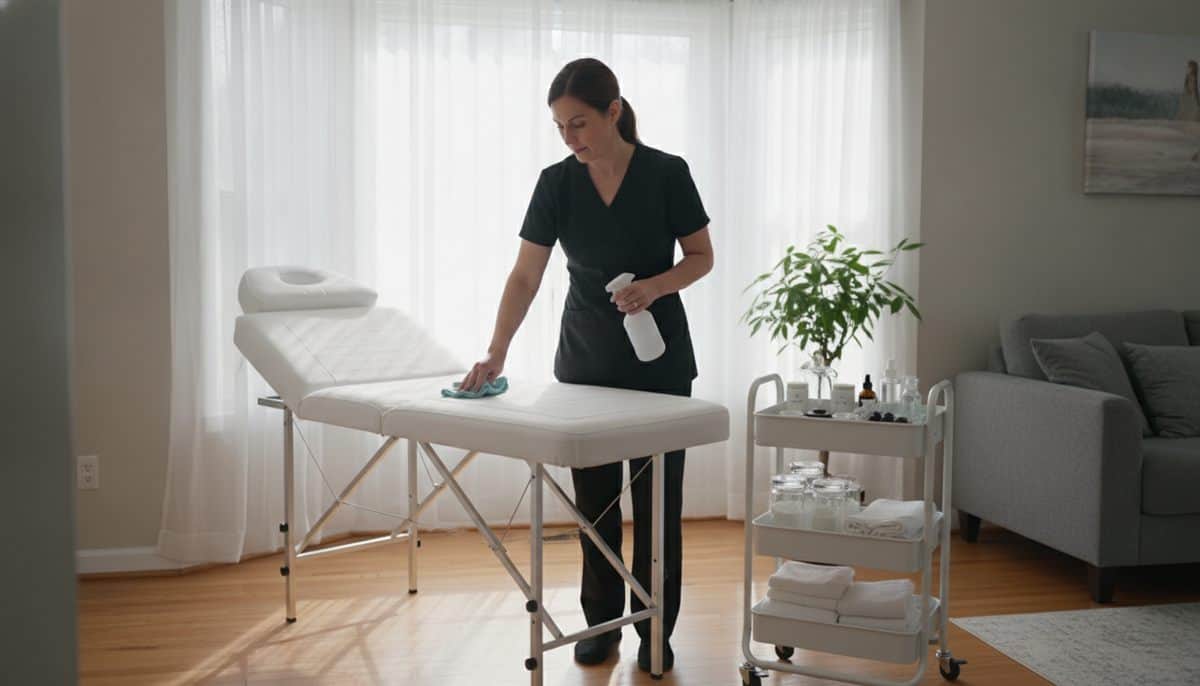
There is no single mobile spa license. See how nine states treat home and event appointments, from permits to salon-only rules.
There is no single mobile spa license in the United States, and no federal one. Your state license for cosmetology, nails, esthetics or massage lets you do the work, but holding it does not by itself mean you can do that work in a client’s home. Whether you can take a booking in a client’s living room or a hotel suite on a wedding morning depends on your state’s model. California issues a separate personal permit. Washington and Illinois license the business that works off-site. Oregon gives individuals a freelance authorization. New York, Pennsylvania and Arizona allow off-site work only through a licensed establishment (Arizona excepts care facilities and home-care clients). Florida and Texas allow a few narrow exceptions.
The nine states in the table (plus Georgia’s van and sanitation rules) were read from their own statutes, regulations and board pages on October 1, 2026. They are examples of each model, not a 50-state survey.
Read the third column as what must be in place before you accept the booking.
| State | Model | What you need before you book | Limits worth knowing |
|---|---|---|---|
| California | Personal permit | Personal Service Permit: two years licensed, Live Scan fingerprints, $1,000,000 liability insurance | Short service list; no hair color or chemical services; signed receipt kept 5 years |
| Washington | Business license | Personal Service license, $100,000 public liability insurance, UBI number | Client’s home, event venue, office or another convenient location |
| Illinois | Business registration | Salon/shop certificate of registration for work at places you do not own or rent | Exempt: a sole proprietor with no employees or contractors and no mobile salon |
| Oregon | Individual authorization | Freelance authorization | Without it, services must be in a licensed facility |
| New York | Through a licensed business | Your own business license at a fixed location, or direct employment by a license holder | Remote-service records kept at the business for 3 years |
| Pennsylvania | Through the employing salon | The employing salon’s permission, by appointment | Clients at home or confined to institutions; records kept at the salon |
| Arizona | Sent from an establishment | A customer request, and an establishment that sends you | Home-care clients excepted; makeup-only work is exempt from licensing |
| Florida | Narrow carve-outs | The proper license, plus a special event or a service on the basic list | Other home visits only for clients who are ill, booked through a salon |
| Texas | Remote services booked online | A TDLR notice of intent if clients book through your own site, app or social media | No color, waxing or whirlpool pedicures; records kept 5 years |
Under 16 CCR 965.2, you can apply for a Personal Service Permit (PSP) once you have held a barber, cosmetologist, esthetician or manicurist license for two consecutive years. An out-of-state license that makes you eligible for a California one also counts. You need Live Scan fingerprints and at least $1,000,000 in liability insurance, kept in force. The permit costs $25, renews for $10 and lasts two years.
The catch is the service list, because it is closed. For a cosmetologist with a PSP, the list includes shampooing, cutting and styling, hair tonics and hands-on facials. Makeup or strip lashes, tweezing, nail filing and buffing with non-electrical tools, and polish are on it too. The rule excludes “singeing, relaxing, chemically waving, or dyeing the hair.” A manicurist’s list is just filing and buffing with non-electrical tools, plus polish. An esthetician can do hands-on facials without chemical or tool exfoliation, plus makeup, strip lashes and tweezing.
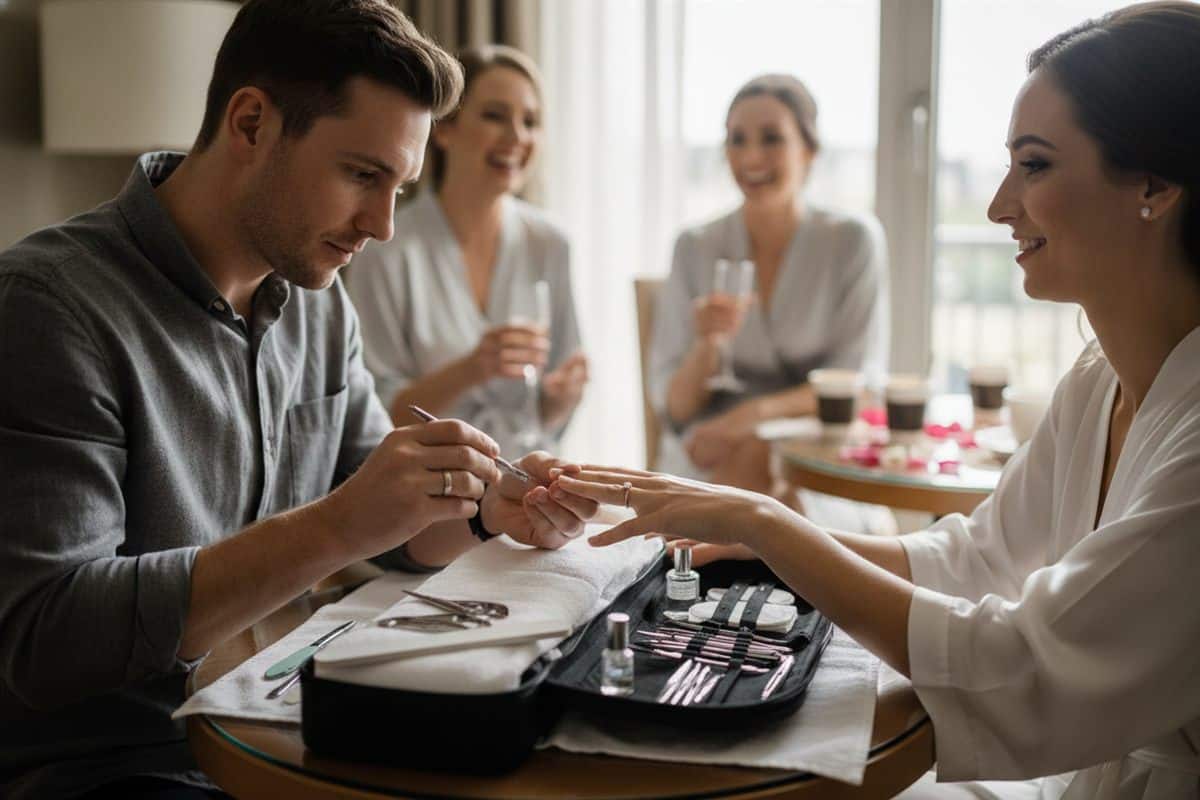
So check each line of a California home quote against your license’s list before you send it. Anything that needs an electric file is off the list for every license type, and so is hair color. Strip lashes are on it; lash extensions are not. If a bride wants color the week before the wedding, book that appointment in a licensed establishment.
The paperwork comes at the end of each visit. Give the client the Personal Service Permit Consumer Notice (form BBC-PSP (2020)). Then get a signed, dated receipt listing their name, phone, email (if they have one), the services you did and their acknowledgment of the notice. Keep that receipt for five years; electronic copies count. Your own home does not count as “offsite” under the rule, so the PSP does not turn a spare room into a salon.
Texas lets a licensed practitioner offer “digitally prearranged remote services” at a client’s home or your own. The client has to book through a website, app or other online system. The allowed list covers haircuts and styling, weaves, beard work, facial tweezing, lotion and cream treatments, and eyelash extensions. Hand and foot work is limited to polish changes and non-whirlpool basin pedicures. TDLR prohibits coloring, bleaching, tinting, waxing, sugaring and portable whirlpool foot spas.
The booking side is where Texas adds paperwork. If clients book through your own website, app or social media account, you are your own remote service business. As a license holder, you file a notice of intent with TDLR. Before the appointment, send the client your name, license number and photo, with the business website and phone. Afterward, give them a receipt with the date, services, your name and license number, the business contact details and a notice that they can complain to TDLR. Keep these records for at least five years. Build the confirmation and the receipt template once, and every booking carries the details.
In these three states, the license that matters for home visits belongs to a business.
New York: 19 NYCRR §160.8 allows practice at “remote locations.” You either hold an appearance enhancement business license at a fixed location, or you are directly employed by someone who does. Records of each remote service stay at the business for at least three years. The owner also carries accident and professional liability cover of at least $25,000 per occurrence and $75,000 in total (§160.9). So a New York freelancer with no fixed-location business license needs an employer who holds one before taking a home booking.
Pennsylvania: under 49 Pa. Code §7.81, you may serve clients at home by appointment “with the permission of the employing salon.” Records of each visit stay at that salon, with the date, time, place and fee. The salon must also make sure you are fully supplied and equipped. So in Pennsylvania, adding home visits starts with a conversation with the salon you work for.
Arizona: A.R.S. 32-574 makes off-site work unlawful unless a customer asks and an establishment sends you. Hospitals, nursing homes and care institutions are exceptions. So is the home of someone who needs home care because of illness, infirmity or disability. A violation is a class 1 misdemeanor. In practice, an Arizona stylist taking a bridal booking needs a salon that will send them.
Hiring changes the answer as well. Illinois exempts a sole proprietor only while they have no employees or contractors and no mobile salon. Take on one helper, and the business needs a salon/shop registration for work at clients’ homes. Our piece on hiring spa professionals for a mobile business covers the recruiting side.
Florida starts strict. F.S. 477.0263 limits cosmetology to licensed salons, with exceptions. Two of them matter for a mobile business.
The first is special events, where a properly licensed person may perform any cosmetology or specialty service. The board’s rule, 61G5-20.0015, defines them as “weddings, fashion shows, and other organized public or private events.” The event must last no more than three consecutive days, and the services must be essential to it. You cannot serve the general public there. A bridal party’s hair and makeup on the wedding morning fits. A walk-up booth at a street fair does not.
The second is a short list you can book directly: shampooing, cutting and arranging hair, and nail polish removal, filing, buffing and cleansing. Use disposable implements or an EPA-approved wet or dry sanitizing system. Record every off-site appointment in an appointment book with the client’s name, contact details and service address. Visits to clients too ill to come in are booked only through a licensed salon, and the appointment book for those stays at the salon.
A van or trailer salon is usually an establishment of its own. It does not let you carry your kit into the client’s house. In Texas, a mobile establishment license costs $78 and lasts two years. You need a permanent dispatch address, an onboard water heater and a fresh-water tank for a full day. A working restroom must be available where you park. No services outside the unit or while it is moving. TDLR must also be able to find you. Either the unit carries GPS that TDLR can track, or you file a weekly itinerary at least seven days ahead. Changes go in at least 24 hours before. Keep appointments and itineraries in the unit for a year, and check whether your city wants a permit.
California licenses mobile units separately, with a permanent base address, an inspection and a licensee in charge. Arizona treats a converted vehicle as an establishment if a salon or a business with a street address on file dispatches it. Georgia’s board rules go further. A mobile unit only gets a salon license if it is “anchored on the ground operating in a permanent location.” Price the vehicle, fit-out and licensing together before you commit. Our guide to starting and financing a mobile spa walks through the setup costs.
Cosmetology rules do not settle the question for massage. Florida’s F.S. 480.046(1)(o) lets a licensed massage therapist, as provided by board rule, work at a client’s home or office without an establishment license. Sports events, conventions and trade shows are covered too; colonic irrigation is excluded. In Texas, Occupations Code §455.155 says a solo practitioner needs no massage establishment license. The statute itself says nothing specific about home visits, so read TDLR’s massage rules before you advertise outcalls. TDLR also says waxing and sugaring need a cosmetology license, not a massage license.
Sanitation rules follow you off-site. Use an EPA-registered disinfectant with bactericidal, fungicidal and virucidal claims (California, Texas and Georgia). Keep clean and dirty tools in separate labeled containers (California and Georgia). Throw away single-use items such as buffers, emery boards and nail files after one use (Georgia and Texas). Our list of mobile spa equipment and supplies is a starting point for the kit.
The paperwork varies more, and it is what a board asks to see. The table gives the retention periods. Pennsylvania also wants the date, time, place and fee of each visit, and Florida an appointment book with the client’s name, contact details and address. You already know almost all of this when the client books: who, where, when and what. If your scheduling and booking system captures it then, the record exists before you leave for the appointment.
If your state is not in the table, search your cosmetology or barbering board’s rules for the off-site wording. In the states above, it appears as “personal service permit” (California) and “freelance authorization” (Oregon). New York uses “remote locations,” Pennsylvania “rendering of services outside a salon” and Texas “digitally prearranged remote services.” Once you find the rule, answer these for your own business:
Sales tax on beauty and massage services varies by state, so ask your state revenue department.
Updated October 2026: rewritten around where you may legally work, with nine state examples read from official sources. Texas mobile units may either carry GPS or file a weekly itinerary; an earlier version said GPS was required. Pennsylvania’s rule is now described in full, including the employing salon’s permission.
FOR EVERY HOME VISIT
Every off-site booking should carry its own address, services and date.
Where home and event appointments are allowed, a board’s questions come back to where you worked, what you did and when. SendWork keeps each appointment’s client, address and services together in your schedule, so those details are written down when the booking is made, not pieced together later.