Go to SendWork
— Free for 7 Days
Full access
Full access

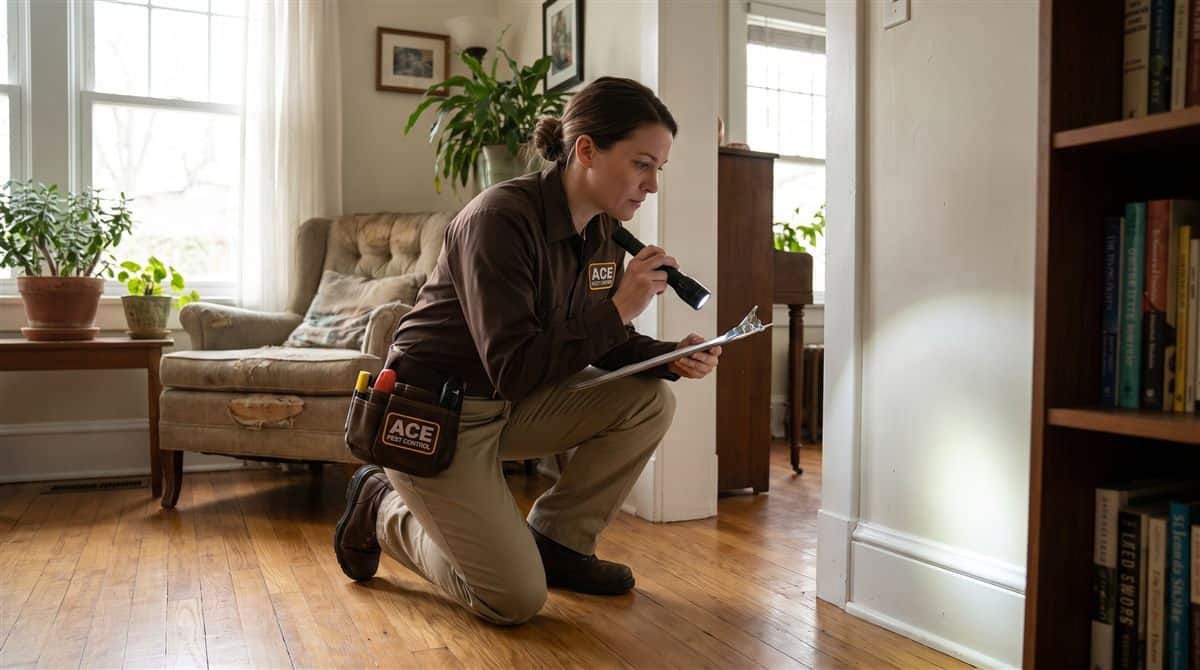
Real 2026 US pest control rates — one-time, quarterly, and annual plans, plus termite and bed bug costs — and how to quote work that renews.
Pest control is one of the few home-service trades where the recurring contract is the product, not an afterthought — and yet plenty of operators still sell one-time sprays and start from zero every month. Setting your pest control rates USA well means pricing the one-time work to lead somewhere and the recurring plans to actually pay, because a book of quarterly accounts is worth far more than a busy phone and an empty renewal list.
Here is what pest control businesses charge across the United States in 2026 — one-time treatments, recurring plans, and specialty jobs like termites and bed bugs — plus how to quote them so the numbers hold. The ranges shift with home size, pest, and infestation severity, so localize from there rather than treating any single figure as the going rate.
A one-time general treatment averages around $171 nationally, with a typical range of $50 to $500 depending on scope; for a 1,500-square-foot home, expect $300 to $550, and a 3,000-square-foot home runs $450 to $750. Recurring service, however, is where the business actually lives. Monthly visits run $40 to $70, quarterly visits $100 to $300, and annual plans $300 to $550, usually with an initial visit of $150 to $300 to knock the problem down before maintenance begins. Standalone inspections commonly run $125 to $450.
For a labor-market anchor, the U.S. Bureau of Labor Statistics reports median pay for pest control workers at $21.51 an hour — about $44,730 a year — as of May 2024. That is the technician’s wage, not your billing rate; the difference covers chemicals, licensing, the vehicle, insurance, and margin. Pest control also carries real compliance weight, which is part of what you are pricing into every visit.
| Pest control work (2026) | Typical US price |
|---|---|
| One-time treatment (average) | ~$171 |
| One-time (1,500 sq ft) | $300–$550 |
| Monthly plan | $40–$70 |
| Quarterly plan | $100–$300 |
| Annual plan | $300–$550 |
| Initial / first visit | $150–$300 |
| Termite treatment | $250–$1,000 |
| Bed bug treatment | $1,000–$4,000 |
The math of pest control rewards recurring plans more than almost any other trade. A quarterly customer at $150 a visit is worth $600 a year and often stays for years, while a one-time treatment is a single transaction that may never repeat. Recurring plans also smooth your routing and cash flow, and they give you the documented service history that commercial accounts require. Therefore, price the one-time treatment to solve the immediate problem, then convert the customer to a plan on the same visit — that conversion, not the initial spray, is where the profit compounds over time.
PESVARO — Precision Protection. Documented Proof.
For pest management professionals who need documented proof — inspection records, treatment protocols, and compliance reporting that hold up to audit.
Specialty jobs are priced separately and should never be lumped into a general plan. Termite treatment runs $250 to $1,000 depending on method and severity, while bed bug extermination is far more involved at $1,000 to $4,000 and can reach $6,000 for heavy infestations across multiple rooms. These jobs demand documentation, follow-up visits, and often a warranty, so price them for the real labor and the risk you are carrying — not as a bigger version of a routine spray. Underpricing a bed bug job is one of the fastest ways to turn a signature into a loss.
Quote from scope: home size, pest, severity, and the number of visits it will realistically take. Build the initial knockdown visit and the ongoing maintenance into a clear plan the customer understands, and put the service history in writing from day one, because it is what wins renewals and commercial contracts. For the bigger picture on landing accounts that renew, the commercial pest control business playbook covers the contract model in depth. Localize the ranges here, revisit them yearly, and compare against other USA pricing guides as the series grows.
The ranges above shift with variables you can name on the quote, and pricing from them keeps you out of trouble. The pest itself is the first driver: a general ant or spider treatment is straightforward, while termites, bed bugs, rodents, or wildlife each demand specialized equipment, materials, and follow-up that justify a very different number. Infestation severity and home size then stack on top — a light perimeter treatment is not the same job as knocking down an established colony across a large property, and pricing them the same way is how operators lose money on the hard jobs.
Access and construction matter too. Crawl spaces, finished basements, multi-unit buildings, and heavy landscaping all add time and risk, while commercial accounts bring compliance and documentation requirements that a simple residential spray does not. Facilities that carry a pest programme often budget janitorial in the same line, so it helps to know current cleaning service rates when you quote bundled facility work. Region and local competition then nudge the final figure up or down. The disciplined move is to quote from a real inspection rather than a phone estimate, spell out exactly what the plan covers, and price specialty work for the risk it carries. Do that consistently and your quotes hold up — both to the customer comparing bids and to your own margin at the end of the year.
Your pest control rates USA should be built around recurring plans, with one-time treatments priced as the on-ramp rather than the destination. This quarter, set a clear plan structure with a defined initial visit, price termite and bed bug work separately for the risk they carry, and document every service from the first visit forward. The operator who sells plans and keeps clean records builds a business that renews itself year after year.
Referrals don’t come from good work alone. They come from the experience of working with you.
SendWork’s AI office manager keeps every service record, reminder, and invoice in one place, so every customer touchpoint is polished, on time, and automatic.
Sell the plan, price the specialty work for its risk, and document every visit — that is how a pest control book renews itself.