Go to SendWork
— Free for 7 Days
Full access
Full access

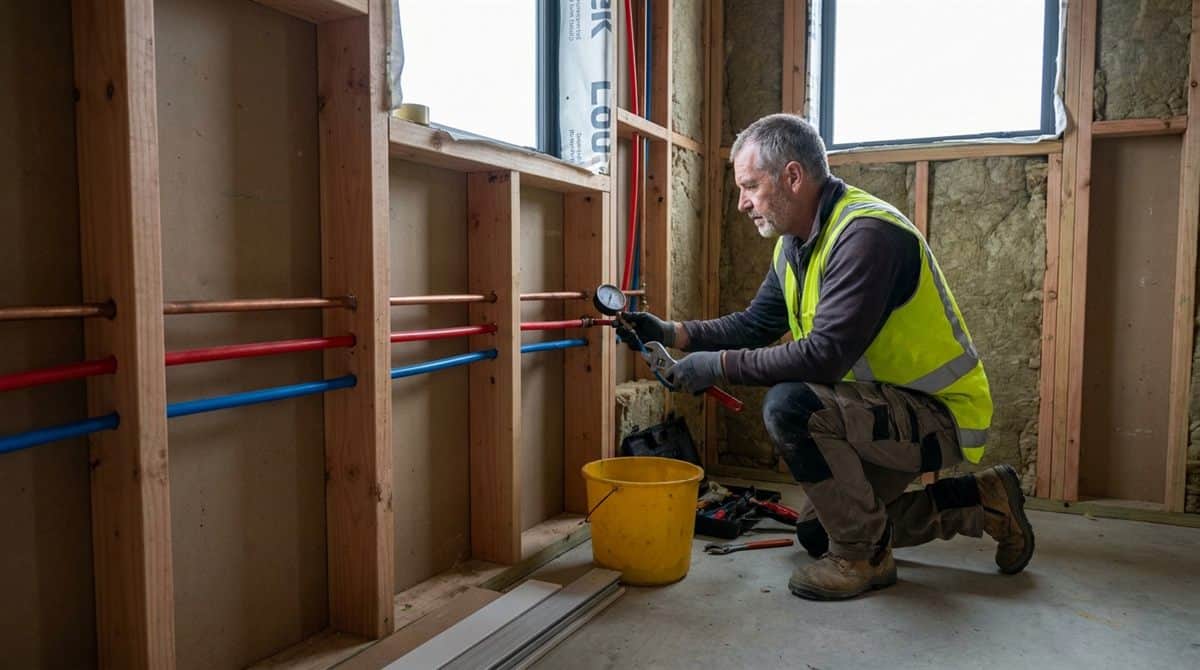
Applications for the plumbing and drainlaying self-certification endorsement opened on 7 September 2026. It costs $2,260 and it moves the inspection off your programme and onto your signature.
Every certifying plumber and drainlayer in the country now has a decision to make, and it has a price on it. Plumber self-certification costs $2,260 to apply for. The endorsement lets you sign off your own consented work instead of waiting for a council inspector, and applications opened on 7 September 2026. You apply to the Plumbers, Gasfitters, and Drainlayers Board, which grants it under the Plumbers, Gasfitters, and Drainlayers Act 2006.
The money does not buy a qualification. It buys permission to stop waiting for a building consent authority (BCA) to come and look at your work. Taking part is voluntary. It changes nothing about when a building consent is required, and nothing about the Building Code. What it does change is who confirms compliance: you sign a certificate of compliance, and a BCA inspector no longer signs off an inspection.
So the decision has three parts, and this article takes them in order. Whether you are eligible to apply. What the $2,260 and the training actually buy you, set against the inspection time it saves. And what you take on in exchange, because the responsibility that used to sit with the inspector now sits with your signature.
On a consented job the owner now has a choice. The Ministry of Business, Innovation and Employment (MBIE) sets it out in its guidance on how the scheme works. The BCA can inspect the plumbing and drainlaying in the usual way. Or an endorsed plumber or drainlayer can self-certify eligible work, and the BCA then must not inspect it.
That is the whole commercial case. On a residential job, the plumbing and drainage inspections often decide whether the linings go on this week or next. An inspection booked three days out, against a crew that is ready today, is dead time nobody pays for. Removing that wait is worth real money on a job that runs to programme. On a job that does not, it is worth nothing at all.
Three things have to line up before any of it applies. The work has to be an eligible type. The building consent has to list it as self-certifiable, so that decision belongs at consent stage rather than on site. And the person doing it has to hold the endorsement.
Only certifying plumbers and certifying drainlayers can apply. That is the highest level of registration, and a tradesperson-level licence has no route in. Beyond the licence, MBIE asks that you hold it currently and keep meeting all professional and disciplinary obligations.
The Board’s own application settings, finalised after a consultation that closed on 13 July 2026 and drew 170 submissions, add four more. To apply from 7 September 2026 you must:
The endorsement does not attach to a licence automatically, and renewing does not bring it. You apply through the Board’s trade login, and until the Board grants it you cannot self-certify anything. Homeowners can check who holds one on the Board’s public register. A separate public property register shows the certificates of compliance issued against a property.
Read the third and fourth requirements as what they are. Insurance and business systems are not a formality on an application form; they are the two things an audit will ask you to produce.
Plumber self-certification has a defined edge, and it is worth knowing before you promise a client anything. Work that does not need a building consent cannot be self-certified at all, because there is no consent for the certificate to attach to.
| Can be self-certified | Cannot be self-certified |
|---|---|
| Work in buildings of no more than three storeys | Work in buildings taller than three storeys |
| Standalone houses, townhouses and similar residential work | Apartment buildings |
| Work designed to an Acceptable Solution or Verification Method | Alternative solutions, unless the work is an on-site system |
| On-site systems using another compliance method where no Acceptable Solution or Verification Method exists | Civil works, such as underground systems servicing public infrastructure |
| Work listed as self-certifiable on the building consent | Work in a shared wall, or work that penetrates a fire separation |
An on-site system here means one that manages water independently of a network utility operator. That covers rainwater collection, wastewater treatment, stormwater disposal, storage, pumping, reuse and irrigation. The carve-out matters on rural and lifestyle-block work, where an Acceptable Solution often does not exist for the system a site actually needs.
In place of the inspection, you take responsibility for the work and you issue a certificate of compliance. The Board prescribes the form. You have 10 working days from completing the work to issue it, and it goes to three places: the owner, the BCA and the Board.

The BCA checks that the certificate carries all the required information, and must then accept it as evidence that the work complies with the building consent. That certificate then travels with the job. The owner needs it in the application for the code compliance certificate, so one that never arrives holds up the CCC on the whole build, not just your part of it.
Ten working days sounds generous until you are running four jobs. Finishing the physical work is no longer the end of the job. You have to write the certificate while you still remember which tests you ran on which property. Keep test results, photographs and the consent reference with the job as you go, on the day you do the work. That turns the certificate into a ten-minute task rather than an evening spent reconstructing a week.
The fee is an application fee and audit levy, and the second half is the part worth thinking about. Self-certification replaces an external check with an internal one, so the Board audits the people doing the certifying. That audit looks at your business systems and recordkeeping, not your pipework alone.
Accountability is otherwise unchanged. The scheme was created by the Building and Construction Sector (Self-certification by Plumbers and Drainlayers) Amendment Act 2026, passed on 2 June. That Act did not soften the consequences of getting the work wrong. Where self-certified work does not comply with the Building Code and the consent, the ordinary enforcement, disciplinary and consumer protection processes apply exactly as before. The practitioner who signed the certificate is the one holding it. The BCA has not gone away either. It still assesses the proposed work for Building Code compliance when it grants the consent. What it gives up is the inspection, and only where the consent says so.
There is one more quiet consequence. The Board tells homeowners to ask an endorsed plumber to confirm they hold civil liability insurance before engaging them. An endorsement is a public signal, so expect the question.
The endorsement is not free money, and for some businesses it will not pay for itself. If most of your work is service, maintenance and repair that never needed a consent, the scheme does not reach any of it. Subcontracting on jobs where another party sets the programme means you carry the certificate while someone else keeps the time you saved. And where recordkeeping is currently a phone full of photos, the training and the audit will find that before your clients do.
It pays off in three conditions together: consented residential work is the core of the business, inspection waits genuinely sit on your critical path, and the paperwork discipline already exists or you were going to build it anyway. Check that last one against your own records rather than assuming it. It is the same discipline that decides whether a busy plumbing business is actually a profitable one.
Work out what the inspection wait costs you in a year, counted in days you could not bill. Set that against $2,260, the training time, and the cost of getting your records to a standard an auditor will accept. If consented residential work is most of what you do and the delay is real, the arithmetic is straightforward. The endorsement is worth having early, while your competitors are still reading about it. If it is not, there is no penalty for staying with BCA inspections. Plumber self-certification is voluntary by design, and the owner still chooses either way.
ON AN AUDITED ENDORSEMENT
Ten working days to certify work you finished on a job you have already left.
Self-certification moves the evidence onto your records. SendWork keeps each job’s tests, photos, consent reference and sign-offs on the job itself, so a certificate of compliance is written from what you recorded on the day rather than from memory.