Go to SendWork
— Free for 7 Days
Full access
Full access

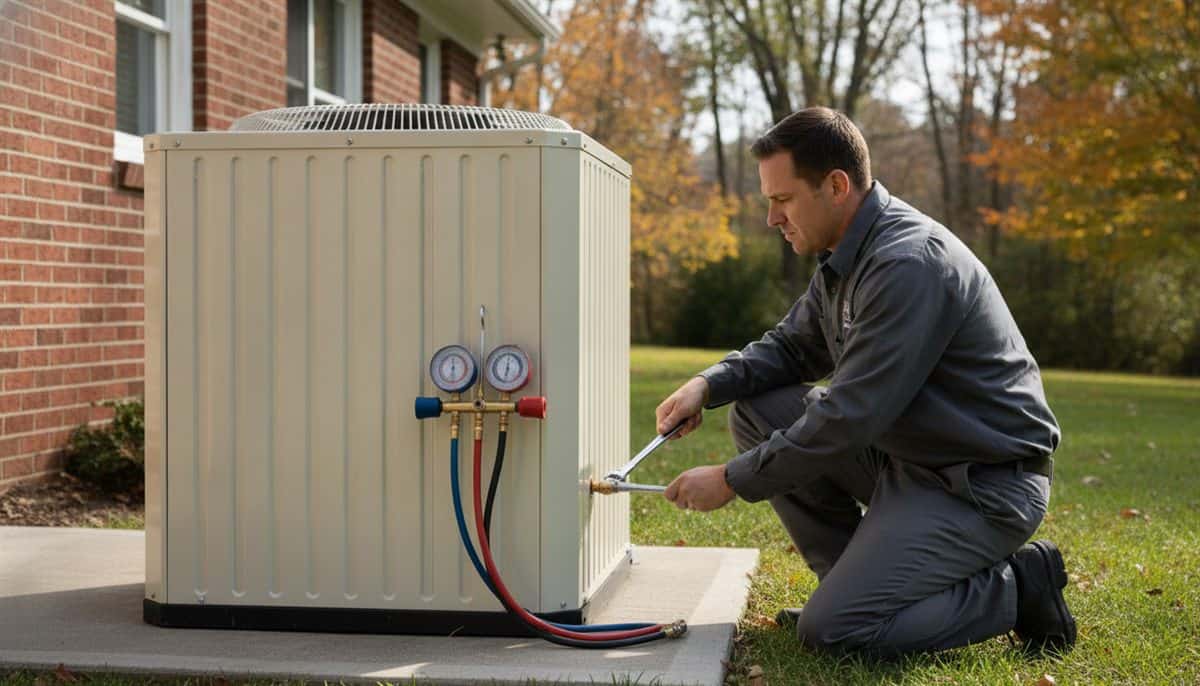
A labor-only workmanship warranty is your own contract; add parts or equipment and the Magnuson-Moss Warranty Act applies. A sample one-page warranty clause by clause, why yours is probably limited, the maintenance-plan condition to avoid and manufacturer registration.
A workmanship warranty that covers only your labor is your own contract, and federal warranty law leaves it alone. Add the parts or the equipment to the same promise, and it becomes a written warranty on a consumer product under the Magnuson-Moss Warranty Act. From that point, federal rules set its title, its contents and some of its conditions. Which side you’re on can turn on a single word, “parts”.
Below is a sample one-page warranty, clause by clause, with what each part has to say and where the law draws its limits.
The Magnuson-Moss Warranty Act is the federal law, passed in 1975, that governs written warranties on consumer products. The Federal Trade Commission (FTC) enforces it and wrote the rules under it. Nothing in the Act makes you give a warranty. But once you put one in writing on a consumer product, its rules apply.
The test is in 16 CFR 700.1(h): “warranties which apply solely to a repairer’s workmanship in performing repairs are not subject to the Act.” The same paragraph goes on: “Where a written agreement warrants both the parts provided to effect a repair and the workmanship in making that repair, the warranty must comply with the Act.” Oral promises are outside it too, because the Act covers only written warranties.
The next question is whether the thing you installed is a consumer product. The FTC’s rules answer it for most trades:
So an HVAC company that warrants “parts and labor” on a new heat pump is inside the Act. An electrician who warrants only their own workmanship on a panel change is outside it. A roofer who warrants the shingles and the installation on a reroof may well be inside it.
This is an illustration, not a form to copy unchanged. It’s a limited warranty that covers workmanship and the parts you supply. The notes under each clause say what the law asks.
“Limited Warranty on Workmanship and Supplied Parts — 2 Years.” On a consumer product costing more than $10, a written warranty must carry the title “Full” or “Limited” as a clear caption, under 15 U.S.C. 2303. You can add the length to it. A labor-only warranty doesn’t need the title, but a plain heading still helps the customer.
“We warrant the installation described in your contract dated [date], and any parts we supplied, against defects in materials and workmanship.” Tie it to the written scope. Our guide to change orders explains why any extra work agreed later needs its own written record.
“Two years from the date we complete the work.” Federal law doesn’t set a length. It does require you to say when coverage starts if that isn’t the purchase date.
“Damage from accidents, misuse, lack of reasonable maintenance, or work and parts by others.” These are lawful exclusions. You can exclude damage caused by someone else’s work, as long as you don’t require the customer to use only you.
“Call or text [number] or write to [address] with photos. We’ll inspect within five business days and repair any covered defect at no charge.” For a consumer product over $15, the FTC’s Disclosure Rule requires a step-by-step claims procedure, with your name and an address or free phone number. It also asks what you’ll pay for and what you won’t.
The same rule requires this sentence word for word: “This warranty gives you specific legal rights, and you may also have other rights which vary from State to State.” If you limit how long implied warranties last, or exclude incidental and consequential damages, each limit needs its own standard sentence beside it.

A “full” warranty has to meet five conditions in 15 U.S.C. 2304. You can’t limit how long implied warranties last. Coverage passes to any later owner during the term, and repairs must be free. After a reasonable number of failed repair attempts, the customer chooses a refund or a replacement. And you can’t make the customer do anything except tell you about the problem, unless you can show the duty is reasonable.
Several common contractor terms fail that test. Charging a trip fee for warranty calls is one. Covering only the original homeowner is another, and so is making the customer return a registration card. Any of them makes the warranty “limited”. That’s legal and normal. It just has to say “limited” in the title.
State law adds promises you never wrote, called implied warranties. For goods, the main one is that the product is fit for ordinary use. Under 15 U.S.C. 2308, once you give a written warranty on a consumer product you can’t disclaim them. A limited warranty can cap how long they last at the length of your written warranty, if that’s reasonable and clearly displayed.
Labor has its own version in many states. In Texas, for example, the state Supreme Court held in Melody Home v. Barnes (1987) that repair work carries an implied promise of good and workmanlike performance that can’t be waived. In Gonzales v. Southwest Olshan (2013), it added that a written agreement which specifically describes how the work will be done can replace that promise. So a specific scope of work does more for you than a disclaimer.
Federal law bans “tie-in” conditions. Under 15 U.S.C. 2302(c), a warrantor of a consumer product can’t make coverage depend on the customer using a named brand of part or a named company’s service, unless it’s free under the warranty. In the FTC’s own banned example, a warranty ends on “failure to have scheduled maintenance performed, at your expense,” by a named maintenance company.
Read that against a parts-and-labor warranty on a furnace that says “valid only with our annual maintenance plan.” On our reading of the rule, that’s the same structure, and the safer wording does three things:
If you want the plan to be a condition, include it free. A plan sold separately for a price is a service contract, not part of the warranty. Some states regulate those separately, and our guide to HVAC maintenance plans covers how to sell them on their own merits.
The equipment maker is the warrantor of its own warranty. You can’t void it by doing the install, and the maker can’t require authorized-only service for routine maintenance. But the maker can exclude damage that it can show came from improper installation. So your work still decides whether its warranty pays out.
Registration windows vary by brand. Carrier’s warranty page requires registration within 90 days of installation for its enhanced parts warranty, and Amana’s furnace page says 60 days. Both list places, including California, where buyers don’t need to register. Register the equipment yourself on install day and give the customer the confirmation.
Carrier’s page also notes that the installing dealer may charge for labor on a parts claim. That gap is what your workmanship warranty decides. Either you cover the labor to swap a failed part for a set period, or you say plainly that you’ll charge for it.
Whatever you promise, keep the job record that proves it: install date, model and serial numbers, photos and the registration confirmation. Our job documentation checklist lists what belongs in the file. Keep in mind that a callback to fix your own work isn’t what general liability insurance pays for, so the warranty is a cost you carry yourself.
THE LINE UNDER YOUR PRICE
A warranty the customer reads at the quote is one you can stand behind at the callback.
Two years of free labor is a cost, so it belongs in the price. SendWork builds and sends quotes from your phone, so the warranty terms sit in the quote the customer approves.