Go to SendWork
— Free for 7 Days
Full access
Full access

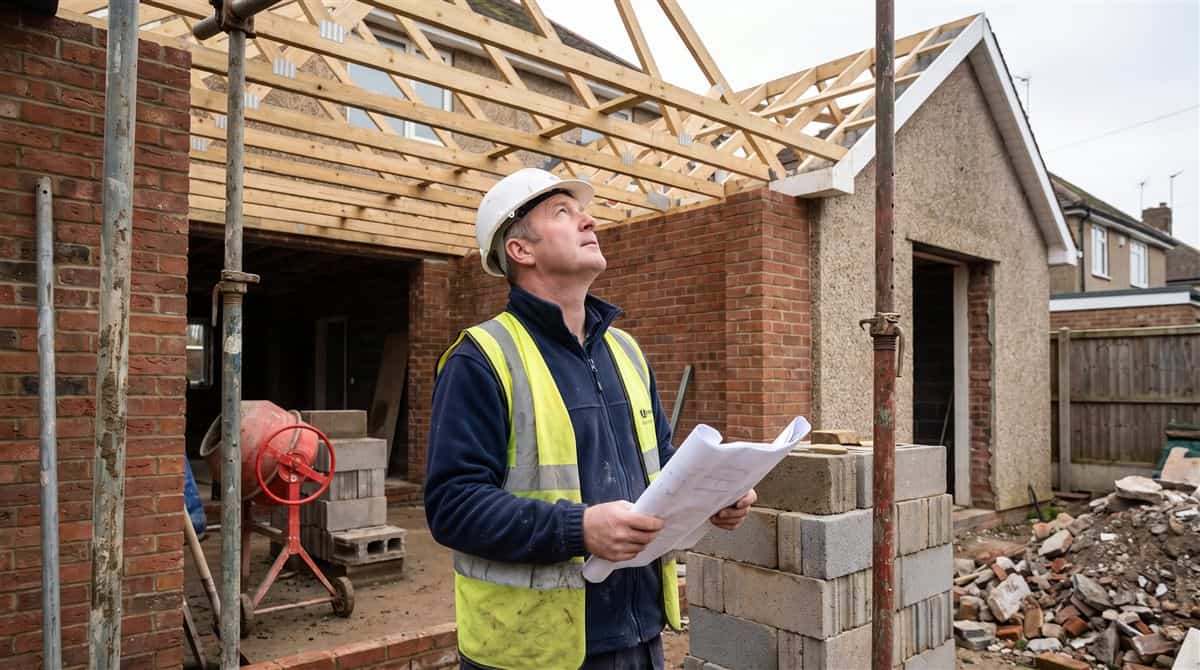
Clients ask for a day rate before they say what the job is. Why builder rates UK figures span £112 to £400, and how to pick the basis that carries the risk.
“What’s your day rate?” is the first question most clients ask a builder. It is also the one question that cannot be answered honestly on the spot. Published builder rates UK figures for 2026 run from £112 a day to £400. Not by region. Not by experience. For the same single word.
That spread is not a market. It is a vocabulary problem. “Builder” covers the labourer carrying blocks. It also covers the person carrying the programme, the insurance, and the liability for everyone else on site. Quote the second job at the first job’s number and you will not find out until the overrun. By then there is nobody left to absorb it but you.
Figures below reflect published 2026 UK guides and trade surveys, checked in July 2026. Building work moves with materials and labour supply. Read them as a spread to position yourself inside, never as a going rate.
Every other trade on a site has a boundary. An electrician is defined by what they are certified to touch. A gas engineer is defined by a register. A plasterer is defined by a surface. “Builder” has no such edge. The same client will use it for a two-hour repair and for a two-storey extension.
The first job of any quote, then, is not pricing. It is establishing which of at least four different roles you are being asked to fill.
| What the client says | What they are actually asking you to price | The basis that protects you |
|---|---|---|
| “Just need a pair of hands for a few days” | Labour only, someone else’s programme, someone else’s risk | Day rate — the one case where it genuinely fits |
| “Can you build the wall / lay the slab?” | A defined element with a measurable quantity | Rate per square metre or per unit |
| “Can you do the extension?” | Design compliance, sequencing, other trades, and the overrun | Fixed price against a written specification |
| “Can you just manage it for us?” | Coordination, liability and other people’s mistakes | Percentage or fee, priced separately from the works |
Read down the middle column and the pricing question answers itself. Three of those four rows are not day-rate work at all, yet all four arrive phrased as a day-rate question.
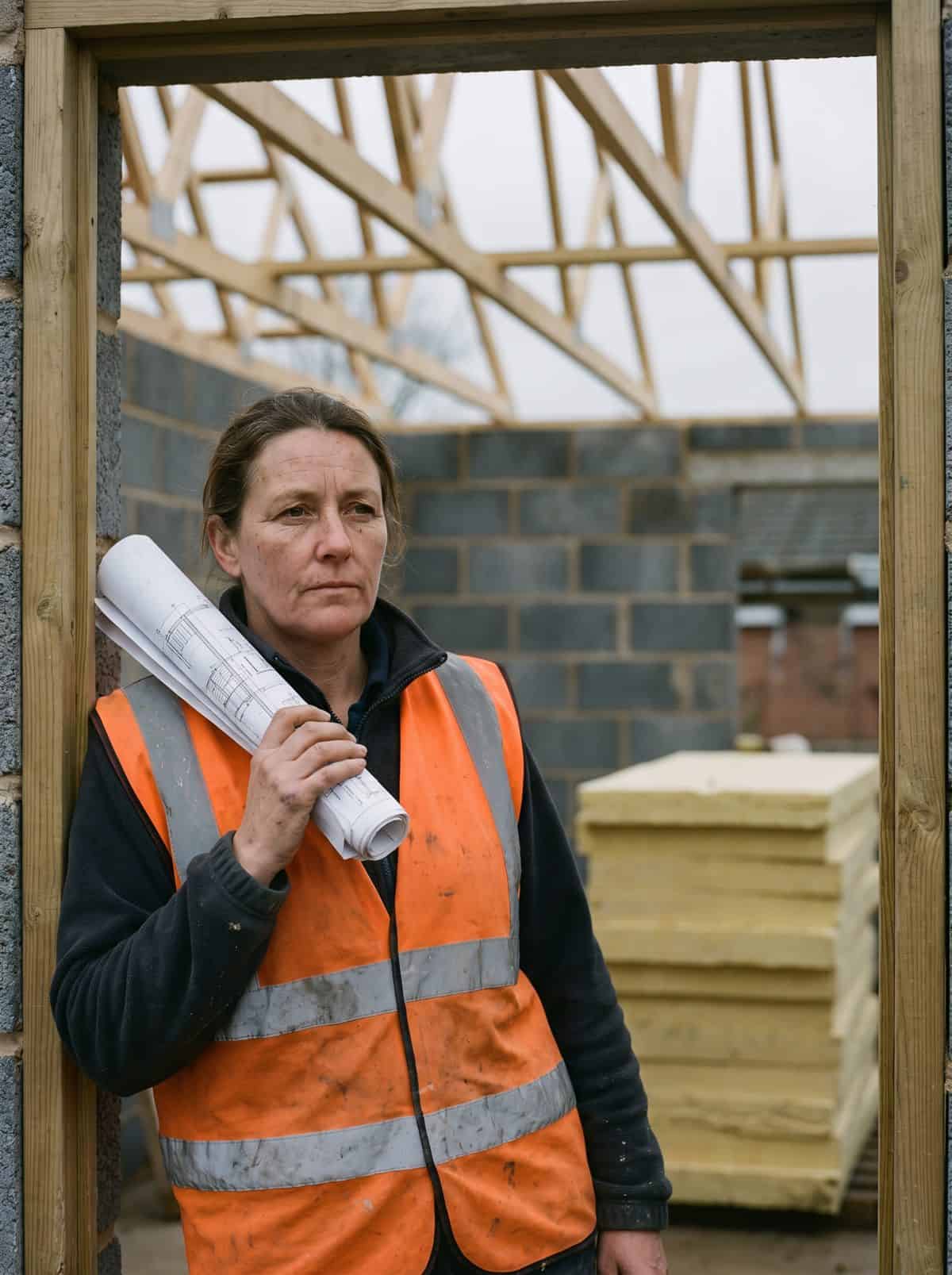
Published builder rates UK figures cluster in two bands once you separate the roles. A general labourer sits around £100 to £150 a day. A skilled tradesperson sits around £150 to £250. London and the South East run 20 to 40 per cent above that. Bricklaying is quoted separately across several 2026 guides. It lands between £200 and £300 across most of the country, and £300 to £380 in the South East. The per-square-metre equivalent is roughly £90 to £150 for labour.
Project figures behave completely differently, because they are not rates at all. Small repairs and odd jobs run £800 to £3,000. A single-room refurbishment runs £4,500 to £12,000. A single-storey extension runs £28,000 to £45,000 and upwards. That is commonly expressed as £2,000 to £3,000 per square metre, rising sharply in London.
Those two sets of numbers are not on the same axis. One is the price of a person for a day. The other is the price of an outcome, with materials, other trades, waste, plant and your own risk inside it. The £112 figure and the £400 figure are not disagreeing about builder rates UK. They describe different jobs that happen to share a noun.
Whichever basis you choose decides one thing above all others: who pays when the job takes longer than planned.
On a day rate, the client carries the overrun. That sounds like the safe option, and for genuinely open-ended work it is. It also caps your earnings at the speed of your hands. And it invites a conversation about why day nine was necessary. On a fixed price, you carry the overrun. That is where the money is. It is also where builders lose years. A fixed price against a vague specification is not a price. It is a wager on nobody changing their mind.
The per-square-metre basis sits between the two and is underused. It pays for output rather than hours, so getting faster pays you more. It also gives the client a number they can check. The basis only works where the quantity is genuinely measurable. That suits brickwork, slabs and roofs. It suits kitchens and renovations very badly.
One more thing sits underneath all three and is routinely left out of the sum. Quoting, pricing, chasing materials and explaining a variation in a wet garden all take real days. None of them are days on the tools. The arithmetic for turning a target income into a defensible daily figure is annual costs divided by honestly counted billable days. Not calendar days. It is worked through in the guide to electrician rates and transfers to building work unmodified.
Not a number. Ask what the job is, then price the role it actually requires. A client who wants a pair of hands for three days should get a day rate. A client who wants an extension should get a fixed price against a written specification. Name an allowance for the things nobody can see yet. Price variations before they happen, rather than arguing about them afterwards. The builders who make money in 2026 are not the ones charging the top of the published range. They are the ones who worked out which question they were being asked before answering it. Then wrote the answer down. That, more than any figure, is what builder rates UK guides cannot tell you.
ON THE VARIATION NOBODY WROTE DOWN
The contractor who sends a clean quote within the hour wins the job. Every time.
Most disputes on building work are not about the price. They are about what was agreed, when, and by whom — which is a record-keeping problem wearing a pricing costume.
Two related questions are worth reading next. Where a licence sets the floor instead, the logic shifts — see the guide to gas engineer rates. For what the work itself must satisfy, there is the guide to building control approval. And because every British trade hides a different question behind its published spread, which question each UK trade is answering is worth reading before you benchmark against any of them. All of it sits alongside the rest of UK pricing and market rates.