Go to SendWork
— Free for 14 Days
Full access
Full access

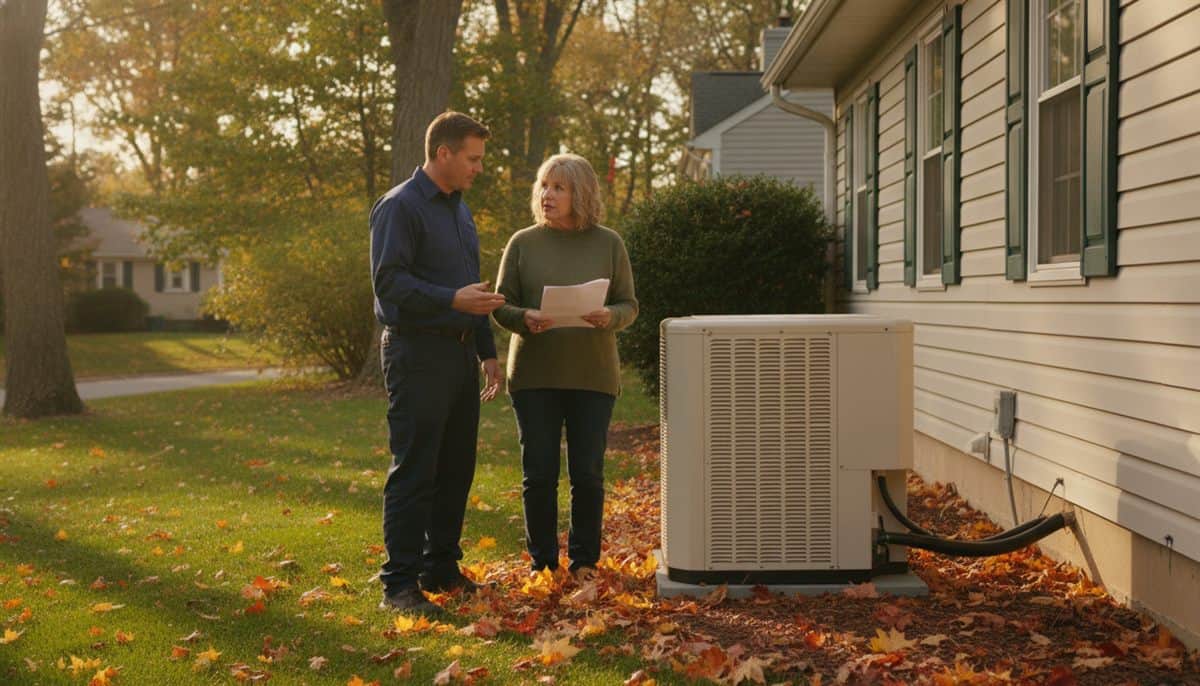
The 25C heat pump tax credit and the 25D solar credit ended for work installed after December 31, 2025. What that means for a deposit paid last year, for the customer still filing a 2025 return, for the rebates that may remain, and for the lines to change in your quotes.
For three years, a heat pump quote could carry a line worth up to $2,000 to the customer. That was the federal heat pump tax credit, part of the Energy Efficient Home Improvement Credit in section 25C. For a system installed in 2026, the figure is zero. Public Law 119-21, signed on July 4, 2025, ended the credit for any property placed in service after December 31, 2025. It ended the 30% Residential Clean Energy Credit for solar, geothermal and battery storage from the same date.
Customers have not all caught up, and neither has every quote template. This article is for the HVAC, insulation, window and solar contractor who still hears one question across the kitchen table: what about the tax credit? It covers what ended and exactly when, what a customer with a 2025 installation can still claim, and what may still exist locally. It also covers the lines that should come out of your quotes, website and sales script.
The IRS set out the change in its frequently asked questions on Public Law 119-21. For section 25C, “the credit will not be allowed for any property placed in service after December 31, 2025.” For section 25D, “the credit will not be allowed for any expenditures made after December 31, 2025.” The statute now says the same thing in 26 U.S.C. 25C and 25D.
Two different tests, but in practice one date. The IRS treats a 25D expenditure as made “when the original installation of the item is completed.” The 2025 Form 5695 instructions apply that rule to both credits: costs “are treated as being paid when the original installation of the item is completed.”
That settles the question a customer asks most often. A deposit paid in December 2025 on a system installed in January 2026 earns no federal credit. What counts is when the equipment was installed and running, not when the customer signed or paid.
| What the customer installed | Installed and running by Dec 31, 2025 | Installed in 2026 |
|---|---|---|
| Heat pump, heat pump water heater, biomass stove or boiler | 30% of cost, up to $2,000 a year (25C) | No federal credit |
| Central AC, gas furnace or boiler, electrical panel; home energy audit | 30%, up to $600 an item; audit up to $150; all within the $1,200 annual limit (25C) | No federal credit |
| Windows and skylights; exterior doors | 30%, up to $600; $250 a door, $500 total (25C) | No federal credit |
| Insulation and air sealing | 30% of materials, within the $1,200 limit (25C) | No federal credit |
| Solar panels, solar water heating, geothermal heat pump, battery storage | 30% of cost, no annual cap (25D) | No federal credit |
The middle column comes from the IRS pages for the Energy Efficient Home Improvement Credit and the Residential Clean Energy Credit. The 25C total was capped at $3,200 a year. For windows, doors and insulation, the Form 5695 instructions excluded the cost of installation labor. They are history now, but they are the numbers your customers remember.
One group of customers can still use the credit: the ones whose job you finished last year. Their claim goes on the 2025 return. That return was due on April 15, 2026, and a customer who filed an extension has until October 15, 2026.
That customer may call you this month, and the call is usually about paperwork. For specified property placed in service in 2025, the Form 5695 instructions require “the four-character alphanumeric unique qualified manufacturer identification number (QMID) for each item.” Insulation and air-sealing materials are the only exception the IRS lists. Windows, doors, skylights and heating and cooling equipment all need one.
A customer filing late will ask you for the QMID on the unit you installed. They will also want an invoice that separates equipment from labor, and the date the system went into service. If your job file holds the model number, the install date and the itemized invoice, that call takes five minutes. If it does not, it is a trip to the attic.

The tax credits and the federal rebate programs are different things. The Department of Energy’s Home Energy Rebates page describes two state-run rebate programs: up to $8,000 for whole-home efficiency and up to $14,000 for electrification. It says they “are now available in select states” and tells homeowners to contact their state or territory energy office. Whether a program is open in your state, and whether it still has money, is a question for that office. Utility rebates vary by utility and change during the year.
So the honest answer to “is there anything I can get?” is a checked one. Before the quote goes out, look up your state energy office and the utilities you work in. Put what you found in writing, with the date you checked it. Promising a rebate you have not confirmed repeats the old problem with a new name.
Two tax breaks that builders and commercial contractors worked with also closed this summer. The builder’s credit for new energy-efficient homes in section 45L “shall not apply to any qualified new energy efficient home acquired after June 30, 2026.” The commercial buildings deduction in section 179D does not apply to property “the construction of which begins after June 30, 2026.” Anyone selling to a spec builder or a commercial owner on either basis should check the dates on the project before promising anything.
Most of the outdated wording sits in three places: the quote template, the website and the pitch your techs give at the door. Go through each of them once.
| Where it sits | Old wording | Wording that still holds in 2026 |
|---|---|---|
| Quote line under the equipment | “Qualifies for up to $2,000 federal tax credit” | “The federal 25C credit does not apply to systems installed after December 31, 2025.” |
| Quote total | “Net cost after tax credit: $12,000” | The price, with no net figure. Show a confirmed rebate as its own line, with the program’s name. |
| Website or ad | “Save 30% with federal tax credits” | Remove it, or say what is actually available in your area and when you last checked. |
| Tech’s pitch at the door | “The government pays part of it” | “The federal credit ended last year. Let me check your utility and state programs before you decide.” |
For insulation contractors this is more than housekeeping. The FTC’s R-value Rule covers anyone who sells or installs home insulation, and section 460.23 is blunt: “Do not say or imply that your product qualifies for a tax benefit unless it is true.” For every other trade, section 5 of the FTC Act prohibits deceptive practices in general. A claim that was true in 2024 is not true now just because it is still on the page.
An illustration, not a real job: a $14,000 heat pump replacement quoted in the fall of 2025 might have shown “up to $2,000 back at tax time.” The same quote in October 2026 should show $14,000. If the customer’s utility confirms a rebate, that goes on its own line, with the utility’s name and the date you checked. The customer is comparing two numbers they can rely on, and so are you.
Where the credit used to do the persuading, the job itself now has to. Operating cost, comfort and what the old system will cost to keep running are what carry a replacement quote. The HVAC rates guide covers pricing the install so the margin survives without a subsidy in the sentence. Without an incentive to hurry the customer, a fast and clear quote matters more, which is the argument behind why slow estimates lose jobs.
You can tell a customer what the law says and when the credit ended. For last year’s jobs, the model, the QMID, the install date and an itemized invoice are yours to hand over. What you should not do is tell them what they will get back on their return. That depends on their tax situation, and it belongs with their preparer.
Before the next quote goes out:
ON THE LINE THAT HAS TO COME OUT OF THE QUOTE
A quote copied from last year still carries last year’s promises.
The credit line is easy to delete once. The harder part is the customer who calls in October for a 2025 model number, install date and itemized invoice. SendWork keeps quotes, jobs and customer records together, so last year’s job file is there when that call comes and this year’s quote starts from what is true now.
See how HVAC contractors keep quotes and job records together →