Go to SendWork
— Free for 7 Days
Full access
Full access

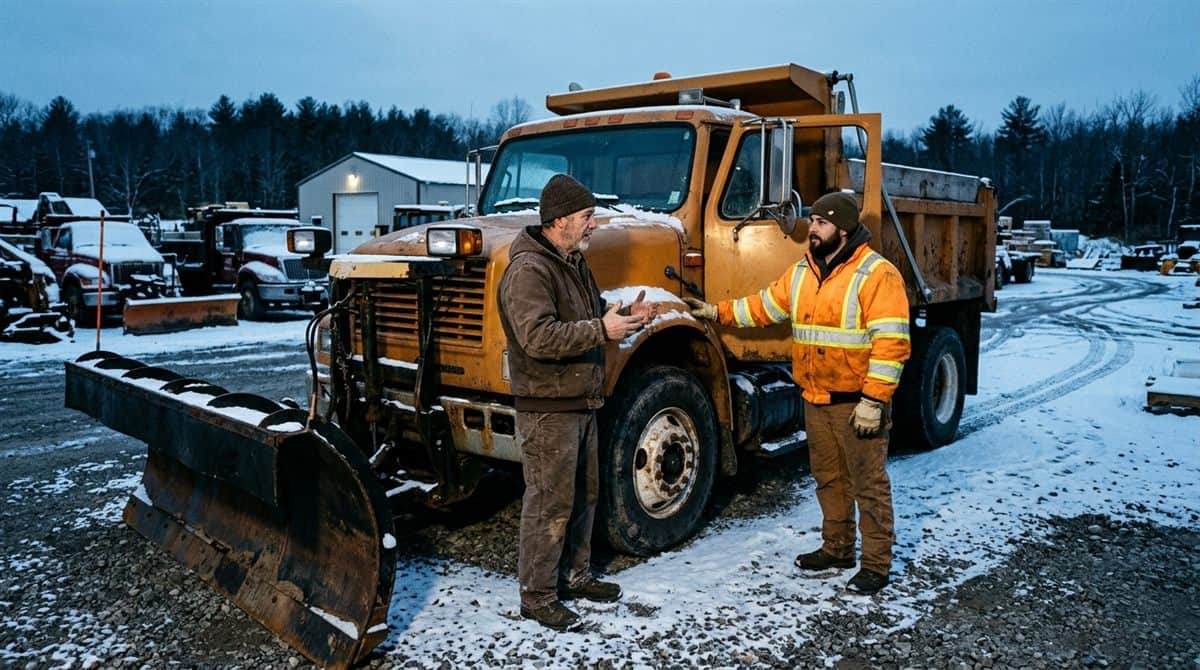
Your plow driver from last winter calls in late November wanting his seat back, with the first snow a week out. Before he drives a mile, you need a clear CDL drug and alcohol clearinghouse query and a negative DOT drug test on file.
Your plow driver from last winter calls in late November wanting his seat back, with the first snow a week out. Before he drives a mile, you need a clear CDL drug and alcohol clearinghouse query and a negative DOT drug test on file.
Call him Luis. He last drove your tandem on March 13, 2026, and that week you took him off the payroll and out of the random testing pool. Over the summer he worked on a landscaping crew that never put him in a DOT program. Now he wants to start again on Monday, November 23. Eight months outside any testing program means a new drug test and a new full CDL drug and alcohol clearinghouse query, just as a stranger would need.
Marcus is a stranger, and he may be ready first. A paving company laid him off on November 6 after keeping him in its random pool all year. He applies to you on November 18. That is twelve days out of a compliant program, with a year in its random pool, so he fits a narrow exception that lets you skip the drug test. You still run the full query and collect his old program’s details before he drives.
Say both queries come back clear, and Luis’s collection appointment is Monday the 23rd. Until the medical review officer reports a verified negative, he can’t do the pre-trip or sit in the yard on standby. If the snow comes early, Marcus takes the route and the driver who knows it waits for a phone call. The rule tracks the testing program, not experience.
The testing rules follow the license, not the job title. Part 382 of the federal motor carrier rules covers every driver who must hold a commercial driver’s license under Part 383, and that driver’s employer (49 CFR 382.103). 49 CFR 383.5 sets out the license groups that matter for a plow fleet:
A one-ton pickup with a plow needs no CDL, and neither does a 19,500-pound single-axle truck that isn’t towing a heavy trailer. Their drivers are outside Part 382, though other federal rules may still apply. Our guide to USDOT numbers for contractor trucks and trailers covers those lower thresholds.
Staying inside one state does not get you out. Part 383 applies in “interstate, foreign, or intrastate commerce” (49 CFR 383.3), so the testing rules reach a contractor who plows parking lots in one county. That section does let a state waive the CDL for emergency snow and ice removal, but only for drivers employed by a unit of local government. It does nothing for a private contractor plowing the same town’s streets under contract.
A 1099 doesn’t take the driver out of it either. Part 382 defines a driver to include casual and occasional drivers, leased drivers and independent owner-operators (49 CFR 382.107). Whatever his 1099 or W-2 status for payroll, the man in your CDL truck is your driver here.
The Commercial Driver’s License Drug and Alcohol Clearinghouse is an online database that the Federal Motor Carrier Safety Administration (FMCSA) runs. The Clearinghouse records CDL drivers’ drug and alcohol violations, such as positive tests, refusals and alcohol results of 0.04 or higher. It also shows whether a driver has finished the return-to-duty process. Using it is a legal requirement for every employer of CDL drivers, not an optional service. The rules sit in Subpart G of 49 CFR Part 382, which FMCSA’s 2016 Clearinghouse rule added, and employers have had to comply since January 6, 2020.
You register as an employer on the Clearinghouse website and buy a query plan there. FMCSA charges $1.25 per query, limited or full, according to its query plan page. The driver needs his own account too. A full query releases his record only after he approves it electronically in that account (49 CFR 382.703). If he refuses consent, he can’t do safety-sensitive work for you.
“Safety-sensitive” covers more than driving. Section 382.107 includes waiting at your yard for dispatch, inspecting or servicing the truck, and loading. That is why a driver still waiting on his result can’t sit in the cab for the storm.
If his full Clearinghouse query shows an unresolved drug or alcohol violation, he can’t drive your CDL truck. Nor does he keep the license for long: since November 18, 2024, once FMCSA notifies his state of that status, the state must remove the CDL privilege within 60 days (49 CFR 383.73(q)).
Usually, yes. The exception in 382.301(b) lets you skip the pre-employment drug test only if all three of these hold:
Luis fails the first condition by months. Marcus meets all three, and using the exception means paperwork. Get his testing program’s name and address, confirmation that it follows 49 CFR Part 40, his last test date and any results from the past six months. Keep them with his testing records.
A driver you expect back next season can be handled another way. FMCSA’s guidance on seasonal layoffs says he needs no new pre-employment test if he stays your employee through the layoff and you keep him in your random program. He then stays open to random selection all summer. You make that choice in March, when the seasonal drivers leave, not in November.
Rehiring Luis also means another look at his Form I-9, which has its own rules for seasonal rehires. Check with your insurer, too, that both men are listed as drivers on your commercial auto policy.
Every CDL driver you employ goes in a random pool. Section 382.305 sets the minimum yearly rates at 50% of average driver positions for drugs and 10% for alcohol. FMCSA raised the drug rate to 50% for 2020 and must publish any change in the Federal Register. It has published none since, so those rates apply for 2026. Random tests must come without warning and spread through the year, and a selected driver heads to the collection site right away. A small employer can join a consortium, where a third-party administrator pools many employers’ drivers and makes the picks. You stay responsible for meeting the rate.
The annual query can be a limited query, which only says whether anything is on file. The driver can give one consent covering limited queries for more than a year. When a limited query shows something, you must run a full query within 24 hours. Otherwise he stops safety-sensitive work until a full query comes back clear (382.701(b)).
Drive your own CDL truck and the rule treats you as both employer and driver (382.103(b)). Your own pre-employment test, random selection and annual query all apply. When you are the only CDL driver on the books, say over the summer, a pool of one won’t do. The rule requires a random pool of two or more covered drivers, which in practice means a consortium. You must also designate that administrator in the Clearinghouse to report on your own record (382.705(b)(6)).
Section 382.401 sets the periods. Keep the records somewhere secure with controlled access. FMCSA can ask to see them at your principal place of business within two business days.
WHILE A TEST RESULT IS PENDING
Know which routes need another driver before the snow starts.
A driver waiting on his result can’t take the truck out, even on standby. With SendWork you assign each plow route to a named driver and truck in the schedule. You can see which routes rest on a driver still waiting, and move them the night before.