Go to SendWork
— Free for 7 Days
Full access
Full access

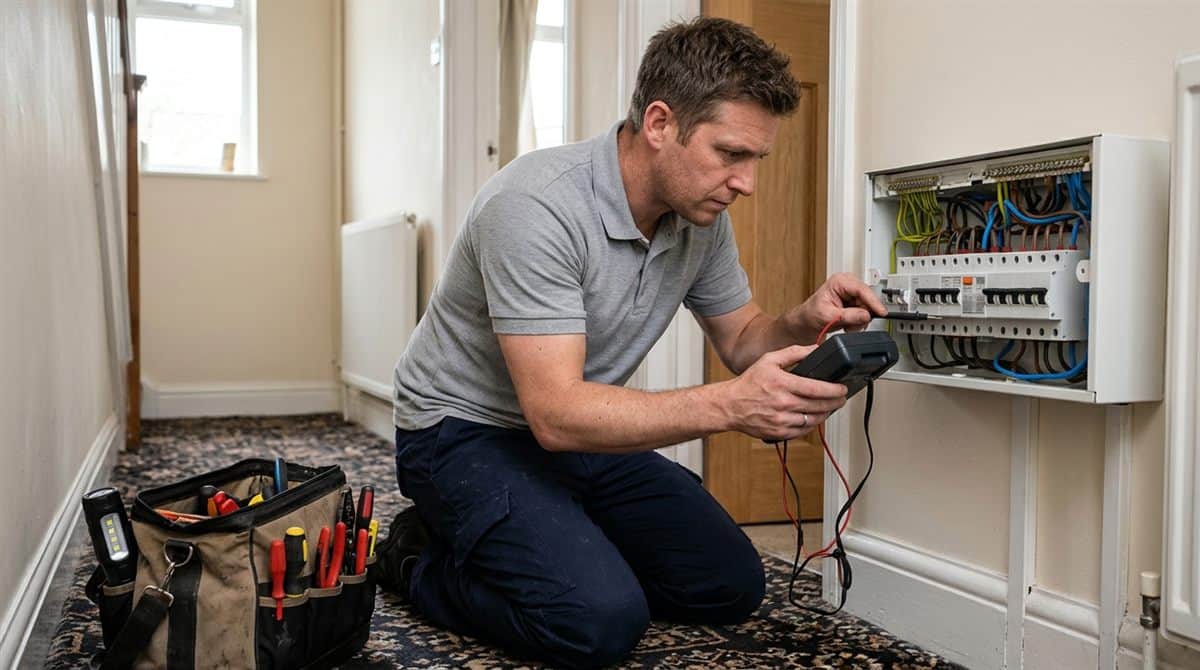
You test a rental on Monday and send the landlord EICR on Friday. The landlord's 28 days began on Monday. Your report's wording and speed decide how much of that is left for the repair.
That’s the rule in England. Once your report calls for remedial work, the landlord has 28 days to finish it, counted from the day you inspect and test, not the day the report lands in their inbox. The duties are the landlord’s, but almost every step runs through your landlord EICR: it sets the next inspection date and the remedial deadline. A qualified person’s confirmation then closes the job.
The law is the Electrical Safety Standards in the Private Rented Sector and Social Rented Sector (England) Regulations 2020. Ministers made them under the Housing and Planning Act 2016, and local councils enforce them. They are a legal requirement on landlords, not industry guidance. At first they covered private tenancies only: new tenancies from 1 July 2020, and existing ones from 1 April 2021.
Social housing came in through the Electrical Safety Standards in the Private Rented Sector (England) (Amendment) (Extension to the Social Rented Sector) Regulations 2025. Since 1 November 2025, the rules have applied to social tenancies granted on or after 1 December 2025. For older social tenancies, the first inspection had to happen before 1 November 2026. That deadline has passed. A housing association or council home with no report is already late, and remedial deadlines from the autumn inspections are running now.
The landlord must have the installation inspected and tested by a “qualified person” at least every five years. The regulations define that as someone competent to do the inspection and any follow-up work. The standard is BS 7671, which the regulations still call the 18th Edition, with no amendment named. Our article on BS 7671 Amendment 4 covers which version applies to new work. To find someone qualified, GOV.UK’s guidance for landlords points them to industry registers.
A council that finds a breach can serve a remedial notice or arrange the work itself. It can also fine the landlord up to £40,000, a limit that rose from £30,000 on 1 November 2025. These rules cover England only. Wales and Scotland run their own five-yearly regimes under different laws.
Under regulation 3(3), the landlord must get a report from you with the results and the date of the next inspection. Five years is the maximum, not the default. If the installation’s condition justifies an earlier date, put it on the report. That date then becomes the landlord’s legal deadline.
The landlord then has to pass the report on. Each existing tenant gets a copy within 28 days of the inspection. A new tenant gets one before moving in, and the council gets one within seven days if it asks in writing. The landlord keeps it until the next inspection and gives a copy to whoever does that one. So expect someone to hand you the last report when you arrive.
Social landlords have an extra layer. A registered provider that supplies appliances, such as cookers and fridges, must now have each one checked at least every five years. The regulations call the result an ISIT record, short for in-service inspection and testing. Your landlord EICR for a social landlord must state whether those checks are up to date for each listed appliance. So ask for the equipment list and the latest ISIT records when you take the booking, not on the day.
GOV.UK’s guidance explains the codes for landlords. C1 means danger present, and C2 means potentially dangerous. Either one makes the report unsatisfactory, and the landlord has to get remedial work done. FI means the installation needs further investigation without delay, and the landlord must arrange it. C3 recommends an improvement, and the landlord doesn’t have to act on it.
The legal trigger is wider than the codes, though. Regulation 3(4) applies when the report “requires” further investigative or remedial work, and the regulations don’t mention codes at all. The landlord has 28 days, or any shorter period your report specifies, starting with the date of the inspection. If a fault needs fixing within a week, say so plainly on the report. That shorter period becomes the deadline.

Not every job fits in 28 days, and the guidance accepts that. Its own example is a consumer unit swap that waits on the energy supplier to fit an isolator. A landlord who took all reasonable steps isn’t in breach. A dated note from you explaining the hold-up helps them show it.
Once the repair is complete, the landlord needs written confirmation from a qualified person. It must say that the installation now meets the standards, or that it needs more work. Under regulation 3(5), the landlord sends that confirmation, with the original report, to each tenant and to the council. The deadline is 28 days from completion, and the council gets a copy every time, not just when it asks.
GOV.UK lists what counts as written confirmation. A satisfactory EICR, an Electrical Installation Certificate or a Minor Electrical Installation Works Certificate will all do. Nothing requires the inspecting electrician to do the repair or sign the confirmation. If another firm does the remedials, the landlord still needs that paperwork from them.
Price the landlord EICR on its own, then quote the remedials once you’ve seen the installation. Include the confirmation certificate in the remedial price, because the landlord can’t close the job without it. If you find C1 or C2 items, tell the landlord before you leave and pencil in the return visit then.
Keep a record of every visit you couldn’t complete. A landlord whose tenant refuses access has a defence for taking all reasonable steps. Your dated note of the attempt is part of their evidence, and it gives you a clean basis for charging the wasted trip.
A few scope questions come up on most landlord jobs. GOV.UK says a re-let doesn’t need a new report if the current one is under five years old and requires no work. It still recommends a visual check. Communal stairwells and corridors fall outside these regulations. Solar PV and battery storage are part of the installation, though the guidance says they may need a separate specialist inspection.
Gas engineers have their own version of all this in the landlord gas safety record, with a yearly cycle and a different early-booking rule. For social landlords’ repair timescales, our guide to Awaab’s Law covers what applies to repairs contractors.
WHILE YOU’RE STILL AT THE BOARD
Quote the remedials before the 28 days start slipping.
Every day between the inspection and the landlord’s go-ahead comes out of their 28. With SendWork you can build the remedial quote on your phone before you leave. It stays with the landlord’s job and property, so the go-ahead and the return visit come sooner.