Go to SendWork
— Free for 7 Days
Full access
Full access

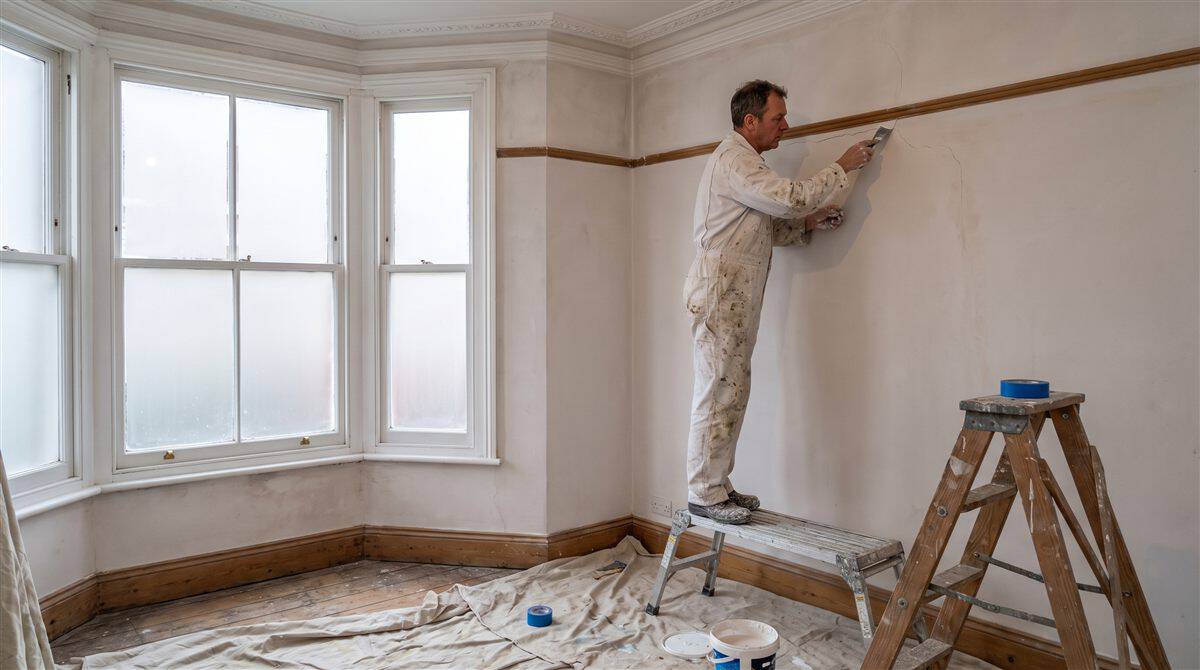
Published day rates for British decorators run from £127 to £700 — because "painter and decorator" is one job title covering two trades at two prices. How to tell which one you are selling, and why preparation is the line item nobody itemises.
Published decorator rates UK figures for 2026 run from £127 a day to £700. That is not a market with regional variation. That is a market where one job title is doing the work of two.
A flat repaint of three bedrooms and a Victorian reception room with hand-hung paper, restored architraves and a colour scheme are both booked by ringing a “painter and decorator”. They are not the same trade, they do not take the same skill, and pricing them off the same day rate is how decorators end up subsidising the interesting work with the dull work.
Figures checked July 2026 against published 2026 UK rate data. Rates move; treat these as market ranges to test against your own costs, not a price list.
The consumer-facing directories sit low. One large database puts the national average at £161 a day and £24 an hour; another lists £127 to £271. Trade-side guides sit far higher — £180 to £280 for a solo decorator, £280 to £420 in another, with a widely quoted national average of £325 for an established sole trader. London and the South East run £240 to £350 a head, and heritage specialists doing lime finishes or gilding reach £500 to £700.
Some of that gap is regional and some is experience. Most of it is that the low figures are averaging in labourers, second pairs of hands and part-time work, while the high figures are pricing a skilled sole trader who brings their own preparation standard. An apprentice working alongside a senior decorator is £80 to £140 a day. Put that in the same average as a heritage specialist and the mean stops meaning anything.
| What the customer is actually buying | Typical 2026 day rate | What it includes |
|---|---|---|
| Painting — straightforward repaint, sound walls | £180–£220 | Mist coats, emulsion, gloss woodwork, basic filling and caulking |
| Decorating — papering, awkward substrates, coordinated finishes | £280–£450 | Hand-hung paper, stain-blocking, minor plaster repair, feature work |
| Heritage and specialist | £500–£700 | Lime-based finishes, gilding, hand-painted work, listed buildings |
| Second pair of hands | £80–£140 | Apprentice or labourer working under a senior decorator |
Quote the middle row at the top row’s price often enough and the business quietly becomes a painting business that occasionally does decorating for free.
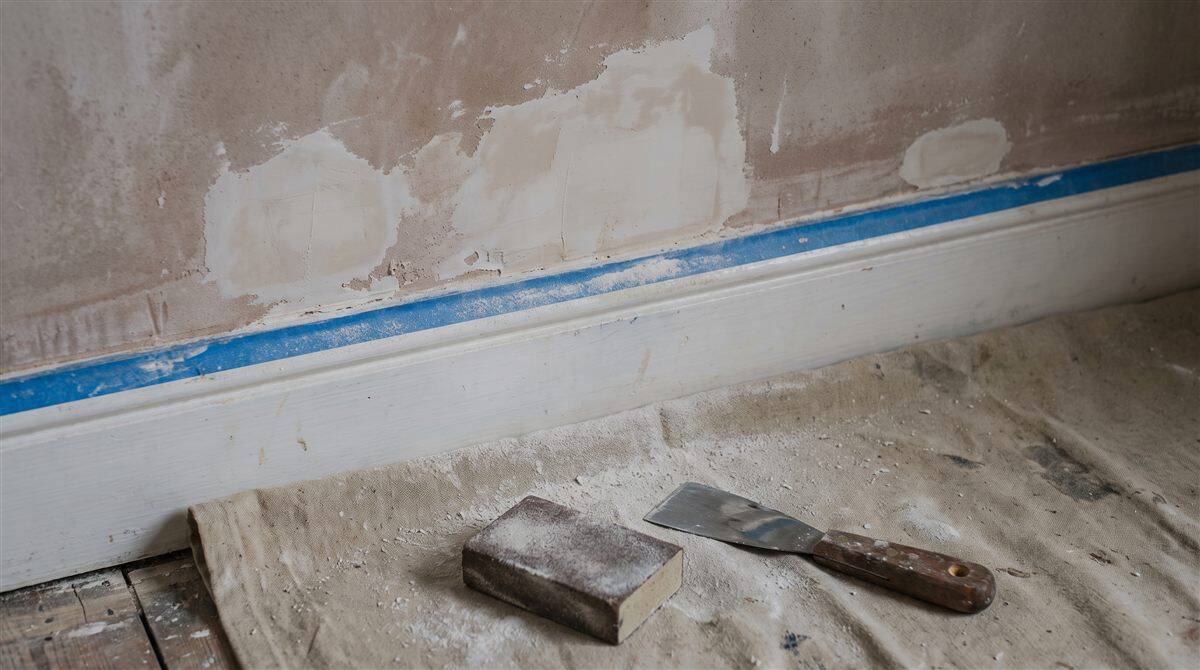
Paint goes on fast. Everything before it does not.
Filling, caulking, sanding, stain-blocking, masking, moving furniture and protecting floors routinely take longer than the painting itself on any room that has been lived in. A customer comparing two quotes sees a number and a number. They do not see that the cheaper decorator has priced two days because they are not going to fill properly.
This is worth saying out loud on the quote, because it is the one thing that reliably wins the job against a lower price. Itemise the preparation. Name the hours. A customer who understands why the higher quote is higher will often take it; a customer shown only a total will always take the smaller one.
Two more things sit outside the day rate and get absorbed by accident. Full plaster re-skims are a plasterer’s job, not yours — above roughly half a square metre of damage, say so and price accordingly. And commercial or site work needs a competence card before you are through the gate, which is a renewable overhead covered in the guide to construction site cards.
Most domestic customers do not want a day rate. They want to know what the room costs. That preference is worth leaning into, because a fixed room price pays you more as you get faster, while a day rate quietly penalises competence.
The arithmetic underneath is the same one every trade runs. Total what the business must recover in a year — van, insurance, tools, accountancy, phone, pension, dust sheets and consumables — add what you need to earn, then divide by the days you will realistically be on the tools rather than the days in the year. Quoting, materials runs, holiday and illness take a serious bite; most sole traders bill nearer 180 days than 250. The same sum is worked through end to end in the guide to electrician rates, and the numbers change but the method does not.
Then convert that day figure into room prices using your own timings, not a directory’s. A hallway, stairs and landing is the job that most often destroys a week — awkward access, spindles, multiple doors, work at height — and it is consistently the most underquoted room in British decorating.
ON THE PREP THEY NEVER SAW
Clients don’t just hire the best contractor. They hire the one who looks like they have their act together.
A quote that shows the preparation, arrives the same day and reads clearly wins work from decorators who are cheaper. Most of that is admin, not brushwork.
Decorating is not the only trade where the job title hides two different prices. The same problem in its most extreme form — one word covering everyone from a labourer to a main contractor — is taken apart in the guide to builder rates. Where the call-out fee rather than the day rate settles the job, see the guide to plumber rates. For a side-by-side view of what every UK trade rate spread is measuring, start with the five-trade comparison. The wider set is under UK pricing and market rates, with the regulatory side under UK licensing and regulations.