Go to SendWork
— Free for 14 Days
Full access
Full access


EPA removed the installation deadline for R-410A residential and light commercial systems built before 2025. The test is the components, not the box — here is what qualifies and what to keep on file.
Somewhere on the back rack sit three condensers that have been there since the spring of 2024, with a matched air handler behind them. Nobody wanted to be the one to write them off, and for most of this year nobody was sure whether R-410A installation from that stock was still allowed. As of July 27, it is.
The EPA finalized a reconsideration of its Technology Transitions rule on May 26, 2026, and the part that matters to a residential or light commercial contractor is short: the R-410A installation deadline for qualifying pre-2025 systems is gone. Not extended — removed. What follows is what qualifies, what the rule leaves untouched, and why the paperwork you keep is a business decision rather than a regulatory one.
Under the AIM Act, the 2023 Technology Transitions rule prohibited new residential and light commercial air-conditioning and heat pump systems using a refrigerant with a “global warming potential of 700 or greater.” R-410A sits far above that line, which is why the market moved to R-454B and R-32.
The rule then set two separate dates, and conflating them is where most of the confusion came from. Manufacture and import of the restricted components had to stop by January 1, 2025. Installation had a later date: systems above the GWP limit “may be installed prior to January 1, 2026, where all specified components of that system are manufactured or imported prior to January 1, 2025.”
So the original scheme gave the industry one year to install what had already been built. For anyone still holding stock in the middle of 2026, that year had run out.
The final rule removes the installation deadline for that subsector. In the EPA’s own words, it is “remov[ing] the installation deadline for systems in the residential and light commercial air conditioning and heat pumps (AC/HP) subsector, where all specified components of such systems were domestically manufactured or imported before January 1, 2025.”
There is no replacement date on R-410A installation from that stock. You can install the qualifying inventory until it runs out.
| Date | What it governs | Status now |
|---|---|---|
| January 1, 2025 | Manufacture or import of the specified components | Unchanged — this is the qualifying test |
| January 1, 2026 | Installation deadline for qualifying systems | Removed |
| July 27, 2026 | Effective date of the final rule | In force |
This is the part worth reading twice, because it is not about the crate or the model year on the invoice. The 2023 rule defines specified components as “condensing units, condensers, compressors, evaporator units, and evaporators,” and the allowance applies where all of them were manufactured or imported before January 1, 2025.
A matched system assembled from a 2024 condenser and a 2025 evaporator coil does not qualify on the strength of the condenser. The date attaches to every listed component. So a mixed pairing, pulled from two corners of the warehouse, needs checking rather than assuming.
This also cuts the other way, in the contractor’s favor. Equipment sitting in a distributor’s warehouse, or on your own rack, does not lose eligibility because time passed. Anything built before 2025 stays eligible.
Three things are worth separating out, because a rule change in one area tends to get read as a general reprieve.
Nothing here brings back manufacture. The January 1, 2025 line on making and importing these components still stands, so the pool of qualifying equipment is finite and shrinking. R-454B and R-32 are still where new equipment is, along with the A2L handling that comes with mildly flammable refrigerant — different leak-detection expectations, different tooling, and installation practice worth training for rather than improvising.
Nor does it change servicing. Your EPA 608 duties on equipment already in the field — leak repair thresholds, recordkeeping, technician certification — form a separate regime, and this rule does not touch them. Our guide to EPA 608 compliance for commercial HVAC covers those duties and where they bite; refrigerant leak detection covers the automatic side. Read the first with its date in mind. It went up while the reconsideration was still open, and this final rule closed it.
And federal is not the only layer. Several states run their own HFC rules on their own schedules, and a federal deadline disappearing does not remove a state one. Check your state’s position before you quote a job on pre-2025 stock.
The final rule places no new recordkeeping requirement on installers or distributors for this provision. That is worth saying plainly, because it is easy to invent an obligation that does not exist.
It is still worth keeping evidence, for a commercial reason rather than a regulatory one. If a manufacturer’s warranty question, a home inspection, a utility rebate or a resale comes back to you in three years, the argument that the equipment qualified is only as good as what you can show. A short record attached to the job is enough:
The last one is not paperwork so much as the thing that prevents an argument. A customer buying an R-410A system in 2026 should know three things: it is serviceable, it is legal, and the refrigerant sits on a long phase-down. Tell them you chose it together, on price and availability.
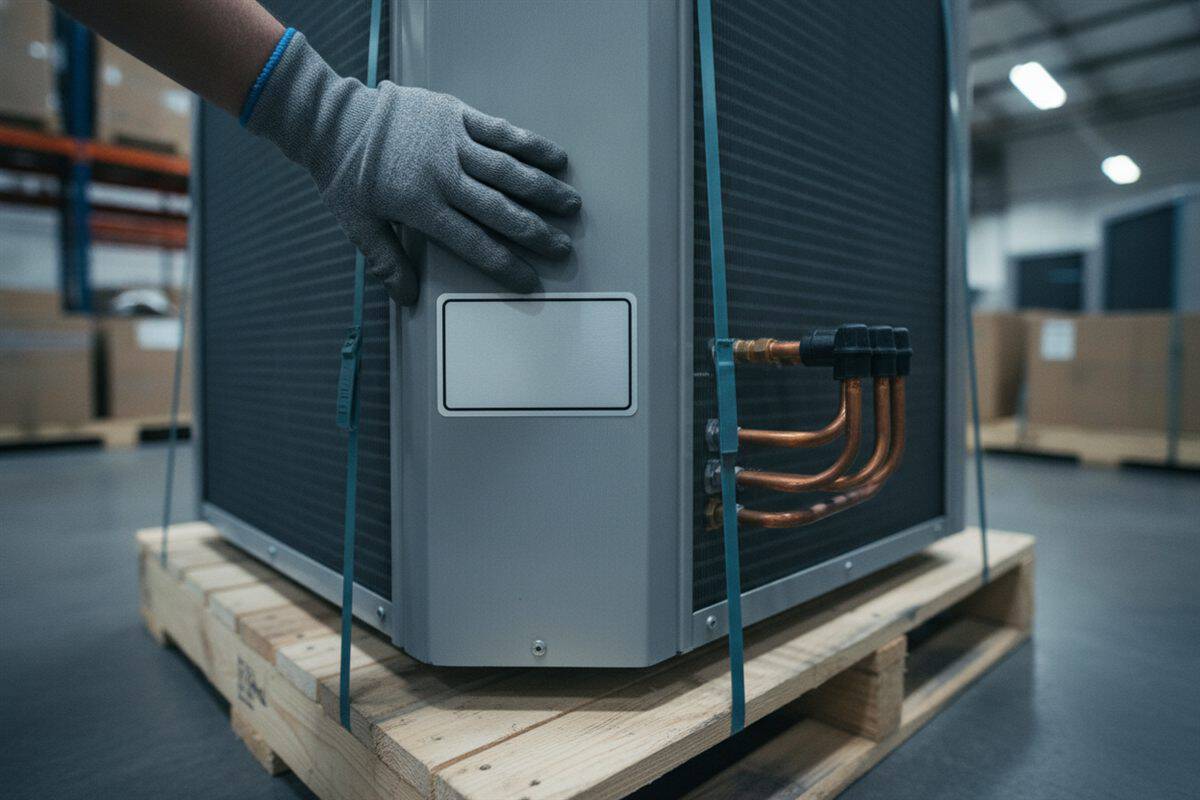
For the wider picture of how a service business handles a transition like this without losing margin on it, see building a commercial HVAC business.
ON THE SERIALS NOBODY WROTE DOWN
The install you can explain in three years is the one you documented on the day.
Nothing in this rule requires a record, which is exactly why the record goes missing. SendWork keeps the job, the equipment details and what the customer was told on one client history, so a question three years out has somewhere to be answered from.
EPA final rule, 91 FR (May 26, 2026) · EPA Technology Transitions program