Go to SendWork
— Free for 7 Days
Full access
Full access

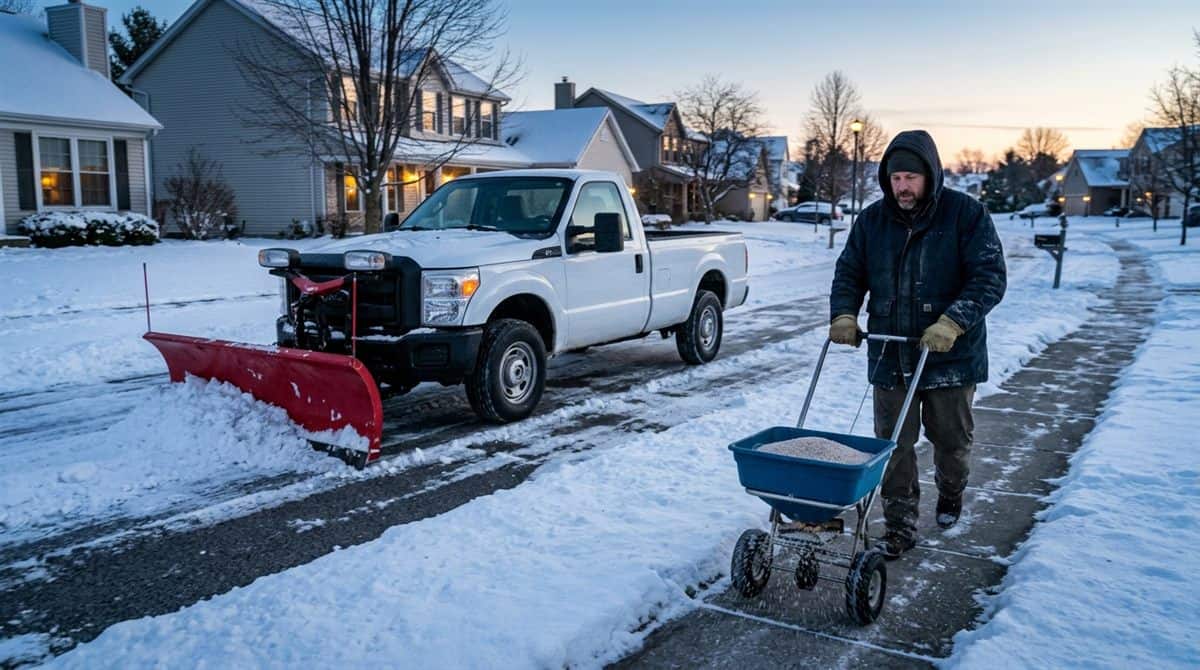
Your plowing sales in Ohio pass $5,000 for the year, and from then on every plow visit carries sales tax, next winter included. Here's which states charge snow removal sales tax, and what it means for the salt you buy.
Your plowing sales in Ohio pass $5,000 for the year, and from then on every plow visit carries sales tax, next winter included. Here’s which states charge snow removal sales tax, and what it means for the salt you buy.
New York doesn’t wait for a threshold: it taxes snow removal from the first push. Missouri doesn’t tax it at all. So snow removal sales tax is a state-by-state question. The same rules decide whether you pay tax on the salt when you buy it.
The reason is how sales tax works. It starts from goods, and a service is taxable only where a state’s law names it. Ohio, New York and Kentucky name snow removal. Missouri, Wisconsin, Iowa, Massachusetts and Pennsylvania don’t, or say outright that it isn’t taxable. Being registered for your summer mowing doesn’t settle the question either: Wisconsin taxes lawn care but not plowing.
Take one residential visit: $75 to plow it with a truck-mounted plow and $25 for salt spread from the truck, billed as $100. The figures are illustrative.
Each row comes from that state’s own statute, regulation or revenue department. States we couldn’t confirm at an official source aren’t listed.
| State | Plowing taxable? | What you pay when you buy salt | Worth knowing |
|---|---|---|---|
| Ohio | Yes, by machine, once snow sales reach $5,000 in a calendar year | Nothing if it goes on with mechanized removal; tax if you only spread it by hand | Shoveling isn’t taxable. Monthly returns, even in summer |
| New York | Yes, as maintenance of real property | Sales tax, with no refund or credit | Certificate of Authority needed. Salt and fuel lines on the invoice are taxable too |
| Kentucky | Yes, 6%, as a landscaping service | Not stated in the regulation | $12,000 small-provider exemption, with conditions |
| Missouri | No, including shoveling and salting | Sales tax | Plows, snow blowers and plow-truck repair parts are taxable purchases |
| Wisconsin | No, including sanding and salting | Sales or use tax | Lawn care is taxable; plowing isn’t |
| Iowa | No | Tax on salt, sand and brine | Plows, shovels and snow blowers are taxed |
| Massachusetts | No | Tax on sand, salt and de-icer | Self-assess use tax if the supplier didn’t charge it |
| Pennsylvania | Not as building maintenance | Not covered by the regulation | Lawn care is taxable in Pennsylvania |
Ohio’s sales tax law, Revised Code section 5739.01(B)(3)(r), makes “the removal of snow by any mechanized means” a taxable service. A truck plow or a snow blower counts and a shovel doesn’t. The same section leaves out anyone with less than $5,000 of snow removal sales in the calendar year. The Ohio Department of Taxation explains the rules for plowers in its Information Release ST 2003-02. It’s guidance, but it’s where the practical answers are.
The threshold doesn’t work like an allowance you get every year. The release says that once your sales reach $5,000, you register and collect on all future sales until you stop doing business. If you can reasonably expect $5,000 of snow work in the year, the release says to register from the start. Landscaping and snow removal count toward separate thresholds, but one vendor’s license covers both.
After that, file a return every month by the 23rd through the Ohio Business Gateway, even in July when you haven’t plowed anything. Charge the county rate where the job is, not where your shop is. A fuel surcharge counts as part of the taxable price, even on its own line. A landlord or condo association can’t buy your plowing tax-free “for resale”, either.
New York taxes services that maintain or repair real property. The tax department’s bulletin for landscapers, TB-ST-505, lists snow removal among them. It says you need a Certificate of Authority, the state’s sales tax registration, before you do the work. There’s no threshold, and the guidance draws no line between a plow and a shovel.
The salt is where New York differs from Ohio. In an advisory opinion for a salt-spreading company, the department said the company uses up its rock salt in providing the service. So it pays tax when it buys the salt, with no refund, and still charges tax on the customer’s whole bill, salt line included.
Kentucky’s sales tax statute, KRS 139.200, taxes “landscaping services” at 6%, and its list includes “snow plowing or removal services”. A small provider is exempt while its receipts from these services stay under $12,000 in a calendar year, under KRS 139.470. Once they pass $12,000, everything above that is taxable that year and everything is taxable the year after. The exemption doesn’t apply if you also sell goods or certain other taxable services.
In most of the states in the table, you’re the end consumer of your salt. You pay sales or use tax when you buy it, and it becomes a cost you build into your price. That holds whether the plowing itself is taxable (New York) or not (Missouri, Wisconsin, Iowa and Massachusetts). Ohio is the exception. There, salt you spread as part of a taxable mechanized service can be bought exempt, by giving your supplier an exemption certificate once you’re a licensed vendor. Salt you only throw by hand is a non-taxable service in Ohio, so you pay tax on that salt.

Plows, snow blowers and other equipment are taxable purchases in every state above that addresses them, and Ohio and Missouri tax repair parts for them too. If a supplier across a state line didn’t charge you tax, Missouri and Massachusetts expect you to report use tax yourself.
Don’t assume either way. A state that doesn’t list snow removal as a taxable service usually doesn’t charge sales tax on it. Still, look for your revenue department’s own guidance on landscapers or snow removal before you print an invoice. Missouri’s matrix, for one, says a letter ruling is the way to get a definitive answer.
Whatever the answer, keep your snow income separate from your mowing and landscaping in your books, because in Ohio and Kentucky the thresholds count snow work on its own. Our bookkeeping basics for contractors cover the monthly routine that makes that easy. For the tax rules on your construction and remodeling jobs, which work on a different test, read whether you charge sales tax on a construction job. And if winter work is new to you, our guide to landscaping rates is a starting point for pricing the season around it.
AFTER A NIGHT OF PLOWING
Bill the driveway before the next storm buries the details.
A plowing season is dozens of small jobs in a few long nights. SendWork lets you send each invoice from your phone as the driveway is done, so billing keeps pace with the snow.