Go to SendWork
— Free for 7 Days
Full access
Full access

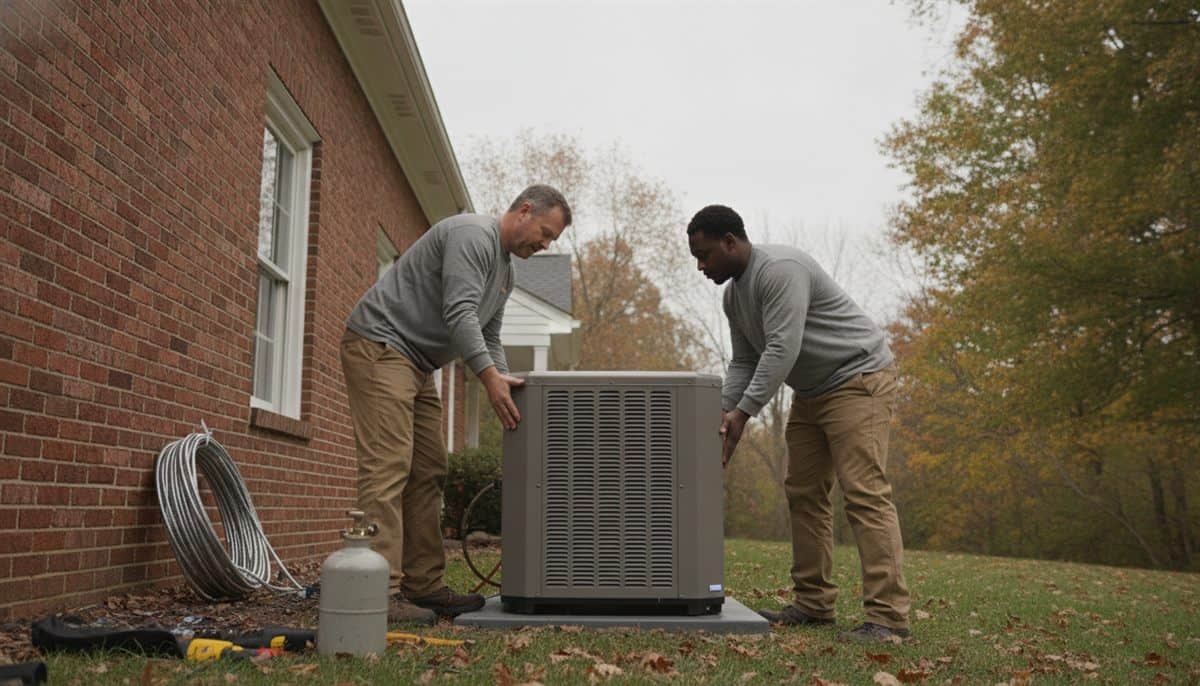
In 2027, an HVAC shop works to a calendar: the VRF install deadline, the last year to sell packaged R-410A, a tariff date and a furnace rule in court. Here's each one.
The HVAC trends that will shape 2027 for a US residential and light-commercial contractor are mostly dates, not gadgets. You can still install pre-2025 R-410A split systems with no deadline. R-410A VRF systems, though, have to go in before January 1, 2027. Packaged R-410A units stay on sale only through the end of 2027. The federal heat pump tax credit has ended. A lower tariff on residential HVAC equipment runs out on December 31, 2027. And heat pumps now outship gas furnaces, while the 2028 furnace rule is back in court.
None of that changes how you braze a joint. It changes what you keep on the rack and what goes on a quote. It also changes how long a quote can stay open, and what you say when a customer asks about the tax credit. Each point below comes from the rule, statute or data release behind it, as checked in October 2026.
| Date | What changes | Who it reaches |
|---|---|---|
| Since July 27, 2026 | No end date for installing R-410A split systems built from pre-2025 components | Residential and light-commercial installers with old stock |
| January 1, 2027 | Deadline to install R-410A VRF systems built before 2026 (January 1, 2028 where a permit issued before October 5, 2023 specifies the system) | Light-commercial VRF installers |
| January 1, 2027 | New supermarket systems need refrigerant below 1,400 GWP; new data center cooling needs below 700 GWP | Commercial refrigeration and IT cooling |
| December 31, 2027 | The temporary 15% tariff tier for certain residential HVAC equipment ends; 25% applies from January 1, 2028 | Anyone quoting equipment for early 2028 |
| January 1, 2028 | Sale and distribution of packaged (self-contained) R-410A units ends | Distributors and contractors holding packaged stock |
| December 18, 2028 | 95% AFUE gas furnace standard, now under court remand and an industry petition for 2030 | Furnace replacement planning |
| January 1, 2029 | HFC supply caps fall from 60% to 30% of baseline | Everyone who buys refrigerant |
The rule behind most of these dates is EPA’s Technology Transitions rule. It is a mandatory federal regulation, made under the American Innovation and Manufacturing (AIM) Act of 2020. It decides which refrigerants new equipment may use, sector by sector, and it sits in 40 CFR Part 84, Subpart B. New residential and light-commercial air conditioners and heat pumps need a refrigerant with a global warming potential (GWP) below 700. R-410A sits far above that line. That is why new equipment moved to A2L refrigerants such as R-454B and R-32.
EPA changed one date this year, in a final rule published May 26, 2026. Since July 27, a split system still counts as a lawful new install when every specified component was made in or imported into the US before January 1, 2025. Those components are the condensing unit, condenser, compressor, evaporator unit and evaporator. That stock now has no end date.
One limit stays. Equipment that Canadian or Mexican plants built before 2025 but that crossed the border after January 1, 2025 does not qualify. Separately, EPA does not treat swapping the condensing unit on an existing system as a new system install, and it left that rule unchanged. Our article on the R-410A you already own walks through the component test in detail.
VRF got no such relief. You may install a new R-410A VRF system only before January 1, 2027, and only if its components date from before January 1, 2026. A project has until January 1, 2028 if a building permit issued before October 5, 2023 specifies the R-410A system. Its components must still date from before 2026. EPA said in the 2026 rule that it would not extend the VRF date.
Take a hypothetical job. In September you quoted a small dental office for an R-410A VRF system, using equipment made in 2025. Now suppose the install slips into January and the building permit is newer than October 2023. That equipment can no longer go in as a new system. So the scheduling call belongs on this month’s calendar, while there is still room.
Packaged equipment has a later date. The rule treats a product that is complete when it leaves the factory, such as a packaged unit, apart from a system that you connect and charge on site. Manufacturers had to stop making or importing packaged R-410A products on January 1, 2025. From January 1, 2028, nobody may sell or distribute them either. That makes 2027 the last full year to move that stock.
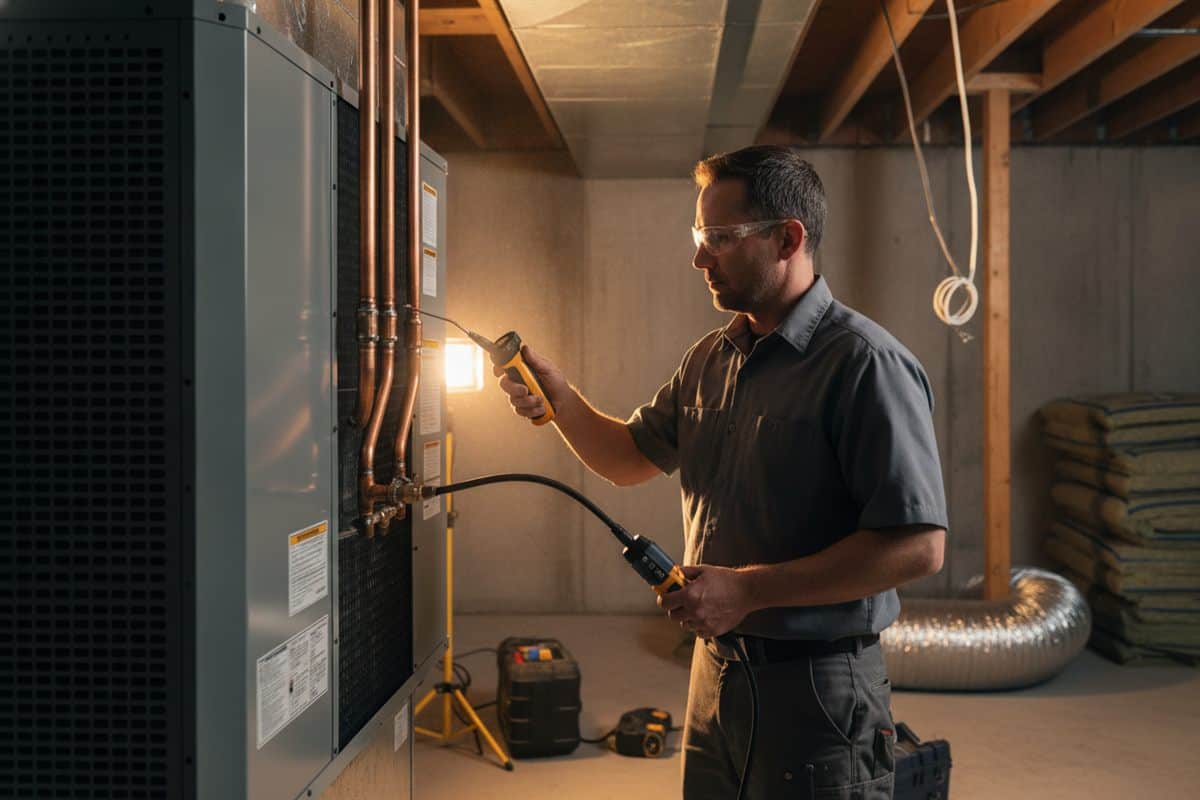
A2L equipment took over quickly. EPA’s 2026 rule cites HARDI, the distributors’ association, on this point. HARDI put A2L equipment at about 90% of distributor sales by the end of the 2025 cooling season. The install rules for these mildly flammable refrigerants come from the model codes. Take the 2024 International Residential Code. It calls for A2L systems listed to UL/CSA 60335-2-40 and caps the A2L charge at 34.5 pounds per system. It also wants a label showing the installer’s details and the charge. Model codes apply only where your state or city adopts them. So check which edition your jurisdiction enforces before you pull the next permit.
For three years, heat pump quotes could point to section 25C of the tax code, the Energy Efficient Home Improvement Credit. The IRS put it at up to $2,000 a year for a heat pump. Public Law 119-21, the budget law signed on July 4, 2025, ended it for property placed in service after December 31, 2025. The same law ended the 45L builder credit for efficient new homes acquired after June 30, 2026. It also closed the 179D deduction for commercial projects that start construction after that date. The IRS questions and answers on the law confirm each date.
State rebates have narrowed too. State energy offices run heat pump rebates under the High-Efficiency Electric Home Rebate program, which DOE first marketed as HEAR. It rests on section 50122 of the Inflation Reduction Act (42 U.S.C. 18795a) and serves households below 150% of area median income. It is optional, and each state decides whether to launch it. Under DOE Program Notice 26-2, effective May 29, 2026, states must stop offering these rebates for replacing gas, propane or oil equipment with a heat pump. Rebates already reserved can still be paid. New rebates cover upgrades from existing electric equipment, plus new construction.
So a 2027 heat pump sale rests on operating cost, comfort and reliability, not on a federal check. A customer may still ask about the credit. Our guide to what your quotes should say now has the wording and the dates.
Section 232 tariffs are import duties that the President sets by proclamation, under section 232 of the Trade Expansion Act of 1962. The importer pays them. They reach you through distributor prices. Two of them matter to an HVAC shop.
First, Proclamation 11032 took effect on June 8, 2026. It put “certain HVAC systems and components that are predominantly for residential use” in a temporarily reduced 15% tier. That tier ends at 11:59 p.m. on December 31, 2027. From January 1, 2028, the 25% rate applies to those goods. The tariff schedule decides exactly which product codes qualify, so ask your distributor how it treats the lines you buy. Second, copper pipe and tube have carried a 50% tariff since August 1, 2025, under Proclamation 10962.
Suppliers have already passed some of this on. ACHR News listed the increases announced for January 2026. Fujitsu announced 3% and Aspen 5% on coils. Southwire announced about 5%, “tied to copper and non-copper costs.” Johns Manville and Owens Corning announced 6% to 8%. Some jobs will reach the order stage after year-end 2027. For those, price the equipment at order date or put a clear adjustment clause in the quote. Our piece on protecting a bid from material price changes covers the clause.
The shipment numbers from AHRI, the manufacturers’ trade association, show the direction. US shipments of air-source heat pumps reached 3,644,596 in 2025. Gas furnaces reached 3,247,426. Combined air conditioner and heat pump shipments still fell 20% from 2024. For January through July 2026, AHRI’s latest release shows combined shipments up 5.5% and heat pumps up 5.8%. Gas furnaces fell 5.1%. We read that as a replacement market recovering in 2026, with heat pumps holding a large share. That is our reading of the data, not a forecast for 2027.
The gas furnace question is less settled. DOE sets furnace efficiency standards under the Energy Policy and Conservation Act, in 10 CFR 430.32. That standard calls for 95% AFUE on non-weatherized gas furnaces made from December 18, 2028. On June 8, 2026, the Supreme Court vacated the ruling that had upheld it and sent the case back to the lower court. Gas industry groups have also asked DOE to move the date to at least 2030. DOE has not decided. Until one of those resolves, do not promise a customer either outcome.
Local rules still matter where you work. In the Bay Area, Air District Rule 9-6 sets a zero-NOx standard for water heaters of 75,000 Btu/h or less made from January 1, 2027. In practice that points to electric units. Staff have proposed moving the date to January 1, 2028, and the board hears the proposal on November 4, 2026. The district’s furnace rule starts in 2029 and is under review. Southern California’s air district voted down proposed zero-emission amendments to its furnace and water heater rules in June 2025.
The labor market is not getting easier. The Bureau of Labor Statistics puts the median wage for HVAC mechanics and installers at $61,010 in May 2025. It projects 11% job growth from 2025 to 2035, much faster than average, with about 40,600 openings a year. BLS names commercial construction, including data centers, and retrofit work among the drivers.
For a small shop, that is a market where good technicians have options. Before the spring rush, check that your rates still cover what it costs to keep them. Our guide to HVAC rates in the USA shows how to build the number. And if you are the one thinking of going out on your own, start with the license timeline for starting an HVAC business.
EPA’s leak and recovery rule is the other mandatory rule to know. Its formal subject is the management of certain HFCs and their substitutes, in 40 CFR Part 84, Subpart C. Since January 1, 2026, it has required leak repair on HFC appliances holding 15 pounds or more of refrigerant. It leaves out residential and light-commercial air conditioning and heat pumps. Repair is due at a 20% leak rate for commercial refrigeration and 10% for comfort cooling. From January 1, 2028, you must send emptied disposable cylinders for heel removal. From January 1, 2029, technicians must service supermarket systems, refrigerated transport and automatic ice makers with reclaimed refrigerant.
Supply tightens at the same time. Under the AIM Act, HFC production and import allowances stay at 60% of the baseline through 2028 and drop to 30% from 2029. Are commercial service contracts part of your plans? Then read our guides to the refrigerant records commercial HVAC operators keep and building a commercial HVAC business next.
Several things that could move your numbers were still open in October 2026. The 2025 copper proclamation floated a 15% tariff on refined copper from January 1, 2027, and no decision has appeared yet. The furnace rule sits on remand, and DOE has not answered the industry petition for 2030. EPA has said a new HFC allocation proposal is coming, without saying what it will contain. The Bay Area votes on the water heater date on November 4. And your state’s A2L code edition may change with the next code cycle. Recheck these before you set 2027 prices, and date every quote you send.
When the install date decides the price
A quote is only as good as the date behind its price.
In 2027 the VRF cut-off, the packaged-unit sell-through and the tariff tier all turn on dates. SendWork builds, sends and tracks your estimates from your phone. Your open quotes sit in one list when a date moves, so you can reprice before the customer signs.